The digital marketing landscape is undergoing a seismic shift, driven by the meteoric rise of artificial intelligence-powered search engines, commonly referred to as "answer engines." This burgeoning sector has captured the attention of marketers worldwide, as evidenced by a staggering 40% surge in monthly unique visitors to major answer engines, climbing from 634 million in Q1 2025 to 904 million in Q1 2026, according to data from Wix Studio. This dramatic increase underscores a critical imperative for businesses: to adapt their online strategies to thrive in this evolving search ecosystem.
While the advent of AI search, also known as Answer Engine Optimization (AEO), has generated considerable buzz, it’s crucial to understand that it does not render traditional Search Engine Optimization (SEO) obsolete. Instead, the two disciplines are intricately linked. The foundational principles that have long governed organic search rankings also pave the way for citations within AI-generated answers. As consumers increasingly leverage both classic search engines and AI-driven platforms for their research, a comprehensive digital presence across both is no longer a competitive advantage but a necessity.
This article delves into a repeatable framework designed to optimize websites for AI search, a strategy that remains robust even as large language models (LLMs) continue to evolve. It will explore the technical prerequisites, the content that commands citation, the nuances differentiating various AI search engines, and the metrics essential for evaluating the efficacy of an AEO strategy.
The Enduring Relevance of SEO in the Age of AI Search
The infrastructure underpinning AI search often mirrors that of traditional search. Therefore, a deep understanding of how established search engine algorithms, such as Google’s, function provides invaluable context for navigating both channels. Answer engines, at their core, must still crawl, index, and evaluate web pages before incorporating them into their responses. Google, for instance, has publicly stated that its AI Overviews are powered by a customized version of Gemini, operating in conjunction with its existing Search systems. Similarly, ChatGPT’s web result retrieval frequently integrates Bing, meaning that the discoverability signals that feed traditional search also directly influence AI-powered answers.
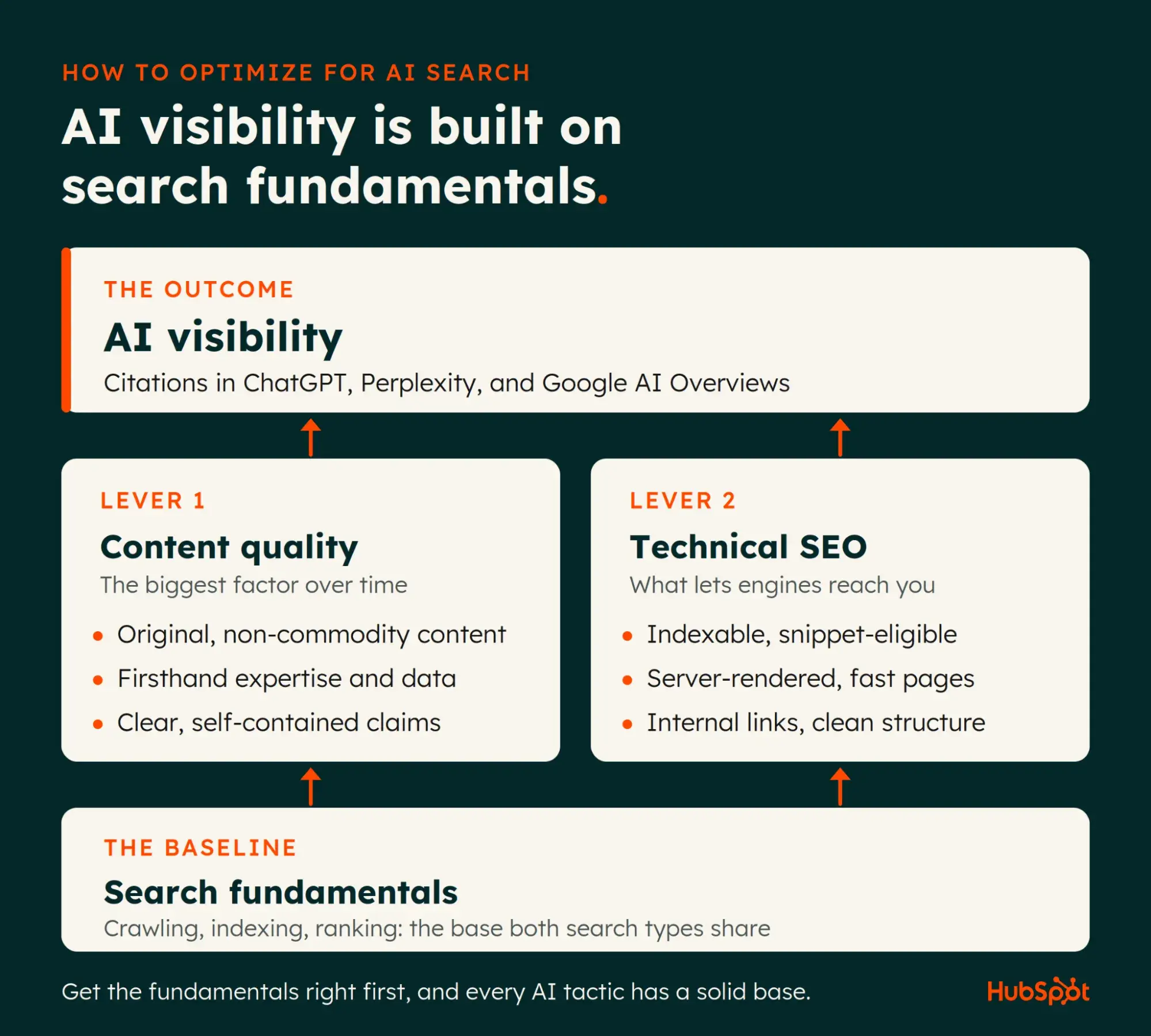
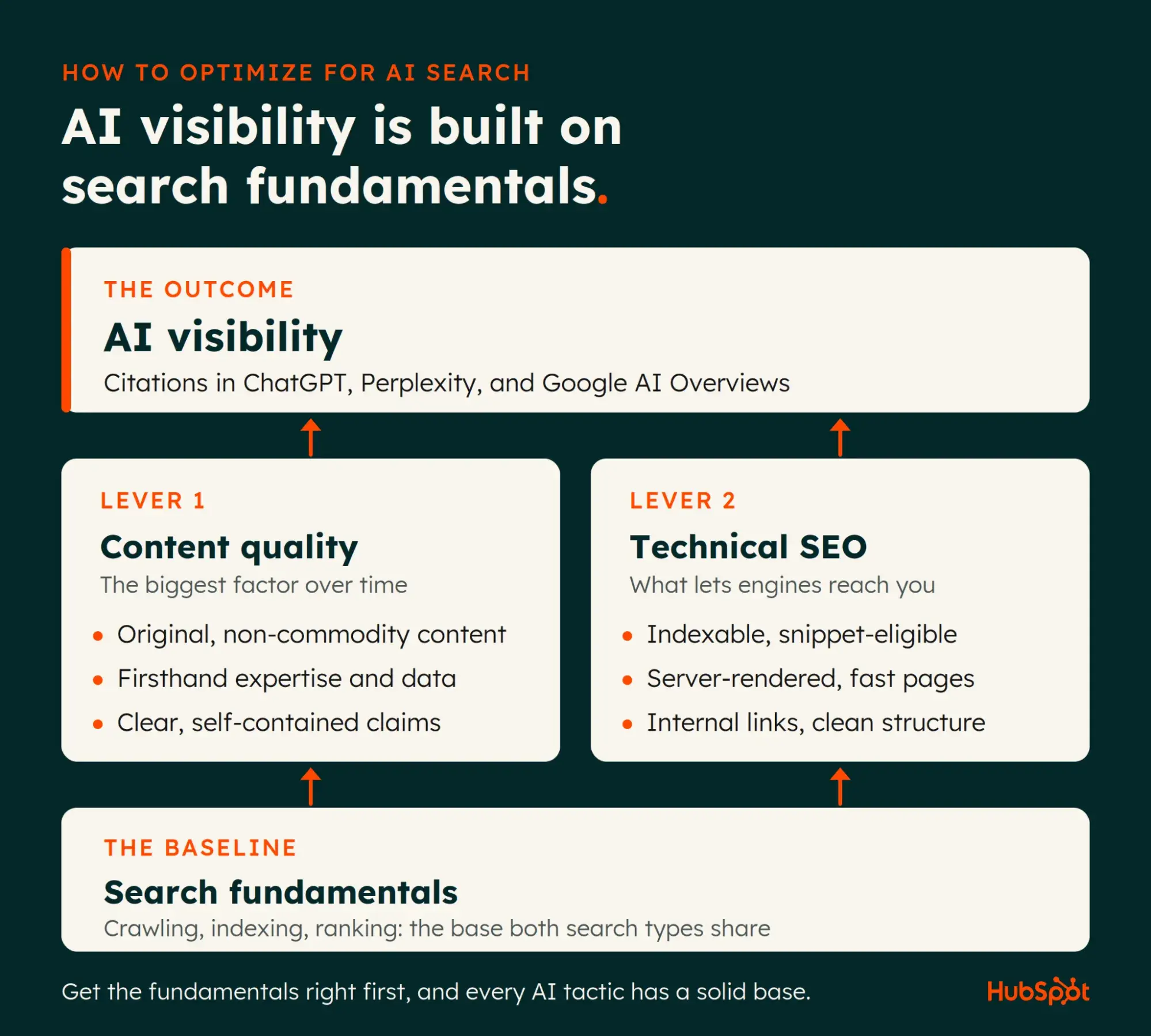
This shared technological foundation is precisely why AI search optimization is an evolution of, rather than a replacement for, SEO fundamentals. A website that search engines struggle to crawl, render, or index inherently limits its potential to be cited in AI-generated content. The quality of content remains paramount; AI engines prioritize and cite sources that they can accurately parse and trust. The established criteria for achieving traditional search rankings directly contribute to a page’s eligibility for AI citations. Consequently, ensuring a website meets basic SEO standards is a non-negotiable prerequisite for any effective AI search optimization strategy.
Crafting People-First Content for AI Search Dominance
Content quality stands as the most significant determinant of long-term AI search visibility. Google itself emphasizes the importance of "unique, compelling, and useful" content, suggesting it plays a more substantial role in generative AI search presence than any other optimization step outlined in its AI optimization guide. The search giant differentiates between "commodity content," which merely regurgitates existing information, and "non-commodity content," which is built upon genuine expertise and firsthand experience.
Answer engines have a diminished incentive to cite content that they could readily generate themselves from their vast training data. Conversely, people-first, non-commodity content significantly enhances citation potential by offering elements that AI models cannot authentically replicate: original data, deep subject-matter expertise, and a distinct human perspective.
Empirical data strongly supports this correlation. An analysis by SE Ranking of over 216,524 web pages revealed that content quoting experts received, on average, 4.1 ChatGPT citations, compared to 2.4 for content lacking expert attribution. Similarly, pages presenting 19 or more data points averaged 5.4 citations, while data-light pages garnered only 2.8. The key lies in articulating each insight with clarity and conciseness, transforming original thinking into self-contained claims that AI engines can readily extract and cite.
Building Robust Technical Foundations for AI Search Discoverability
The ability of answer engines to cite a webpage hinges on their capacity to access and index it. Google has been explicit: a page must be indexed and eligible for display in Google Search with a snippet to appear in AI Overviews or AI Mode, with no additional technical requirements beyond these. This underscores the critical need to ensure pages are crawlable and snippet-eligible. Furthermore, website speed significantly reinforces this accessibility. SE Ranking’s research indicated that pages with a First Contentful Paint (FCP) under 0.4 seconds averaged 6.7 ChatGPT citations, a substantial improvement over the 2.1 citations received by pages with an FCP exceeding 1.13 seconds.
Effective internal linking is crucial for enabling search engines to discover related content, thereby structuring websites to enhance content findability. A seamless user experience across all devices is also paramount. This involves ensuring that primary content is presented as easily distinguishable text and is not overly reliant on scripts that crawlers might bypass.
JavaScript, in particular, presents a common point of failure. While Googlebot can render JavaScript when not explicitly blocked, many other AI crawlers process only raw HTML and do not execute scripts. This means client-side rendered content may appear as a blank page to ChatGPT or Perplexity. Therefore, serving primary content via server-rendered HTML and adhering to JavaScript SEO best practices is essential. Finally, Google recommends a clear page structure, utilizing descriptive headings and logical sections to aid both human readers and AI models in navigating and comprehending the content.
Leveraging Structured Data and Snippet Controls for Enhanced AI Search Visibility
Structured data acts as a machine-readable map for answer engines, reducing the guesswork involved in understanding content meaning and its suitability for citation. However, the accuracy of this map is critical. Google’s guidelines stipulate that markup must accurately reflect the visible text on a page, meaning schema should describe existing content rather than unsubstantiated claims. Misrepresenting content to crawlers versus human visitors constitutes cloaking, a practice that is detrimental to AI search visibility. Schema effectively amplifies clear and credible content; it cannot compensate for a page lacking substance.
Snippet controls function as gatekeepers for AI visibility, dictating the extent to which an engine may extract content from a page. Google surfaces pages in AI Overviews or AI Mode only if they are indexed and eligible for snippet display. Consequently, directives that limit snippets also restrict AI answer inclusion. Three primary preview controls govern this:
noindex: This directive instructs search engines not to display the page in search results at all.nosnippet: This directive prevents search engines from showing a snippet (a descriptive text excerpt) for the page.max-snippet:[number]: This directive sets a maximum character limit for the snippet displayed.
The data-nosnippet attribute operates differently, applying an inline HTML attribute to a specific element within the page body. This allows for the withholding of individual passages without impacting the overall eligibility of the page for AI citations.
It is vital to recognize that these controls affect both classic search results and AI answers. If a page is not being picked up by AI, checking its robots meta tag for a stray nosnippet or max-snippet:0 directive is crucial. Similarly, an overly restrictive max-snippet value can deprive AI models of sufficient context for citation. Modifying these settings typically involves editing the robots meta tag in the HTML head or via the X-Robots-Tag HTTP header, fields often accessible through CMS platforms and SEO plugins.
Optimizing for AI Search with Rich Media and Local Data
Generative AI results can now display images and videos alongside text links, creating additional avenues for website visibility. Standard SEO best practices for pairing content with strong, relevant image and video assets also optimize them for AI features, eliminating the need for separate files. Video content, in particular, offers significant visibility potential. A study by Fan Out’s off-site AEO report identified YouTube as the second most frequently cited platform, with 1,531 citations.
However, AI systems do not "watch" videos in the same way humans do. They primarily rely on surrounding text to gauge relevance. Therefore, providing transcripts, descriptive summaries, and timestamps is essential. Fan Out’s research indicated that 13.7% of YouTube citations pointed to a specific timestamped moment.
Local and merchant data becomes increasingly important for queries related to purchases or specific businesses. Google has confirmed that its generative AI responses can incorporate product listings, product details, and information about local businesses. To ensure eligibility for these responses, maintaining up-to-date Merchant Center feeds and Google Business Profiles is critical. Google explicitly identifies both as tools that enhance visibility in AI responses and broader search results. Depending on the business type, Google also offers newer options like Business Agent, a conversational interface that allows customers to interact directly with a brand on Search.
Harnessing Q&A Formatting for Superior AI Search Performance
Answer engines favor pages that directly address questions upfront. CXL’s analysis of AI Overview citations revealed that the majority of cited passages originated from the top third of a page, with only about a fifth coming from the bottom 40%. This highlights the importance of leading with the answer. HubSpot’s AEO guide recommends placing the main answer within the first 40-60 words of a section, followed by supporting details.
Question-led subheadings further reinforce this structure. Kevin Indig’s study on ChatGPT citations found that cited text was twice as likely to contain a question mark, and headings accounted for 78.4% of citations linked to questions. Phrasing an H2 or H3 as a user’s likely query provides AI engines with a clear prompt to match and a paragraph to extract as a response.
Supporting bullet points and concise summaries enhance the ease with which AI engines can extract answers. A 2026 preprint on structural formatting demonstrated that lists and tables achieved 43% higher extraction accuracy compared to the same information presented as prose. This answer-first formatting transforms a webpage into a collection of self-contained, quotable units, making it more amenable to clean AI citation.

Navigating AI Search Across Perplexity and ChatGPT
The same webpage can yield vastly different results depending on the AI search engine evaluating it. Perplexity consistently emerges as a more prolific citer, accounting for 59% of off-site citations and drawing on approximately 10.8 sources per answer. ChatGPT, in contrast, remains more selective, citing around 3.3 sources per query, according to data from Fan Out. Their citation preferences also diverge. Perplexity tends to favor discussion pages like LinkedIn, G2, and Reddit, which constitute 17.35% of its citations. ChatGPT, on the other hand, leans towards traditional long-form articles, as noted by Wix Studio. Fan Out’s dataset for B2B SaaS queries indicates that 96% of LinkedIn citations are attributed solely to Perplexity.
The timing of AI responses also differs. In a controlled experiment conducted by SE Ranking and Search Engine Land, Perplexity surfaced newly published pages prominently within one to three days. However, its citations often directed to supporting test domains rather than the primary brand site. ChatGPT exhibited a slower reaction but strengthened its citations for the test brand over the course of the month.
These distinct operational habits rarely overlap. Fan Out’s research found that only 7.7% of cited URLs appear across multiple engines, meaning that achieving citations on one platform does not guarantee similar success on another. Therefore, it is advisable to treat each AI search engine as a distinct channel rather than assuming a single optimization strategy will suffice for all.
Developing AI Content Optimization Workflows for Sustained Visibility
The most effective AEO strategies are implemented as repeatable processes rather than one-off fixes. A robust workflow, encompassing research through ongoing refreshment, ensures sustained visibility.
1. Research and Entity Mapping: Begin by grouping the questions your target audience frequently asks into thematic clusters. Subsequently, construct an entity map that illustrates the connections between your brand, products, and core topics, enabling AI engines to understand their interrelationships.
2. Draft with an Answer-First Approach: Structure each section to provide an answer to its core question within the opening lines. Employ question-led subheadings and the answer-first formatting principles discussed earlier. Lead with the primary claim and then substantiate it with original data and demonstrable expertise.
3. Implement Structured Data: Apply schema markup that accurately mirrors the visible content on the page. Adhering to structured data guidelines will ensure that the markup supports comprehension rather than overstating the content.
4. Pre-Publication Quality Assurance: Prior to publishing, verify that the page is crawlable, that its primary content is rendered in server-side HTML, and that it validates correctly using a schema testing tool. A page that an AI engine cannot parse is inherently unquotable.
5. Publish and Establish Baselines: Document the page’s performance in answer engines at the time of publication to establish a benchmark for future improvement tracking.
6. Schedule Regular Refresh Cadences: Establish a fixed schedule for reviewing and updating statistics, examples, and claims. This prevents content from becoming outdated between audits. The measurement section below provides guidance on prioritizing pages for refreshment.
Dispelling Myths in AI Search Optimization
Not all advice circulating about AEO is grounded in evidence. Some commonly cited tactics lack supporting data or contradict official search engine guidance. Therefore, it is essential to identify and disregard these misleading practices:
- Keyword Stuffing: While keyword relevance remains important, over-optimizing with repetitive keywords offers diminishing returns and can harm user experience and rankings.
- Creating Content Solely for Bots: AI engines prioritize content that serves human users. Focus on creating valuable, informative content that naturally incorporates relevant terms.
- Ignoring User Intent: Understanding the underlying intent behind a query is paramount. AI engines are designed to satisfy user needs, so aligning content with user intent is crucial.
- Believing in a "Magic Bullet" Solution: AEO is an ongoing process that requires a multifaceted approach, integrating technical optimization, quality content creation, and strategic formatting.
Measuring Success: AI Search Optimization Through Measurement and Iteration
Visibility signals indicate whether answer engines are mentioning or citing your content. Conversion data, conversely, reveals whether this visibility is translating into tangible business outcomes. Tracking both is indispensable.
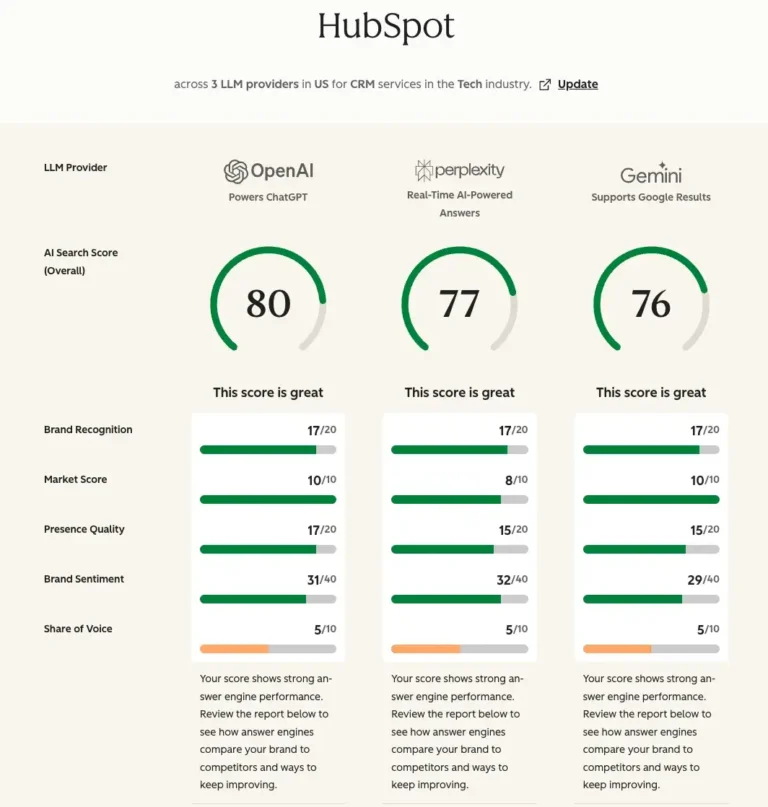
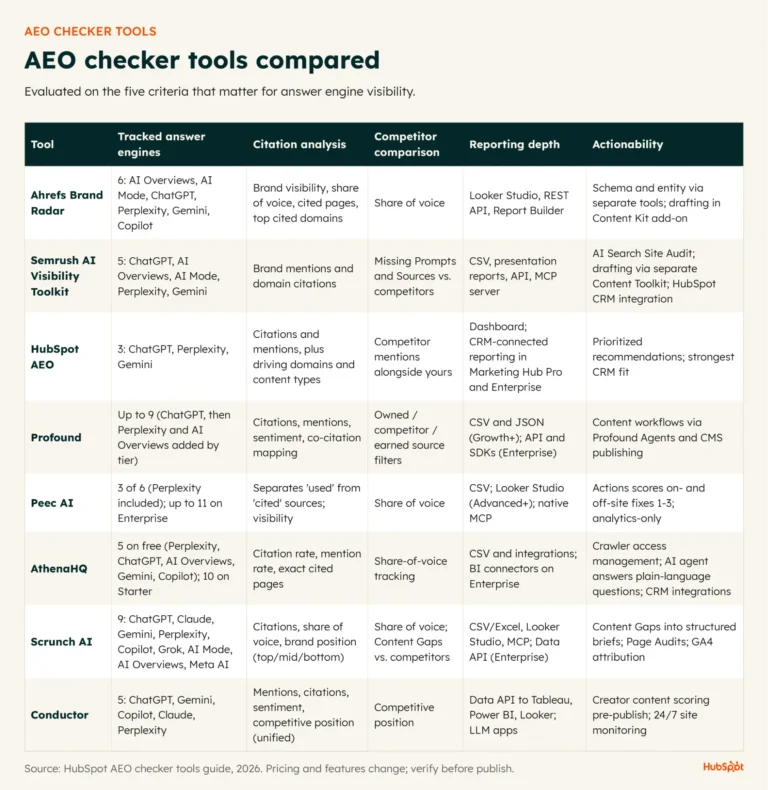
- AI Visibility Metrics: Monitor brand mentions, direct citations in AI answers, and the appearance of your content in AI-generated summaries. Tools that track AI SERP performance can provide valuable insights.
- Traffic and Engagement: Analyze website traffic originating from AI search sources. Track user engagement metrics such as bounce rate, time on page, and conversion rates for this traffic segment.
- Conversion Tracking: Attribute leads, sales, and other key business objectives to AI search traffic to demonstrate ROI.
- Competitive Analysis: Benchmark your AI search performance against competitors to identify areas for improvement and emerging trends.
The AI Search Optimization Checklist: A Pre-Publishing Guide
This checklist serves as a comprehensive pre-publication review for any page intended for surfacing and citation in answer engines.
Foundations
- [ ] Page is crawlable and indexable by search engines.
- [ ] Page renders core content in server-side HTML.
- [ ] Page is snippet-eligible in traditional search results.
- [ ] Website loading speed is optimized (e.g., FCP under 0.4 seconds).
Content
- [ ] Content is unique, compelling, and demonstrably useful.
- [ ] Content is built on original data, expertise, or firsthand experience.
- [ ] Claims are clearly stated and self-contained for easy extraction.
- [ ] Content directly addresses user intent and resolves questions upfront.
Technical and Structured Data
- [ ] Robots meta tag and X-Robots-Tag directives are correctly configured.
- [ ]
data-nosnippetattributes are applied judiciously where needed. - [ ] Structured data markup accurately reflects on-page content.
- [ ] Schema markup is validated using a testing tool.
Multimodal, Local, and Product
- [ ] Images and videos are relevant, descriptive, and optimized.
- [ ] Video content includes transcripts, summaries, and timestamps where applicable.
- [ ] For local businesses, Google Business Profile is current and optimized.
- [ ] For e-commerce, Merchant Center feeds are up-to-date.
Formatting
- [ ] Content is presented with question-led subheadings.
- [ ] Key answers are placed within the first 40-60 words of sections.
- [ ] Bullet points and short summaries are used to enhance extraction accuracy.
Per Engine and Measurement
- [ ] Content strategy considers the nuances of different AI engines (e.g., Perplexity vs. ChatGPT).
- [ ] Baseline AI search visibility metrics are recorded pre-publication.
- [ ] Mechanisms for tracking AI-driven traffic and conversions are in place.
Skip These
- [ ] Keyword stuffing.
- [ ] Content created solely for search engine bots.
- [ ] Over-reliance on cloaking or deceptive practices.
- [ ] Ignoring user intent in favor of technical optimization alone.
Building an Evolving AI SEO Strategy for User-Centric Growth
AI search optimization, much like traditional SEO, necessitates ongoing maintenance and adaptation. The initial 90 days should focus on establishing a robust AEO strategy, after which it should operate on a defined cadence.
- Establish a Clear Cadence: Implement a consistent schedule for content review, updates, and performance analysis.
- Develop Repeatable Workflows: Standardize processes for content creation, optimization, and auditing to ensure efficiency and consistency.
- Define Guardrails: Set clear guidelines for content quality, technical implementation, and ethical optimization practices.
- Foster a Culture of Iteration: Encourage continuous learning and adaptation based on performance data and evolving AI search landscape.
By adopting this approach, an AI SEO strategy can achieve self-improvement, maintaining its effectiveness as AI engines evolve, while the core principles of user focus, consistent processes, and clear guidelines remain constant.
Frequently Asked Questions About AI Search Optimization
Do I need special markup to appear in AI Overviews?
No. Google has stated that AI features do not require dedicated schema. A page simply needs to be indexed and eligible for snippet display. While adding markup is not a guaranteed citation driver, it remains a valuable practice for general SEO.
Should I add an llms.txt file?
There is no conclusive evidence to support the efficacy of an llms.txt file. SE Ranking’s analysis of nearly 300,000 domains found no correlation between its presence and AI citations, and their predictive models improved after its removal.
How often should I update content for AI search?
Instead of adhering to a universal update frequency, establish a fixed refresh cadence based on performance and content relevance. Prioritize pages where statistics, examples, or claims are most likely to become outdated.
How do I increase my chances of getting cited in Perplexity?
Perplexity favors current, well-structured content with cited sources. According to Fan Out, it averages about 10.8 sources per answer. Wix Studio notes that Perplexity leans heavily on discussion content, with 17.35% of its citations originating from such platforms, more than double the cross-model average.
Does AI search replace classic SEO?
No. Answer engines continue to crawl, index, and rank pages before citing them. Therefore, classic SEO principles directly complement AI search. Google’s AI Overviews operate on its existing Search systems, meaning the same fundamentals that earn traditional rankings also create pathways for AI answers.
About the Author