Competitor analysis tools are sophisticated software platforms designed to empower marketing teams by providing comprehensive monitoring and comparison of rival strategies across critical digital channels, including Search Engine Optimization (SEO), social media, Pay-Per-Click (PPC) advertising, and broader market intelligence. These tools function as indispensable allies for marketers, significantly accelerating the often time-consuming process of competitor analysis. By offering clear visibility into where competitors are focusing their efforts and identifying untapped opportunities, they enable marketing professionals to strategize more effectively. The most advanced tools operate unobtrusively in the background, continuously updating data, allowing teams to concentrate on driving their own business forward.
With nearly two decades of experience in digital marketing, including over a decade dedicated to SEO, I have rigorously tested and, in many cases, retired a substantial number of marketing tools. This article compiles a curated list of 14 competitor analysis tools that are actively utilized by marketing professionals. These tools are categorized by their primary marketing focus, encompassing SEO, paid media, social media, and market intelligence. For each platform, I will detail its core functionalities, pricing structures, and personal insights derived from hands-on experience. Where my direct experience is limited, I have incorporated perspectives from industry experts who regularly leverage these platforms, offering their insights into their practical applications and high regard for their capabilities.
A fundamental aspect of effective competitor analysis lies in selecting the right tools. The most effective solutions are not necessarily those with the most extensive feature sets or the highest price tags. Instead, they are the platforms that provide the precise data a business requires while simultaneously inspiring the marketing team to engage with and utilize them. In practice, this translates to tools that align with clear strategic objectives, seamlessly integrate into existing workflows, and facilitate the conversion of insights into actionable strategies.
The ideal competitor analysis tools are characterized by their accuracy, consistent updates, and suitability for direct comparison. Equally crucial is the ability to centralize competitive insights within a Customer Relationship Management (CRM) system for unified reporting and coordinated action. This ensures that competitive intelligence informs marketing campaigns, content creation, and sales engagements. Any new tool adoption should prioritize seamless integration with the existing technology stack.

Below are additional tips tailored for each channel to assist teams in making informed decisions when selecting the most appropriate tools for their specific requirements.
SEO Competitor Analysis Tools
SEO competitor analysis forms the bedrock of effective digital marketing. Insights gleaned from SEO efforts provide marketing teams with crucial information regarding competitor strategies, audience pain points, and opportunities to gain visibility precisely when target audiences are actively seeking solutions. By examining search engine results pages (SERPs), SEO uncovers both direct and indirect competitors, often revealing unexpected rivals who may have previously flown under the radar.
1. Semrush

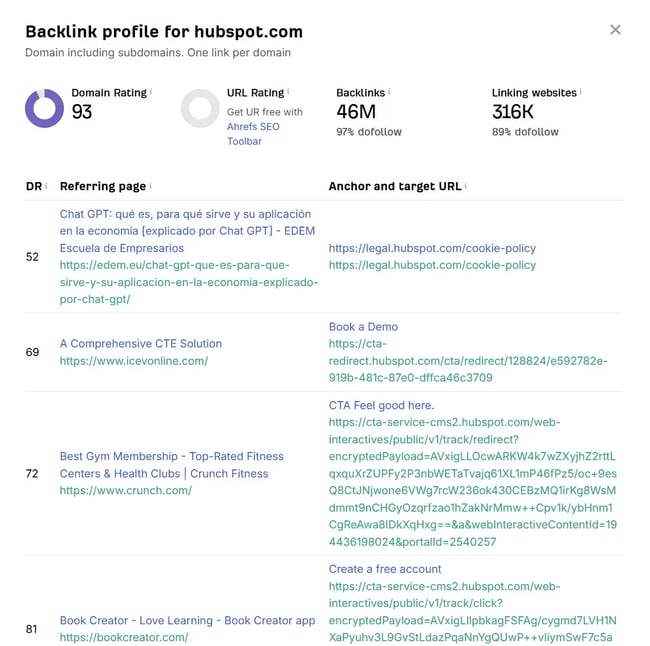
Semrush is a leading platform for SEO competitor analysis, particularly beneficial for teams managing multiple competitors or diverse markets. It has become a staple in the SEO toolkit. Recently rebranded as Semrush One, the platform aims to encompass its expanded capabilities, offering a unified solution for all search-related needs, from traditional SEO to emerging areas like Geosearch Optimization (GEO) and AI-driven search. Semrush excels in providing a holistic view of the competitive landscape, including keyword overlap, content strategy, and AI visibility, thereby eliminating the need to stitch together data from disparate tools.
- Key Features: Comprehensive domain and keyword analysis, backlink auditing, content gap analysis, PPC research, social media tracking, site audit capabilities, and robust AI/GEO tracking tools.
- Pricing: Semrush offers a 7-day free trial. Post-trial, annual billing starts at approximately $129.95 per month for the Pro plan, $249.95 per month for the Guru plan, and $499.95 per month for the Business plan. These tiers offer escalating levels of features and usage limits.
- Expert Insight: "I’ve relied on Semrush for years," states a seasoned digital marketing strategist. "Its user experience is remarkably intuitive, and its continuous adaptation to the evolving search landscape, particularly with its AEO and GEO tools, has been impressive."
2. Ahrefs
Ahrefs is widely recognized for its extensive data depth and its prowess in backlink and content-led competitor analysis. It is a preferred choice for SEO teams focused on building domain authority, acquiring quality backlinks, and driving growth through content. While historically focused on organic search and backlinks, Ahrefs has expanded its utility for tracking modern search behaviors, including GEO and AI-driven discovery.
- Key Features: In-depth backlink analysis, content gap analysis, keyword research, site explorer for deep domain insights, content explorer for trending topics, rank tracker, and site audit tools.
- Pricing: Ahrefs does not offer a free plan but provides limited access through Ahrefs Webmaster Tools. Paid plans, billed annually, begin with the Lite plan at approximately $99 per month, followed by Standard at $199 per month, Advanced at $399 per month, and Enterprise at $999 per month.
- Expert Insight: Lauren Schwartz, Digital Strategy Manager at Maid2Match, recommends Ahrefs for its Site Explorer. "It allows me to scrutinize specific subfolders of a competitor’s website, offering a clear overview of their strategy and its effectiveness. Ahrefs complements Google Search Console data, enabling more informed SEO decisions." Jimmy Hartill adds, "Ahrefs is excellent for position tracking and gap analysis. While not always 100% precise, its consistency aids in making sound judgments."
3. Moz
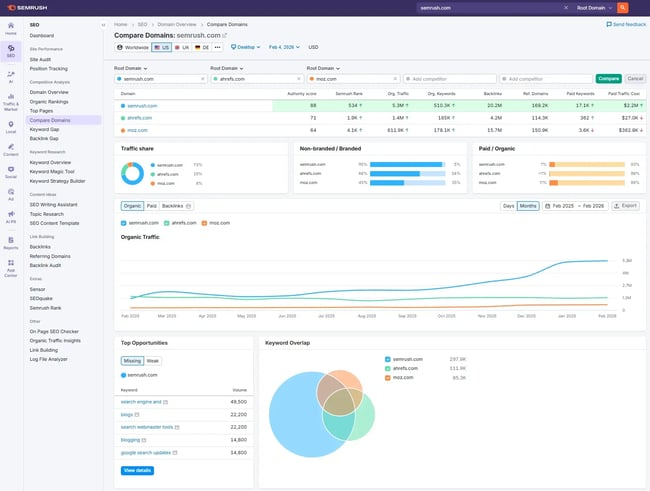
Moz, a long-standing player in the SEO software market, is often favored by smaller in-house teams and agencies seeking dependable tools for benchmarking competitors and identifying strategic opportunities. While not as expansive as Semrush or Ahrefs, Moz remains a reliable option for foundational SEO competitor analysis.
- Key Features: Domain Authority (DA) and Page Authority (PA) metrics, keyword explorer, site crawl for technical SEO audits, link explorer for backlink analysis, and on-page grader.
- Pricing: Moz offers a limited free tier. Paid plans, billed annually, start with the Standard plan at approximately $99 per month, Pro at $179 per month, and Premium at $299 per month.
- Expert Insight: Lydia Fox, Head of SEO at Serpify, highlights Moz’s user-friendliness and trusted metrics. "I use Moz daily. Their Chrome extension is invaluable for quick link analysis, distinguishing between internal, nofollow, and do-follow links. The link analysis and spam score evaluation are crucial for off-page collaboration assessments."
Social Media Competitor Analysis Tools
Monitoring competitors on social media extends beyond vanity metrics. It’s about understanding their presence, identifying content that resonates with their audience, and observing how their messaging evolves. Social media competitor analysis tools empower marketing teams to track competitor activities across platforms, enabling early trend detection, strategic content adaptation, and a sustained competitive edge.
4. HubSpot
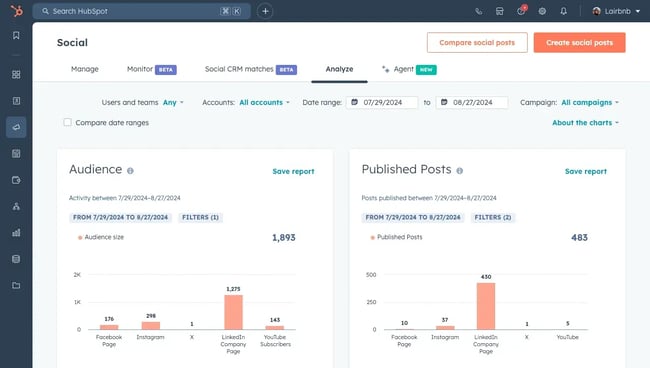
HubSpot’s social media tools are most effective for teams already integrated with its CRM and marketing platform. They offer comprehensive competitor insights that can be directly linked to broader marketing operations within Marketing Hub.
- Key Features: Social media scheduling and publishing, competitor monitoring, audience insights, post performance tracking, and seamless integration with HubSpot’s CRM and other marketing tools.
- Pricing: HubSpot’s social tools are part of Marketing Hub. Limited features are available in the free tier. Paid plans, billed annually, start with Starter at $20 per month, Professional at $800 per month, and Enterprise at $3,200 per month.
- Expert Insight: "The centralization of social competitor analysis within HubSpot’s Marketing Hub is a significant advantage," notes a marketing operations manager. "It simplifies connecting competitor actions to our own strategy. Furthermore, HubSpot’s integrated suite often replaces multiple standalone tools, offering substantial cost savings." Jenny Bernarde, Brand and Communications Manager at BrightLocal, praises HubSpot’s social scheduling tool for its clear layout, accurate previews, and AI generation features for content editing.
5. Sprout Social
Sprout Social is a comprehensive social media management platform that includes robust competitor analysis features. It offers advanced monitoring capabilities, such as sentiment analysis and audience intelligence, alongside essential scheduling tools. This platform helps social media marketers understand competitor posting strategies, audience engagement levels, and the effectiveness of various content approaches.
- Key Features: Social media scheduling, competitor reporting, audience analysis, sentiment analysis, listening tools for brand mentions, and analytics dashboards.
- Pricing: Sprout Social offers a 30-day free trial. Paid plans, billed annually, start with the Standard plan at approximately $249 per month, Professional at $149 per month per user, and Advanced at $249 per month per user.
- Expert Insight: "Sprout Social’s reporting is exceptionally polished and presentation-ready," shares a former agency project manager. "This is invaluable for quickly communicating competitor insights to stakeholders and clients."
6. Brand24
Brand24 specializes in real-time social listening and brand monitoring. It is particularly adept at tracking competitor mentions, analyzing brand sentiment, and identifying emerging conversations across social media, blogs, forums, and news outlets. Its focus on what is being said about brands and their competitors makes it an ideal tool for reputation management and competitive intelligence.
- Key Features: Real-time mention tracking, sentiment analysis, competitor monitoring, influence analysis, and customizable reporting.
- Pricing: Brand24 offers a 14-day free trial. Paid plans with annual billing start from the Premium plan at approximately $129 per month, with higher tiers like the Business plan at $249 per month and the Enterprise plan at $499 per month.
- Expert Insight: Jenny Bernarde also utilizes Brand24 for brand mention tracking. "Its AI Brand Assistant simplifies data analysis, helping to extract key campaign mentions and providing recommendations for future marketing steps."
PPC Competitor Analysis Tools
For paid media teams, understanding the competitive landscape is crucial for effective bidding, creative strategy, and budget allocation. The following tools are instrumental in providing the insights necessary to navigate the complexities of PPC advertising.
7. SpyFu
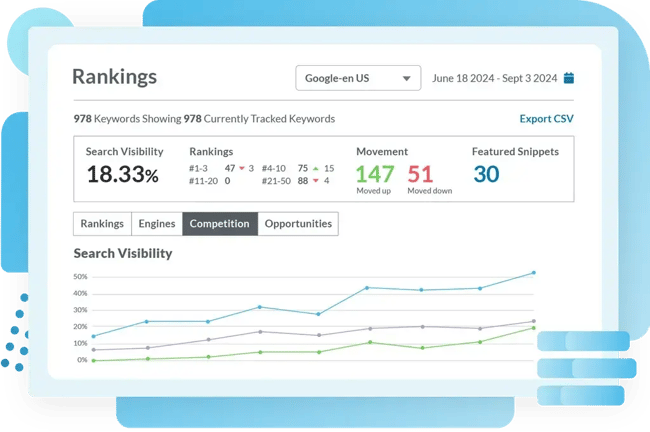
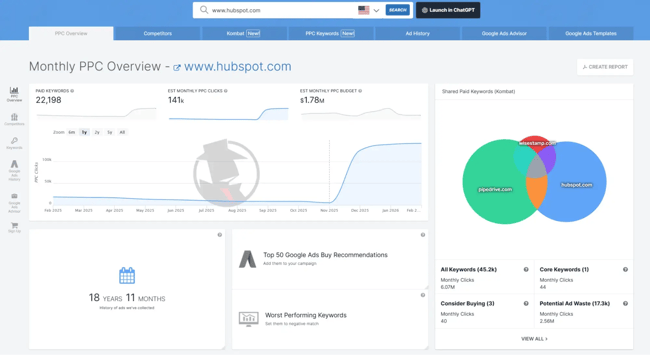
SpyFu is a specialized tool for paid search and competitive keyword research. It provides rapid answers to critical PPC questions: who is bidding on specific keywords, for how long, and which keywords and ads are demonstrating the most success. SpyFu is particularly well-suited for PPC competitor analysis, offering fast, actionable insights without overwhelming complexity.
- Key Features: Competitor keyword analysis, ad copy research, historical PPC data, SEO competitor analysis, and keyword grouping.
- Pricing: SpyFu offers limited free access. Annual plans start with the Basic plan at approximately $39 per month, Professional at $78 per month, and Team at $239 per month.
- Expert Insight: Leigh Buttrey, co-founder of the SEM agency forank, states, "SpyFu is a cost-effective and user-friendly tool for PPC marketers. It efficiently highlights competitor spending patterns, enabling prioritization of tests and early identification of opportunities."
8. Google Ads Auction Insights
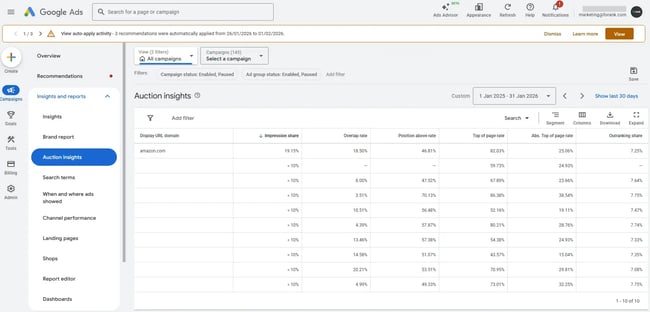
Google Ads Auction Insights is an integrated report within the Google Ads platform that provides a direct comparison of an advertiser’s ad performance against other participants in the same auctions. While it does not reveal specific keywords or ad copy, it offers invaluable first-party competitive context directly from Google. PPC experts leverage this tool to refine bidding strategies and budget allocations by identifying areas of strength and opportunities for improvement.
- Key Features: Competitor impression share, overlap rate, position above rate, and top-of-page rate.
- Pricing: Free.
- Expert Insight: Leigh Buttrey emphasizes, "Auction Insights is indispensable as it provides real-time competitive pressure data directly from Google. It helps assess whether performance shifts are due to bidding dynamics or campaign configuration."
Content and Influencer Analysis Tools
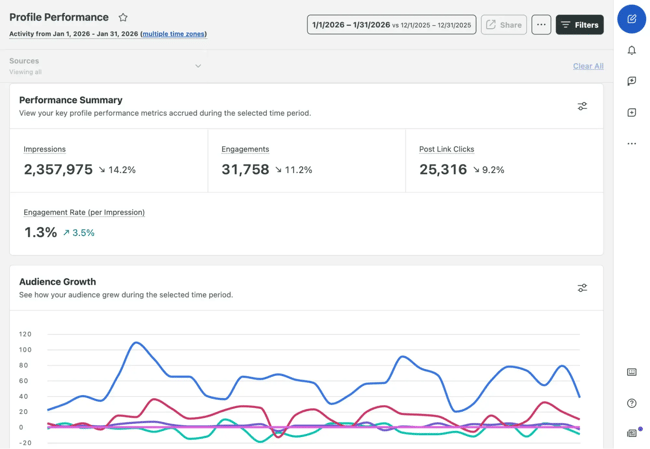
These tools help marketing teams understand what truly influences their target audiences, going beyond mere content publication by competitors. They reveal which topics, formats, and creators are driving engagement and building trust, allowing for the reverse-engineering of successful strategies and the avoidance of superficial metrics.
9. BuzzSumo
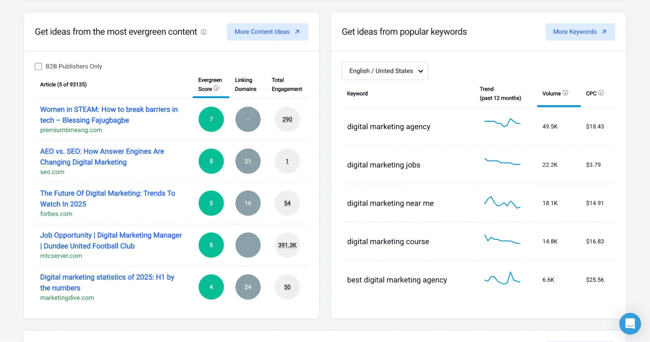
BuzzSumo is a content research and analysis platform that identifies top-performing competitor content across social channels, its amplification sources, and the reasons for its resonance. Marketing teams utilize BuzzSumo to deconstruct successful content strategies, pinpoint content gaps, and discover influencers and publishers who are amplifying competitor messages.
- Key Features: Content analysis by engagement, influencer identification, trend monitoring, keyword research, and content gap analysis.
- Pricing: BuzzSumo offers a 7-day free trial. Paid plans, billed annually, start with the Pro plan at approximately $129 per month, followed by Plus at $229 per month, Large at $499 per month, and Enterprise at $999 per month.
- Expert Insight: "BuzzSumo’s utility extends beyond social media, providing valuable input for overall content strategy and emerging industry messaging," notes a content marketing specialist.
10. HypeAuditor
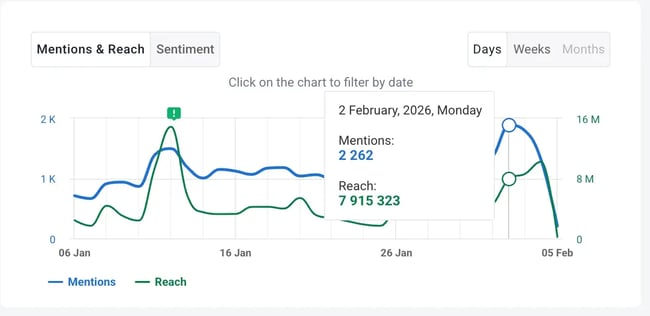
HypeAuditor is an AI-powered influencer analytics platform that scrutinizes audience quality, engagement authenticity, and detects fraud. Marketing teams use HypeAuditor to evaluate competitor influencer collaborations, assess the actual value derived from these partnerships, and develop more effective influencer strategies based on verified data.
- Key Features: Influencer discovery and vetting, audience authenticity analysis, fraud detection, campaign analysis, and market intelligence.
- Pricing: HypeAuditor offers a demo, but pricing is customized. Interested parties must book a demo to receive a quote.
Market Intelligence and Pricing Tools
These tools provide timely signals and trends that can influence messaging, positioning, pricing strategies, and go-to-market decisions, helping teams stay informed without being overwhelmed.
11. Owler
Owler is an accessible business intelligence platform that tracks competitor news, funding rounds, leadership changes, and company growth indicators in real-time. Marketing teams use Owler to stay abreast of competitor developments, such as acquisitions, product launches, and executive appointments, which can signal strategic shifts or changes in market positioning.
- Key Features: Real-time competitor news tracking, company profile analysis, funding and acquisition alerts, and competitor news aggregation.
- Pricing: Owler offers a limited free tier. Paid plans start with the Starter plan at approximately $150 per month, with higher tiers available upon request.
12. Morning Consult
Morning Consult provides enterprise brands and agencies with data-driven insights into brand perception and consumer sentiment at scale. This market intelligence platform uses real-time polling and survey data to track brand health, competitive positioning, and audience sentiment across various demographics and markets. It is instrumental for understanding how a brand is perceived by consumers, offering insights beyond traditional web analytics.
- Key Features: Consumer sentiment tracking, brand perception analysis, competitive benchmarking, market trend analysis, and custom survey capabilities.
- Pricing: Morning Consult’s pricing is customized based on specific research needs. Interested parties should book a demo to obtain pricing information.
Free Search and Web Tools
Free tools can offer significant power, especially when teams need data and validation before committing to paid solutions. The following tools provide depth and reliability that rival many paid platforms and can form the foundation of an effective competitive analysis workflow.
13. Google Search Console
Google Search Console (GSC) is an indispensable tool for SEO, providing direct insights into a website’s performance in Google Search. By analyzing impressions, queries, and pages, teams can review SERPs to identify competitors appearing alongside them and track where visibility is being gained or lost.
- Key Features: Performance reports (impressions, clicks, CTR, average position), URL inspection, sitemap submission, mobile usability reports, and core web vitals.
- Pricing: Free.
- Expert Insight: "GSC is the source of truth for organic search data," asserts a seasoned SEO professional. "Its Performance report reveals actual search queries, including long-tail and emerging terms often missed by paid tools. It’s a goldmine for understanding real user behavior."
14. HubSpot AI Search Grader

HubSpot’s AI Search Grader is a free tool designed for the modern search landscape, evaluating AI search visibility. It helps teams understand how their brand and competitors appear in AI-generated answers and LLM-powered search experiences. This tool allows for domain-to-domain comparison, making it highly practical for assessing AI and GEO presence.
- Key Features: AI search visibility assessment, competitor domain comparison, AEO (AI-Enabled Optimization) scoring.
- Pricing: Free.
- Expert Insight: "For a free AI search tool, the AI Search Grader is exceptionally useful," remarks a digital marketing analyst. "It quantifies AI search performance and facilitates productive discussions about GEO strategies."
Frequently Asked Questions About Competitor Analysis Tools
-
What is the simplest free stack to start with?
For an initial free stack, begin with Google Search Console for first-party search data, Google Ads Auction Insights for paid visibility signals, and HubSpot’s AI Search Grader for understanding AI and GEO presence. This combination provides a comprehensive view of current competitive positioning across search, paid, and AI channels without any financial outlay. -
How often should we run competitor analysis?
Competitor analysis should be an ongoing process. Advanced tools like Semrush and Ahrefs can continuously monitor competitors in the background. While deeper, manual analyses might be conducted quarterly, biannually, or annually, the overarching goal is to maintain awareness of significant market shifts rather than conducting constant audits.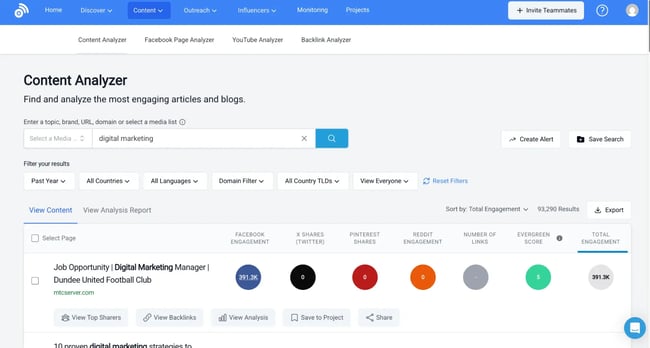
-
Is it legal to monitor ads, emails, and social posts from competitors?
Yes, it is legal to monitor publicly available information from competitors, including their advertisements, email marketing content, and social media posts. However, it is imperative to avoid accessing private systems and to ensure data accuracy and respect for privacy. -
How can we keep insights from getting siloed?
Centralizing all findings within a shared system, ideally a CRM, is crucial. This ensures that competitive intelligence is linked to campaigns, content, and revenue generation efforts. Regular reviews and AI-powered summaries can help maintain the actionability of competitive data. -
When should we move from spreadsheets to a competitive intelligence platform?
Transitioning from spreadsheets to dedicated competitive intelligence platforms should occur as soon as competitor tracking becomes a significant, multi-channel, or cross-team activity. Spreadsheets can impede decision-making and increase the risk of data errors as complexity grows.
Turning Insight From Competitor Analysis Tools Into Competitive Advantage
The true value of competitor analysis tools lies in their ability to translate data collection into actionable strategy. The most effective platforms not only gather data but also facilitate the comparison of competitors across SEO, social media, PPC, and market intelligence, enabling informed decision-making. The most successful competitive analysis strategies often combine specialized, best-in-class tools with a central system, such as HubSpot CRM, for shared insights, tracking, and long-term action.
Drawing from extensive practical experience with many of these tools in real-world SEO and marketing workflows, it is evident that substantial progress can be made without initial financial investment. Tools like Google Search Console, Google Ads Auction Insights, and HubSpot’s AI Search Grader offer immense power, particularly for teams operating with budget constraints or just beginning their competitive research journey.
The recommended approach is to commence with free tools, followed by trials of paid platforms to determine which best align with specific business objectives, team workflows, and operational needs. Ultimately, the most effective competitor analysis stack is the one that the team consistently utilizes and adapts as market dynamics evolve.
About the Author