The pursuit of digital visibility for large organizations has transcended simple keyword position checks. Today’s premier enterprise rank-tracking software operates at a colossal scale, meticulously monitoring millions of data points across diverse devices, geographical locations, and evolving search features. This encompasses the critical inclusion of AI Overviews, featured snippets, and local packs, transforming raw data into actionable intelligence that fuels dashboards, CRM workflows, and executive reports designed to drive strategic decisions across vast organizational structures. This comprehensive guide delves into the distinguishing characteristics of enterprise-grade tools, offers a framework for evaluating their suitability for high-traffic websites, and highlights platforms that merit consideration for any enterprise shortlist.
Understanding Enterprise-Grade Rank Tracking
At its core, enterprise rank-tracking software is a sophisticated platform engineered to monitor keyword positions at an extensive scale. For enterprises, this necessity frequently extends across multiple:
- Geographic Markets: Tracking rankings in specific cities, regions, or even custom coordinates to reflect localized search behavior.
- Device Types: Differentiating between desktop and mobile search results, as rankings can vary significantly.
- Search Engines: Monitoring performance not only on Google but also on other relevant search engines, depending on the business’s target audience.
- Languages: Adapting tracking to linguistic nuances and regional search patterns.
- User Segments: Understanding how rankings might differ for distinct customer personas or buyer stages.
Once this data is meticulously recorded, its true value is unlocked when it becomes actionable for large, cross-functional teams. Unlike basic rank trackers designed for smaller websites monitoring a few hundred keywords daily, enterprise-grade solutions are built for complexity. They handle high data volumes, granular location targeting, near real-time refresh rates, and crucial integrations that feed ranking data into the broader systems an organization already relies upon.
Crucially, enterprise keyword ranking data must seamlessly integrate into the wider data ecosystem. In isolation, ranking data provides valuable visibility metrics. However, when paired with Business Intelligence (BI) tools, rank tracking begins to illuminate opportunities and potential risks. Integrated with web analytics, it helps determine if increased visibility is translating into tangible traffic. When connected to a Customer Relationship Management (CRM) system, it can draw a direct correlation between a keyword’s ascent from position eight to position two and a measurable increase in sales pipeline.
Evaluating Enterprise Rank Tracking Solutions
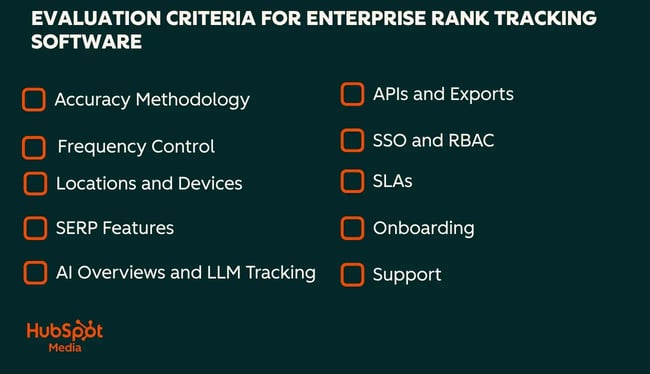
Selecting the optimal platform begins with a deep understanding of a business’s unique needs. This necessitates open communication with all relevant teams to address their specific requirements and existing workflows. Enterprise teams demand tools that integrate seamlessly to facilitate widespread adoption. Several key factors should guide this evaluation process.
Accuracy Methodology: The Foundation of Trust
Inquire about the specific methods vendors employ to collect ranking data. Do they utilize dedicated datacenter IPs, residential proxies, or a hybrid approach? How do they account for personalization and localization to ensure the results accurately reflect what real users experience? Request detailed methodology documentation, moving beyond mere marketing claims to understand the underlying technical processes. This diligence is paramount for ensuring the reliability of the data that informs critical business decisions.
Frequency Control: Timeliness for Dynamic Markets
Determine whether users can customize crawl schedules for specific keyword groups, campaigns, or markets. While daily tracking is standard, high-stakes periods such as product launches, major sales events, or significant news cycles may necessitate hourly or even on-demand refresh capabilities to capture immediate shifts in search engine results pages (SERPs). The ability to adapt tracking frequency to market volatility is a critical differentiator for enterprise agility.
Locations and Devices: Granularity for Global Reach
Enterprise-level rank-tracking software must support multi-location and multi-device keyword tracking with a high degree of granularity. Confirm the ability to track rankings at the city, zip code, or even coordinate level if the business operates within specific local or regional markets. Independent tracking of both desktop and mobile rankings is essential, as positions frequently diverge between these platforms. This granular approach allows for precise performance analysis and targeted optimization strategies.
SERP Features: Beyond the Ten Blue Links
The traditional "ten blue links" are no longer the sole determinant of search visibility. A robust platform must track a comprehensive array of SERP features, including featured snippets, local packs, "People Also Ask" boxes, image carousels, video results, and shopping units. Confirm which features are tracked and whether the system triggers alerts for significant improvements or declines in keyword positions within these influential elements. Understanding dominance across the entire SERP is crucial for a holistic SEO strategy.

AI Overviews and LLM Tracking: The Future of Search
The ability to monitor AI Overviews is rapidly becoming a non-negotiable capability. Evaluate whether the platform tracks AI Overview appearances, identifies the URLs cited within them, and captures prompt-level data for generative search environments. Effective AI Overview tracking requires robust prompt libraries and historical snapshots to provide meaningful long-term insights. Verifying that the platform supports both is essential for staying ahead in the evolving search landscape.
APIs and Exports: Data Liberation
Enterprise teams often operate beyond the confines of a single platform’s native user interface. Confirm that the platform offers a well-documented API with sufficient rate limits for the organization’s data volume. Additionally, assess flexible export options, such as CSV and JSON, or direct connectors to data warehouses and business intelligence and reporting tools. Seamless data flow is critical for comprehensive analysis and reporting.
SSO and RBAC: Security and Governance Essentials
Enterprise rank tracking software must provide Single Sign-On (SSO), Role-Based Access Control (RBAC), Service Level Agreements (SLAs), and audit logs for robust governance. SSO integration with an organization’s identity provider and RBAC are fundamental security requirements in enterprise environments. Confirm that permissions can be granularly scoped at the team, market, or campaign level, ensuring that only authorized personnel access relevant data.
SLAs: Ensuring Reliability and Uptime
Thoroughly review the vendor’s Service Level Agreement (SLA). Understand the guaranteed uptime, the protocols for data handling in case of crawl failures, and contractual commitments to data freshness. Clarity on remedies for missed SLAs is also vital for risk management.
Onboarding: A Smooth Transition to Full Adoption
Large keyword sets, complex site architectures, and multi-market configurations require meticulous setup. Evaluate whether the vendor provides a dedicated onboarding team, structured implementation support, and a realistic timeline for achieving full production use. Ensure the onboarding process adequately supports all critical integrations.
Support: Ongoing Partnership and Problem Resolution
The quality of day-to-day support is paramount at scale. Look for a named account manager or customer success contact, clearly defined response time commitments, and access to technical support for API and integration issues, rather than relying solely on a generic help desk.
Leading Enterprise Rank Tracking Software Solutions
The platforms detailed below have been selected for their demonstrated ability to meet demanding enterprise-level requirements, including the depth of reporting necessary for large organizations.
HubSpot’s SEO Marketing Software
HubSpot’s SEO Marketing Software, integrated within Marketing Hub, offers enterprise teams a centralized solution for managing and enhancing organic search performance without operating in isolation. This integrated approach allows teams to plan their SEO strategy and optimize content within the same marketing platform used for all other initiatives.
The software provides keyword recommendations prioritized by impact, enabling enterprise teams with extensive content libraries to focus on optimizations that yield the most significant results. Its content strategy tool simplifies topic discovery and ranking, offering suggestions based on relevance, competition, and popularity.
A key advantage for enterprise teams lies in the seamless integration. Keyword data, content performance, and lead attribution are unified within the same environment as the CRM, campaign tools, and analytics, eliminating the need for manual data bridging between disparate SEO workflows. The software also integrates with Google Search Console and HubSpot’s CMS tools to amplify inbound marketing efforts. Furthermore, capabilities within HubSpot’s SEO Software extend to Answer Engine Optimization (AEO), assisting teams in structuring content for AI-driven search results and featured snippets—an increasingly vital layer of visibility for enterprise brands.
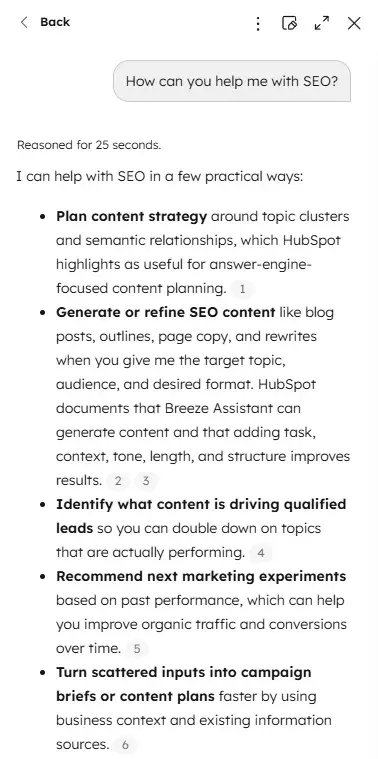
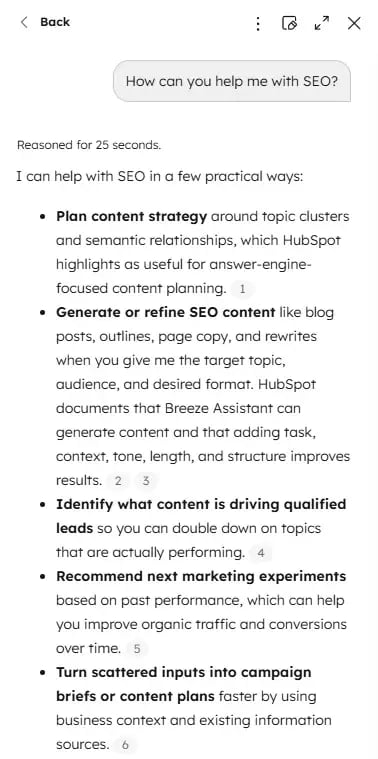
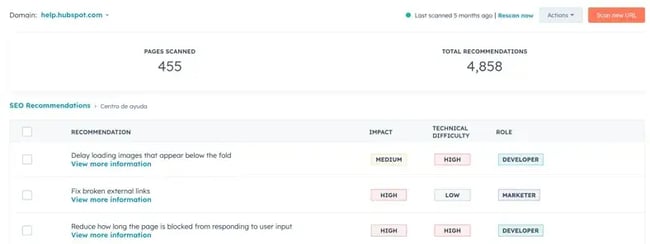
The Breeze Assistant, an AI-powered tool within HubSpot, provides continuous support for marketing teams, offering guidance on SEO strategies and content optimization, empowering junior team members and enhancing overall efficiency. The SEO Recommendations tool within HubSpot’s SEO Marketing Software allows for comprehensive analysis of live pages, including those hosted outside of HubSpot, a critical feature for organizations managing content across multiple domains. Recommendations are prioritized, helping teams focus on high-impact improvements, a crucial capability when managing thousands of URLs. Content readability metrics, meta tag suggestions, internal linking opportunities, and content length recommendations further enhance content quality at scale.
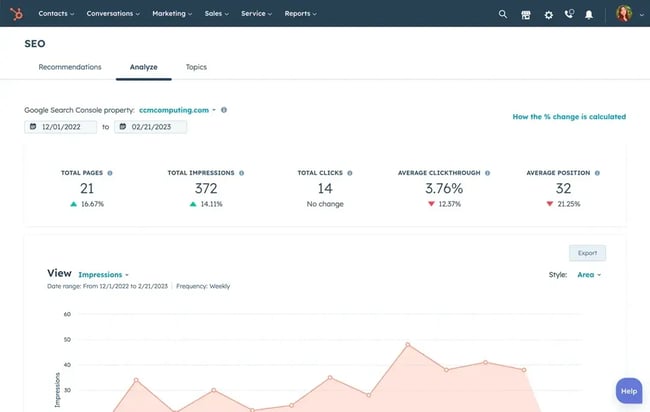
HubSpot’s SEO Analyze tab tracks core search performance metrics directly from Google Search Console, providing insights into indexed pages, impressions, clicks, clickthrough rates, and average search positions. Marketers can customize date ranges, switch between metrics, and drill down into individual page performance. The platform also surfaces search queries that drive traffic to blog posts and pages, offering valuable insights for refining topic and keyword strategies based on actual search behavior.
The inherent value of HubSpot’s SEO Marketing Software for enterprise teams is deeply intertwined with the broader HubSpot ecosystem. As part of HubSpot’s unified customer platform, which encompasses marketing, sales, service, and operations, SEO data is not siloed. This integration addresses a common enterprise pain point: data fragmentation. By unifying rank data, traffic data, lead data, and revenue data, HubSpot significantly reduces the manual effort required to construct a coherent picture of SEO’s business impact. For enterprises evaluating their CRM system’s capacity for growth, the unified platform offers a compelling solution.
From a security and governance perspective, HubSpot’s enterprise edition includes SSO, advanced user permissions, and role-based access controls, ensuring that data and tools are accessible only to relevant teams, thereby safeguarding sensitive campaign and contact information. These controls are a prerequisite for large organizations with stringent data governance requirements. HubSpot’s extensive integration network, available through its ecosystem marketplace, connects natively with a wide array of third-party tools, allowing SEO data generated within Marketing Hub to flow into existing reporting infrastructures.
HubSpot’s Content Hub
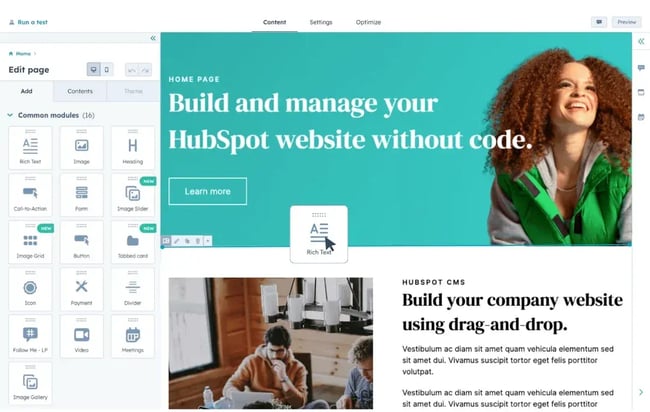
HubSpot’s Content Hub is a Content Management System (CMS) designed for teams that need to publish content at scale while maintaining SEO discipline and structural consistency. It embeds SEO guidance directly into the authoring workflow, surfacing recommendations for internal linking and page structure as content is created, rather than after publication. This embedded approach is invaluable for enterprise teams managing large content libraries across multiple contributors, reducing the gap between content production and SEO requirements.
Content Hub’s schema capabilities are particularly relevant for enterprise teams looking beyond traditional search. It supports coded templates using HTML and HubL, alongside structured content via HubDB and custom modules. This allows teams to centralize schema patterns and metadata logic, avoiding the need for manual coding on each page. Teams can implement structured data at the template level for consistent schema types across all content or utilize custom modules for selectable schema types (e.g., Article, Event, JobPosting) by content editors during the publishing process. This systematizes schema implementation, moving it away from manual management by individual contributors.
The "Content Remix" tool transforms a single piece of content into various formats, including social posts, emails, and landing pages, while "Brand Voice" ensures a consistent tone across all AI-generated content. This platform-level enforcement of consistency mitigates brand and messaging drift at scale. The AI Content Writer supports content creation workflows directly within the CMS, enabling writers to draft, refine, and optimize content within the same environment where SEO recommendations, schema configurations, and performance data reside.
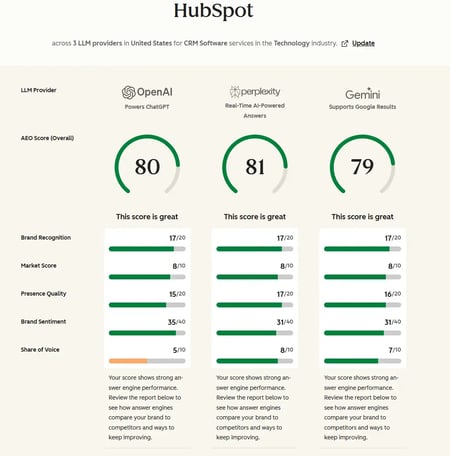
HubSpot AEO Grader
As search behavior increasingly shifts towards AI-generated answers, enterprise teams require methods to measure brand presence in these responses, not just traditional SERP rankings. The HubSpot AEO Grader is a free tool designed for this purpose, offering an accessible entry point into Answer Engine Optimization (AEO) measurement.
The AEO Grader evaluates how a brand appears across AI systems shaping customer perception, including ChatGPT, Perplexity, and Gemini. It scores performance across five dimensions:
- Brand Mentions: Frequency and context of brand mentions.
- Sentiment Analysis: The overall tone and perception of the brand.
- Key Entity Recognition: Identification of core brand attributes and offerings.
- Factual Accuracy: The correctness of information presented about the brand.
- Content Authority: The perceived expertise and reliability of the information.
A brand might rank well in traditional search yet be poorly represented or entirely absent in AI-generated responses, which increasingly influence purchase decisions before a prospect visits a website. The tool’s competitive intelligence capability is a significant asset for enterprise benchmarking. By accepting any brand name, the AEO Grader enables direct competitive intelligence analysis. Teams can understand how AI platforms characterize competitors, their market positions, sentiment patterns, and recognition depth, using this as a benchmark for their own scores. This allows enterprise teams to analyze key competitors and identify areas of advantage or disadvantage in AI-driven search.
The output includes narrative analysis of recurring themes in AI descriptions of the brand, a composite score, a detailed breakdown, and an interpretation of what the scores signify. This structured output provides actionable insights. Acknowledging its nature as a free tool, the primary limitation is the absence of continuous or automated monitoring. Progress tracking requires manual execution and recording of results over time. For enterprise teams, running the grader at regular intervals (e.g., quarterly) and logging scores by date and competitor provides a practical approach to tracking progress until more automated capabilities are available.
Semrush One
Semrush One consolidates a comprehensive suite of SEO tools under a single subscription, including an AI Visibility Toolkit. This integration brings together traditional enterprise rank tracking functionalities—such as keyword research, position tracking, technical site audits, and on-page optimization—with GEO and prompt tracking in a unified environment.
Semrush One pairs its core SEO Toolkit with the AI Visibility Toolkit to help brands maintain visibility across both traditional search and AI platforms like ChatGPT and Perplexity. Competitive intelligence is a core strength, with tools designed to track competitor rankings, share of voice, and overall domain health at scale.
Key Features:
- Position Tracking: Comprehensive monitoring of keyword rankings across diverse locations and devices.
- AI Visibility Toolkit: Tools for tracking performance in generative AI search environments.
- Competitive Analysis: In-depth insights into competitor strategies and performance.
- Technical SEO Audits: Identification and resolution of website technical issues impacting search performance.
- Content Optimization: Tools to enhance content for search engines and users.
Pricing: Semrush One starts at $165.17/month, billed annually.
What is noteworthy: Semrush has solidified its reputation in the SEO industry through consistent investment in data quality, keyword coverage, and competitive intelligence tooling. This mature data infrastructure has enabled a credible expansion into GEO and prompt tracking. The AI visibility tracking within the same dashboard significantly streamlines monitoring of both traditional and emerging search surfaces, reducing the need to switch between different tools.
Profound
Profound is an enterprise-grade AI visibility platform specifically designed for teams that need to understand and optimize their brand’s presence across generative AI engines. Unlike platforms that have added AI tracking as an afterthought, Profound was built from the ground up to manage narrative shaping across the entire AI ecosystem, going beyond mere citation tracking. It monitors:
- AI Overview Citations: Tracking how often and in what context the brand is cited in AI-generated answers.
- AI Answer Engine Performance: Evaluating visibility across major AI platforms.
- Prompt Performance: Analyzing how specific prompts influence brand visibility and sentiment.
- Content Optimization for AI: Providing recommendations to enhance content for AI-driven search.
Key Features:
- Cross-Engine AI Tracking: Monitors performance across multiple AI answer engines.
- AI Narrative Analysis: Provides insights into how AI systems describe the brand.
- Competitive AI Benchmarking: Allows for comparison of AI visibility against competitors.
- Prompt Library Management: Tools for organizing and analyzing prompt performance.
- Content Intelligence: Recommendations for optimizing content for AI.
Pricing: Profound offers tiered plans starting at $99 per month for the Starter plan (ChatGPT tracking, 50 prompts). The Growth plan is $399 per month, extending coverage to three answer engines with 100 prompts and content optimization support. Enterprise pricing is custom and includes coverage across ten engines, multiple companies, dedicated support, and SSO.

Choosing the Right Enterprise Rank Tracking Software
Selecting an enterprise rank tracking platform is a significant decision. At scale, the wrong choice can hinder SEO teams, create data silos, lead to reporting gaps, and result in adoption challenges that are difficult and costly to rectify. The following criteria are paramount when choosing these tools in a real-world enterprise environment:
1. Integration Fit Over Feature Count
While an extensive feature list may seem impressive during a demonstration, a tool with fewer features that integrates seamlessly with the existing technology stack will ultimately outperform a more capable platform that operates in isolation or offers unnecessary complexity. For enterprise teams, rank data only becomes truly valuable when it flows into the systems where decisions are made—be it a BI platform, a data warehouse, a CRM, or an executive dashboard. A tool requiring manual data exports to bridge these gaps will eventually be deprioritized, irrespective of its ranking accuracy. Enterprise rank tracking software must integrate with BI, CRM, and data warehouse systems; this should be a non-negotiable requirement from the outset. Vendors should provide detailed documentation on their API, webhook support, and native connectors before contract finalization. Investing in a tool that aligns with the existing ecosystem maximizes its utility and return on investment.
2. Early Stakeholder Involvement
A common and costly mistake in software selection is conducting the process without input from all affected stakeholders. While the SEO team may champion a particular solution, it must be vetted by IT, legal, finance, sales, and any other department that will be impacted. Delays can occur if security reviews, for instance, are initiated too late in the process. Engaging these stakeholders at the shortlisting stage, rather than at the contract negotiation phase, helps maintain the timeline and prevents the frustration of a preferred tool being blocked at the final hurdle.
3. Scalable Pricing and Tiered Packages
Enterprise rank tracking pricing models vary considerably, and the advertised headline cost rarely reflects the actual expenditure at scale. Some platforms charge per keyword, others per user, or per domain/location, and the cost implications of each model shift dramatically as the program expands. A platform that appears affordable for 10,000 keywords and two markets can become prohibitively expensive for 500,000 keywords across 15 markets. Furthermore, investigate what features are restricted to higher tiers. API access, historical data, and advanced user permissions are often reserved for enterprise plans with significant price increases. It is advisable to map anticipated growth over a two to three-year horizon against each vendor’s pricing model, identifying the tier that realistically aligns with current and future business requirements and understanding the triggers for upgrades.
Tracking Competitor Rankings at Enterprise Scale
At the enterprise level, competitor rank tracking extends beyond merely observing if a rival outranks your brand for a select few keywords. It encompasses share of voice analysis, pixel position assessment, feature ownership, and brand variant tracking across affiliates and reseller sites.
Share of Voice Tracking
Share of voice measures the frequency with which a domain appears in search results relative to competitors across a defined keyword set. At enterprise scale, this translates to tracking share of voice across topic clusters, segmented by product line, market, or buyer stage. Establishing competitive keyword groups that mirror commercial priorities and monitoring share of voice trends over time, rather than relying on point-in-time snapshots, provides a more profound understanding of market dynamics. Twelve months of data, for instance, can reveal who is gaining ground and why, offering strategic insights beyond short-term wins.
Pixel Position Analysis
Ranking in the first position does not guarantee top-of-page visibility. Paid advertisements, AI Overviews, local packs, and shopping units can push organic results significantly down the page. Pixel position tracking measures the vertical distance from the top of the page to the first organic result, offering a more accurate representation of true visibility than rank position alone. For high-value commercial keywords, tracking pixel position alongside rank position provides a clearer picture of the SERP real estate captured by a brand compared to its competitors.
SERP Feature Ownership
SERP features—including "People Also Ask" boxes, image packs, video carousels, and local packs—represent substantial visibility opportunities not captured by traditional rank position. Tracking feature ownership over time helps identify when competitors gain or lose featured snippets, signaling an opportunity to review and update content targeting those positions.
Brand Variant and Affiliate Tracking
Large enterprises often manage multiple brand variants, sub-brands, regional domains, and affiliate or reseller partners that appear in search results for branded and near-branded queries. Tracking these variants as part of competitive monitoring provides a comprehensive view of how the entire brand family appears in search. This is crucial for identifying instances where affiliates or resellers might be cannibalizing organic traffic or appearing for brand terms at positions that directly compete with the enterprise’s own properties.
Tracking Across Affiliates and Partners
When third parties are authorized to appear for specific queries, a separate tracking segment should be established to monitor their positions alongside the enterprise’s own. This is particularly important for enterprises in retail, financial services, and technology, where affiliate activity can be substantial. Understanding whether a partner site ranks above the enterprise domain for a high-intent commercial query provides actionable intelligence, informing both SEO strategy and partner management discussions.
Automation and Alerting
Manual competitor monitoring at an enterprise scale is unsustainable. Implementing automated alerts for significant position changes—both gains and losses—across the competitor set is essential. Setting thresholds to distinguish meaningful shifts from normal ranking fluctuations is key. Integrating competitive rank data into regular reporting cadences ensures that changes are visible to the teams responsible for content, product, and go-to-market decisions, not just the SEO team.
Frequently Asked Questions About Enterprise Rank Tracking Software
How do we validate rank accuracy across thousands of locations?
Validation requires a multi-faceted approach, combining sampling with rigorous validation layers. This involves defining representative keyword-location cohorts, conducting scheduled spot checks, and comparing results against established control datasets. Maintaining detailed audit logs is crucial for tracking discrepancies and ensuring consistency over time.
How should we track AI Overviews when prompts change frequently?
To effectively track AI Overviews amidst fluctuating prompts, establish structured prompt libraries aligned with key topics and product lines. Capture regular snapshots, meticulously log cited sources, and review performance on a defined cadence (e.g., weekly or monthly) to identify trends despite prompt variability.
What is the best way to migrate from a legacy rank tracker?
A phased migration is recommended. Run both the legacy and the new platform in parallel during a transition period, validating data consistency and mapping key metrics and integrations upfront. Prioritize establishing API connections and robust reporting workflows before fully decommissioning the legacy system.
When should you track hourly versus daily rankings?
Hourly tracking is most beneficial during periods of high volatility, such as product launches, sales events, or significant news cycles. For steady-state performance monitoring, daily tracking is typically sufficient and more cost-efficient.
Rank Tracking Software is a Non-Negotiable for Enterprise Businesses
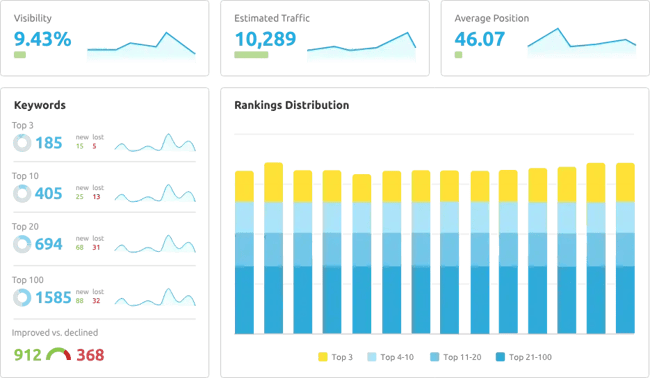
Enterprise rank tracking transcends mere monitoring of rankings; it is fundamentally about understanding and commanding a comprehensive search presence across traditional rankings, SERP features, and AI-generated results. The ideal enterprise tracking platform must not only deliver accurate, scalable data but also integrate seamlessly with the broader technology stack. This integration ensures that visibility translates directly into actionable insights, strategic decisions, and ultimately, revenue generation. Whether through unified SEO and CRM workflows facilitated by HubSpot, AI visibility benchmarking with the HubSpot AEO Grader, or scalable content operations via HubSpot Content Hub, the chosen tools must reflect the realities of modern search behavior.
About the Author