The realm of Search Engine Optimization (SEO) has undergone a swift and profound transformation, driven by the rapid maturation of Artificial Intelligence (AI) tools. What began as an ancillary feature, enhancing existing keyword research platforms, has now blossomed into a distinct and indispensable category. These AI-powered solutions are fundamentally reshaping every facet of the SEO workflow, from the initial stages of meticulous research to the increasingly critical domain of AI search visibility. Growth teams across industries are now faced with a wealth of options, enabling them to strategically integrate AI for maximum impact. Data indicates a significant adoption rate, with over 90% of marketing teams already leveraging AI in their daily operations. However, the mere presence of AI within a marketing stack does not guarantee efficacy; the true value lies in deploying the right AI tools for the specific needs of the organization. This comprehensive guide delves into the specialized functions of AI SEO tools, offers a framework for evaluating their suitability within an existing growth stack, and provides actionable strategies for automating SEO processes without compromising the quality and integrity of content.
Understanding the Value Proposition of AI SEO Tools
AI SEO tools are sophisticated software platforms that harness the power of machine learning and advanced language models to automate, accelerate, and augment specific tasks within the SEO lifecycle. Their primary function is to enhance human judgment at scale by significantly reducing the time and effort required for complex, repetitive, or data-intensive operations. The core functionalities for which these tools are designed encompass a broad spectrum of SEO activities, including:
- Keyword Research and Clustering: Identifying relevant search terms and grouping them into logical topic clusters to inform content strategy.
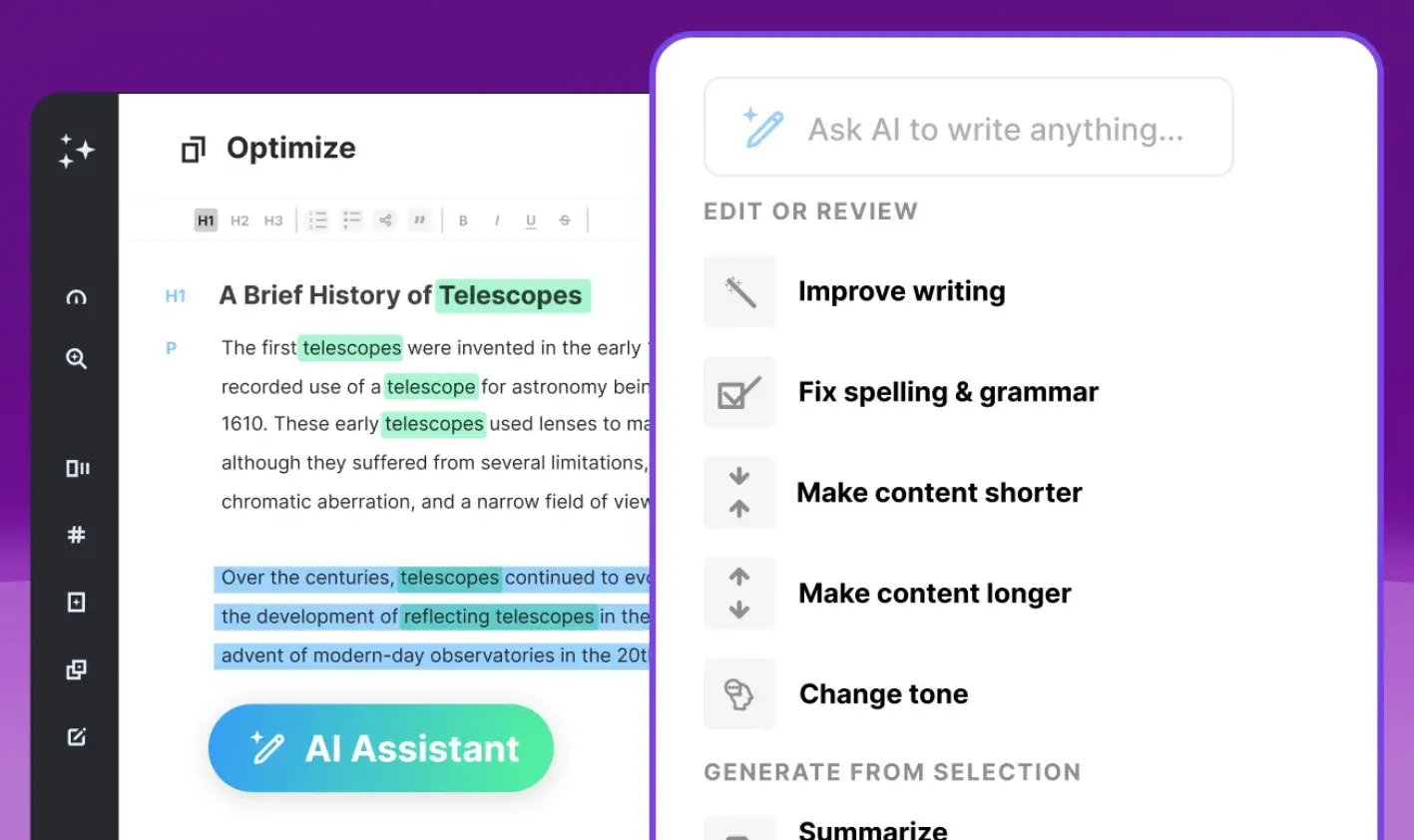
- Content Creation and Optimization: Assisting in drafting content, suggesting improvements for on-page elements, and ensuring alignment with search intent.
- Technical Auditing: Analyzing website structure, performance, and code for issues that could hinder search engine crawling and indexing.
- Internal Linking Strategy: Discovering and recommending optimal internal linking opportunities to improve site navigation and authority distribution.
- AI Search Visibility (AEO): Optimizing content to appear in AI-generated answers and summaries, a rapidly growing area of search.
The return on investment (ROI) derived from AI automation varies across these functions. Tasks such as keyword research, technical auditing, and on-page optimization often yield the highest ROI due to their inherently repetitive, high-volume, and rule-governed nature. Conversely, creative endeavors like content drafting and high-level strategy development still necessitate a significant degree of human intuition and nuanced judgment to achieve optimal results.

Strategic Selection: Integrating AI SEO Tools into Your Growth Stack
The selection of appropriate AI SEO tools hinges on a careful alignment of their capabilities with an organization’s specific objectives and operational context. A methodical approach to evaluation is crucial for maximizing their effectiveness:
1. Define Your Objectives with Precision
A team focused on building topical authority will require a different set of tools than one aiming to enhance crawl efficiency or dramatically scale blog output. Before embarking on a tool comparison, it is imperative to clearly articulate the most urgent SEO task or challenge that needs to be addressed. This clarity of purpose will guide the selection process and ensure that the chosen tools directly contribute to desired outcomes.
2. Assess Team Technical Proficiency
The technical demands of AI SEO tools can vary considerably. Some are engineered for SEO specialists, offering deep technical insights that require a robust understanding of data interpretation, such as Screaming Frog. Others, like HubSpot’s integrated SEO tools, are designed for broader marketing teams, providing actionable recommendations without demanding an advanced technical SEO background. Understanding your team’s existing skill set is vital to avoid implementing tools that create a barrier to adoption.
3. Consider Content Volume and Production Cadence
The optimal level of AI automation is directly correlated with content production volume. For teams publishing a limited number of pieces monthly, an extensive AI automation stack might introduce more overhead than value. Conversely, organizations producing 50 or more pieces per month can experience substantial compounding benefits from automation in areas like briefing, clustering, and on-page optimization.

4. Evaluate CMS and CRM Integration Capabilities
Seamless integration between AI SEO tools, the Content Management System (CMS), and the Customer Relationship Management (CRM) system is paramount for data coherence and operational efficiency. Tools that plug directly into the CMS enable recommendations to be implemented in context, rather than requiring a separate dashboard for data interpretation and action. Similarly, CRM integration allows for the direct correlation of SEO performance with sales pipeline and revenue, moving beyond mere traffic metrics. HubSpot’s SEO tools, for instance, are embedded within Marketing Hub, ensuring that topic suggestions, optimization recommendations, and performance analytics reside within the same ecosystem as content, contacts, and conversion data. This frictionless integration streamlines workflows and empowers growth teams to demonstrably link SEO efforts to tangible business outcomes.
5. Prioritize Governance and Quality Control
While AI can significantly accelerate content production, the need for human oversight remains critical, particularly for brands where accuracy, tone, and regulatory compliance are non-negotiable. It is essential to select tools that facilitate a robust review process, rather than assuming that automation equates to direct publication. Establishing clear editorial guidelines and quality checks ensures that AI-generated content aligns with brand standards and strategic objectives.
6. Scrutinize Reporting and Attribution Mechanisms
The ability to track vanity metrics is readily available. However, the true value lies in understanding whether SEO efforts are effectively driving qualified traffic, generating sales pipeline, and ultimately contributing to revenue. Prioritizing tools that offer comprehensive reporting capabilities, connecting organic performance to key business outcomes, is essential for demonstrating ROI and refining strategies.
Pro Tip: Before diving deep into tool evaluation, ensure a strong foundational understanding of SEO principles. Resources like the HubSpot Complete SEO Starter Pack, which includes templates for on-page optimization, search intent research, and an ebook on common SEO myths, can help establish a reliable baseline for SEO efforts.
Categorizing AI SEO Tools by Job-to-Be-Done
No single AI SEO tool can excel at every task. The most effective strategy involves assembling a stack where each tool is selected for its proficiency in specific workflow stages.
Research and Clustering: Unearthing Opportunities
Traditional keyword research, once a laborious spreadsheet-driven process, has been revolutionized by AI. Modern tools can now identify related terms, group them into topic clusters, and prioritize opportunities based on difficulty and search intent within minutes.
-
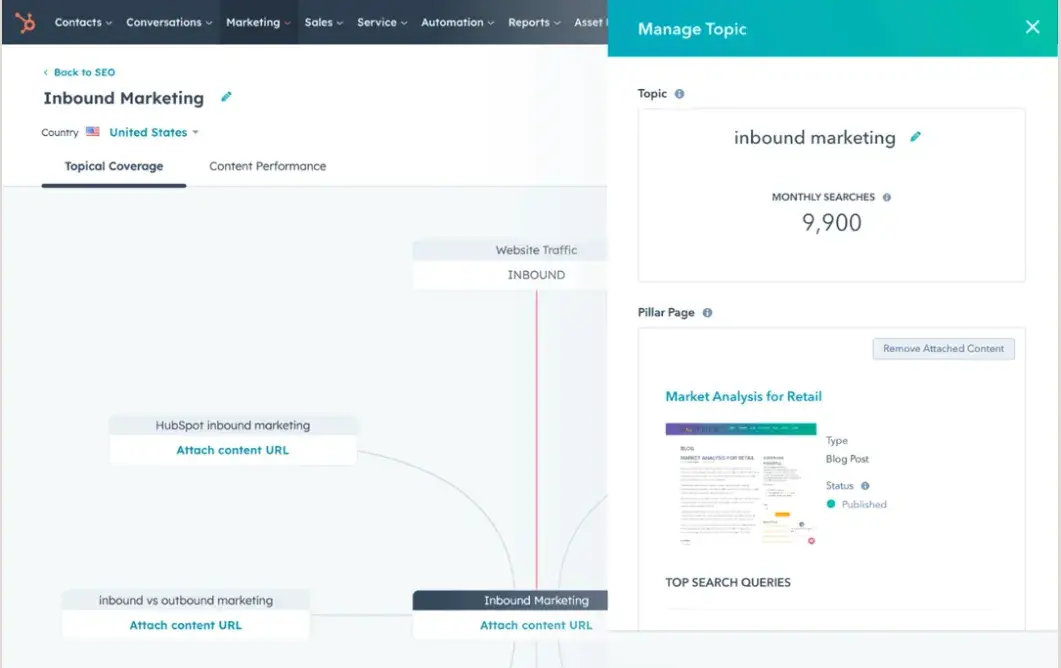
HubSpot SEO Tools: Integrated within HubSpot Marketing Software, these tools offer a seamless transition from research to content creation and publishing. The topic cluster feature aids in identifying pillar topics, mapping supporting content, and visualizing page relationships, facilitating cohesive internal linking and content planning within a unified system. Key features include topic cluster suggestions, keyword recommendations, on-page optimization guidance, and integrated performance analytics. Its native CMS integration allows for immediate action on keyword insights, and CRM connectivity enables performance to be directly tied to revenue. It is particularly well-suited for growth teams already utilizing HubSpot CMS or HubSpot Smart CRM.
-
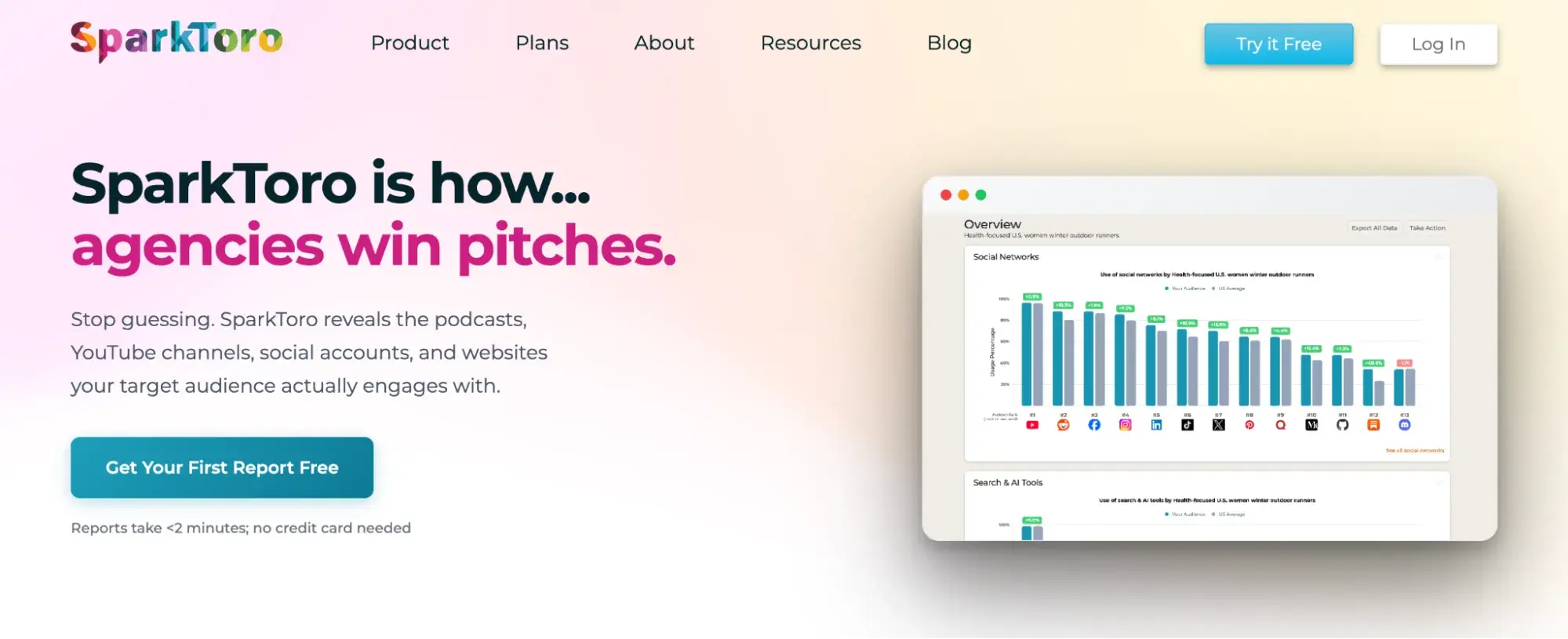
SparkToro: This audience intelligence platform goes beyond traditional keyword research to uncover where a target audience congregates online. Instead of starting with keywords, Sparktoro begins with the audience, revealing the podcasts they listen to, websites they frequent, YouTube channels they watch, social media accounts they follow, and topics they search for. Its key features include audience segmentation, source discovery, and competitive audience analysis. SparkToro is invaluable for content strategists, digital PR teams, and demand generation marketers seeking to ground their distribution strategies in robust audience data. Pricing starts at $38 per month, with a free plan available.
-
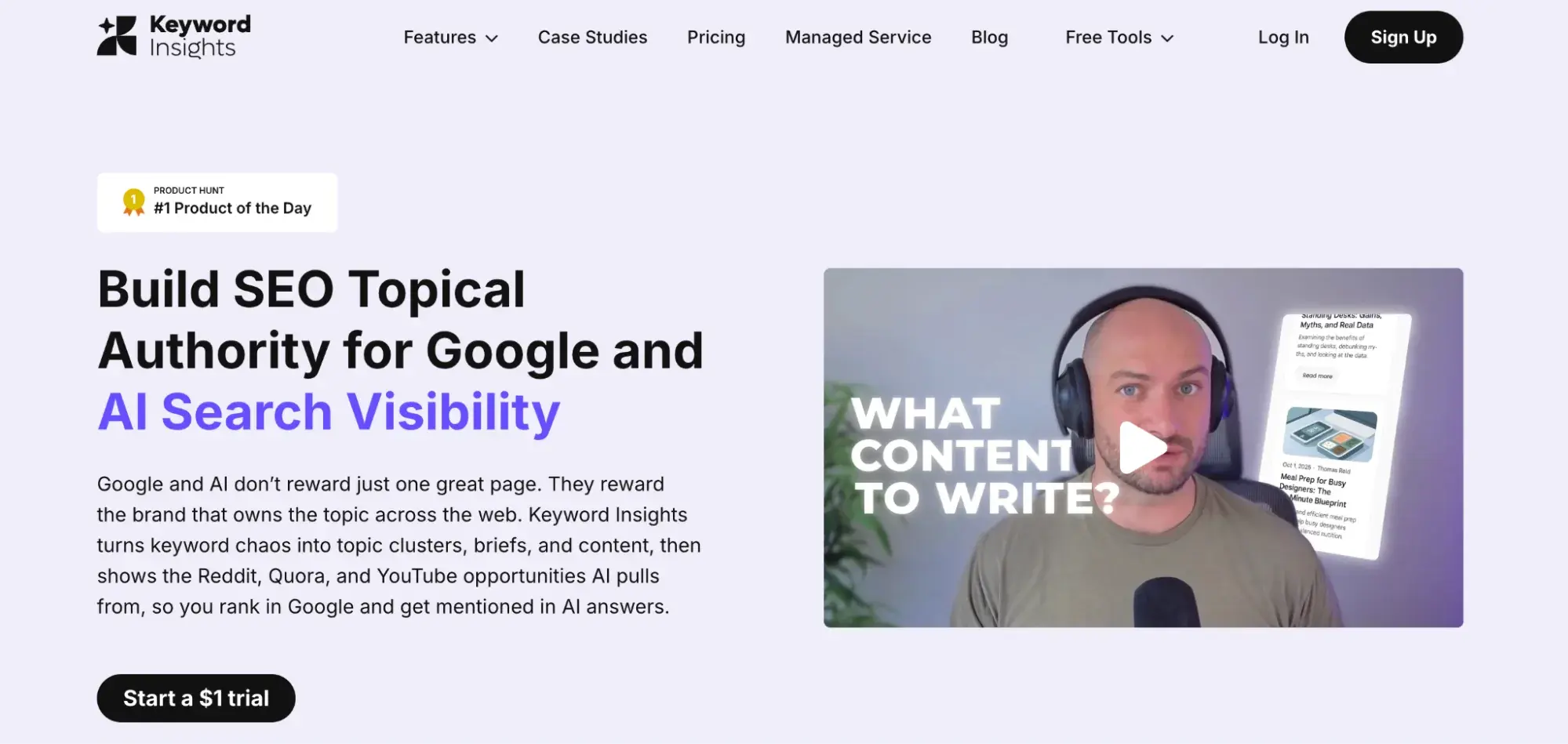
Keyword Insights: Specializing in keyword clustering and content brief creation, Keyword Insights significantly streamlines the development of topic maps for content programs. By uploading a seed list, the tool groups keywords that can be targeted on a single page versus those requiring dedicated content. Its clustering logic is particularly effective, grouping keywords based on how Google treats them on the Search Engine Results Page (SERP), not just thematic similarity. It is ideal for content teams building topical clusters with existing keyword lists. Pricing begins at $58 per month.
-
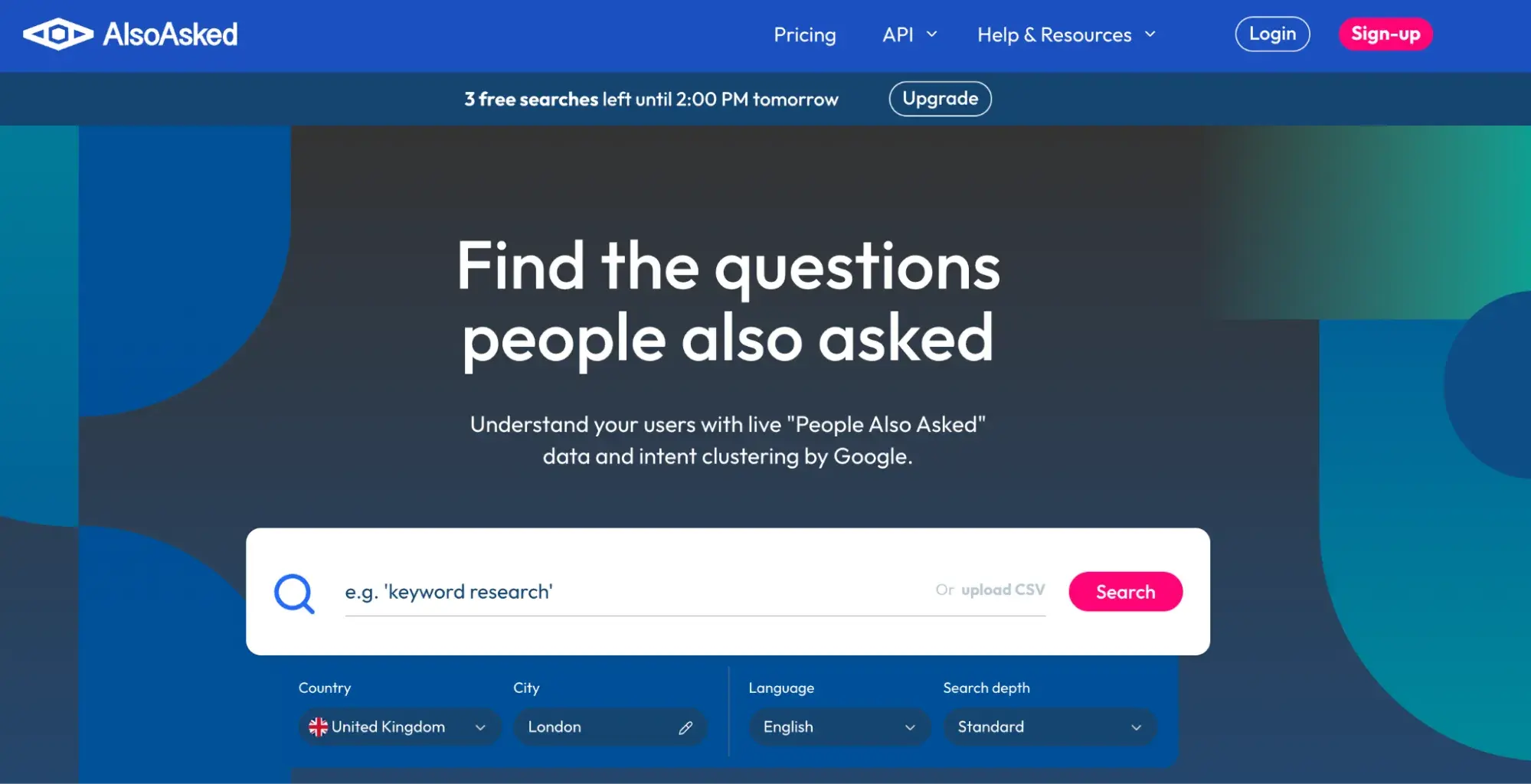
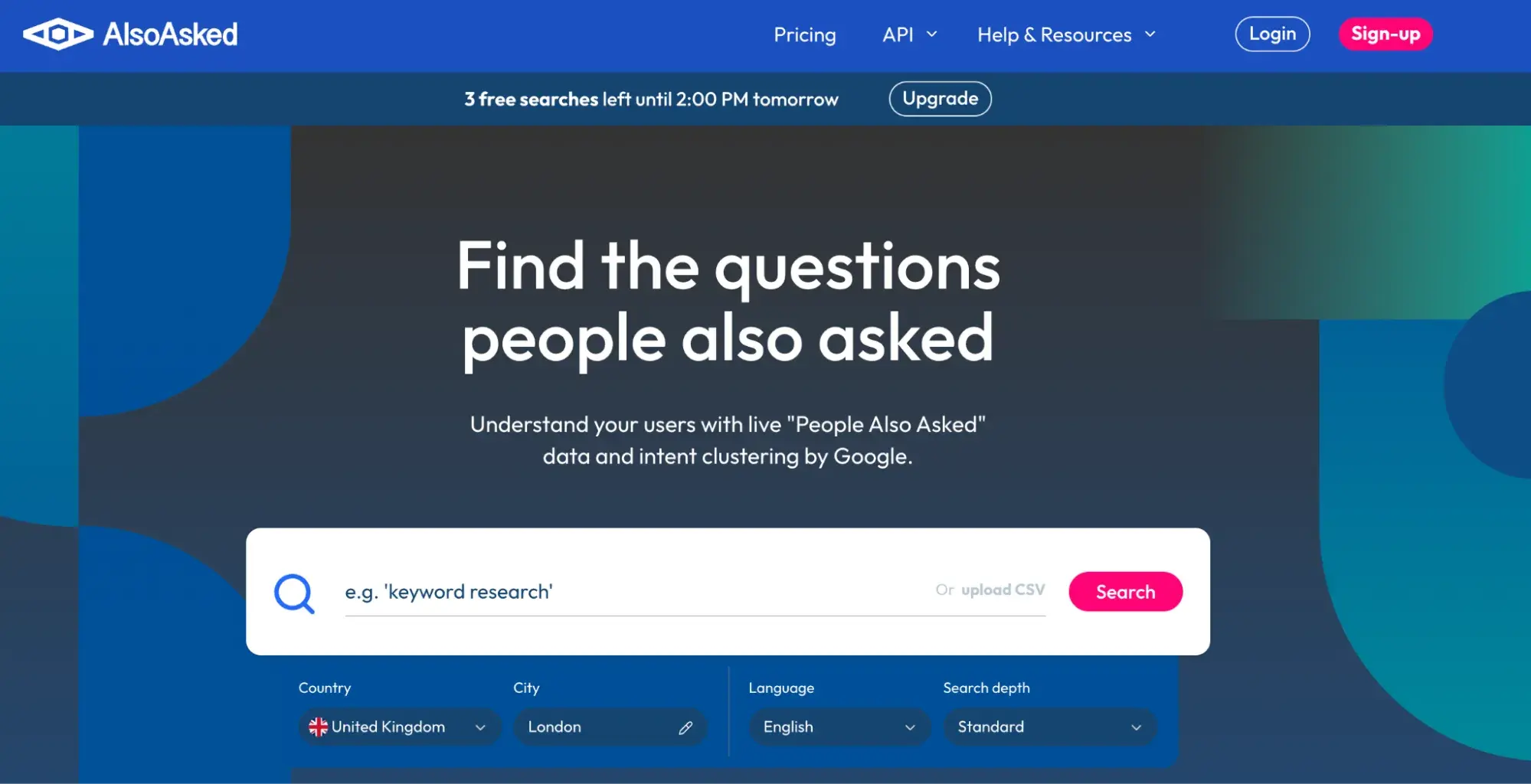
AlsoAsked: This tool directly leverages Google’s "People Also Ask" (PAA) data to map the branching relationships between questions stemming from a seed keyword. The output is a visual tree illustrating how one question leads to another, reflecting Google’s understanding of semantic relationships. This direct access to Google’s data ensures that planning is grounded in actual user search behavior. It is highly beneficial for content strategists and SEO teams developing FAQ sections or targeting featured snippets. Pricing starts at $12 per month.
Content Briefs and AI-Assisted Drafting: Accelerating Creation
Content briefs provide writers with comprehensive guidance, while AI-assisted drafting expedites production by generating outlines or full drafts based on top-ranking content and search intent.
-
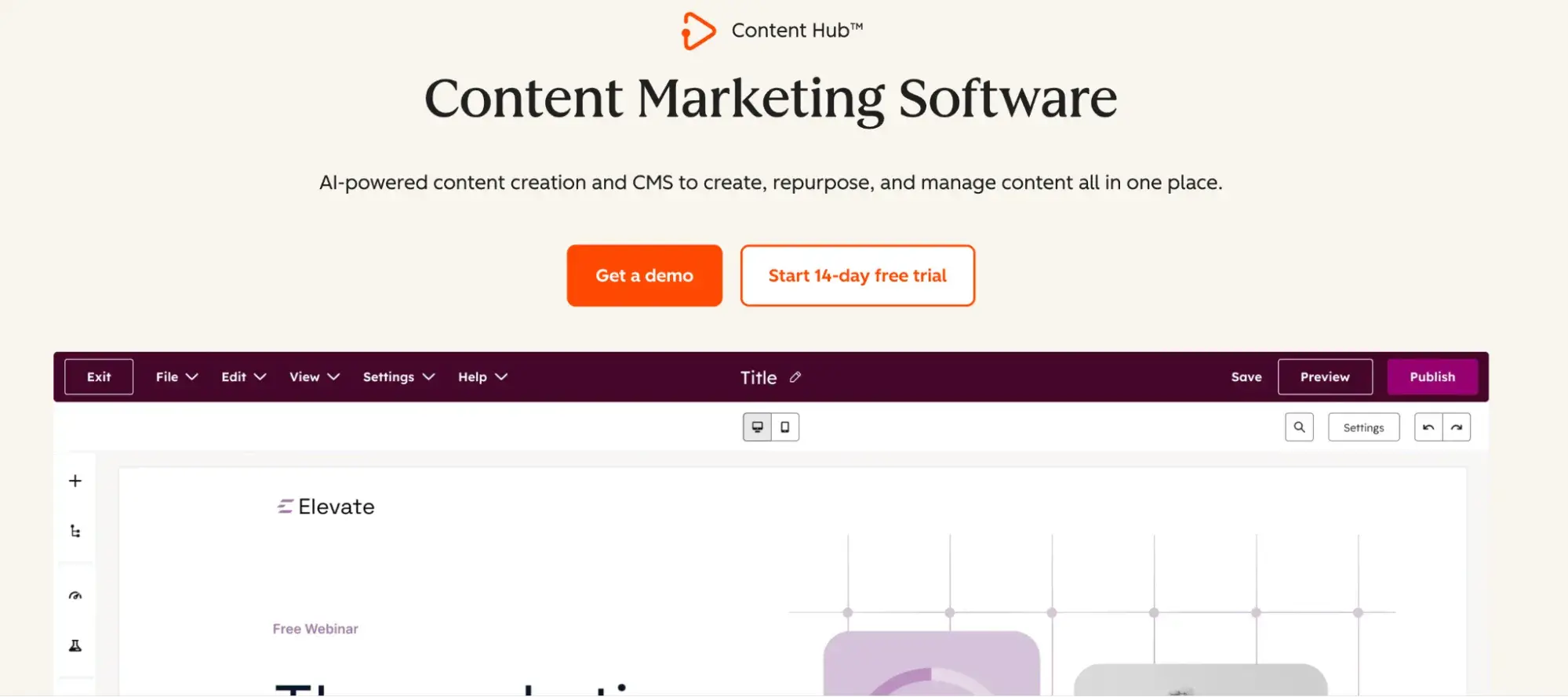
HubSpot Content Hub: This full-stack content marketing platform manages the entire content lifecycle. Its AI assistant can generate drafts, repurpose existing content, and suggest structures based on SEO and audience inputs, all within the CMS. Content created within Content Hub is inherently linked to the CRM, SEO data, and conversion analytics, enabling performance tracking against audience and conversion data. Key features include AI content generation, content repurposing, SEO recommendations, and integrated analytics. It is best suited for teams managing content and marketing within the HubSpot ecosystem.
-
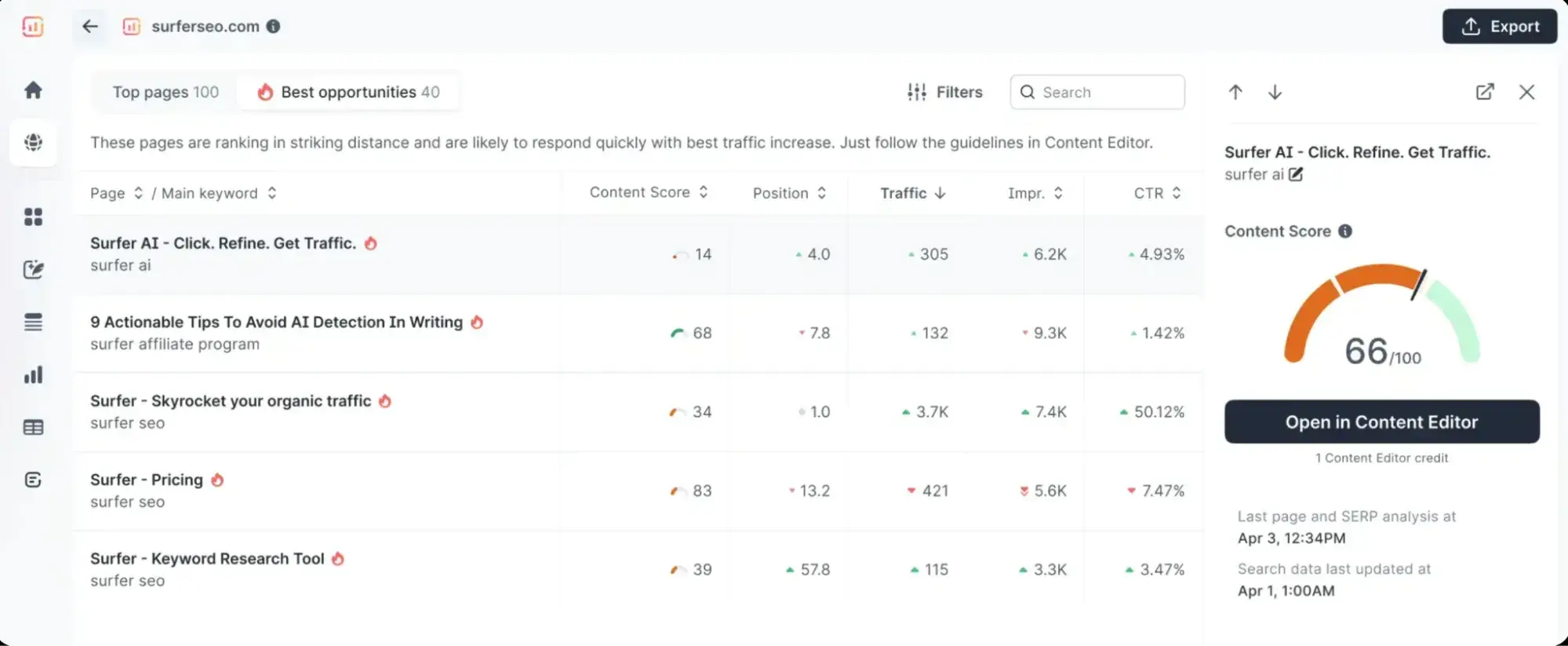
SurferSEO: SurferSEO focuses on on-page optimization and content refresh workflows. Its Content Editor analyzes top-ranking pages for a given keyword, generating a brief with suggested headings, NLP terms, and word count targets. Writers receive real-time relevance score updates as they compose. The tool’s intuitive brief-to-draft functionality and real-time feedback loop are highly valued. Pricing starts at $99 per month.
-
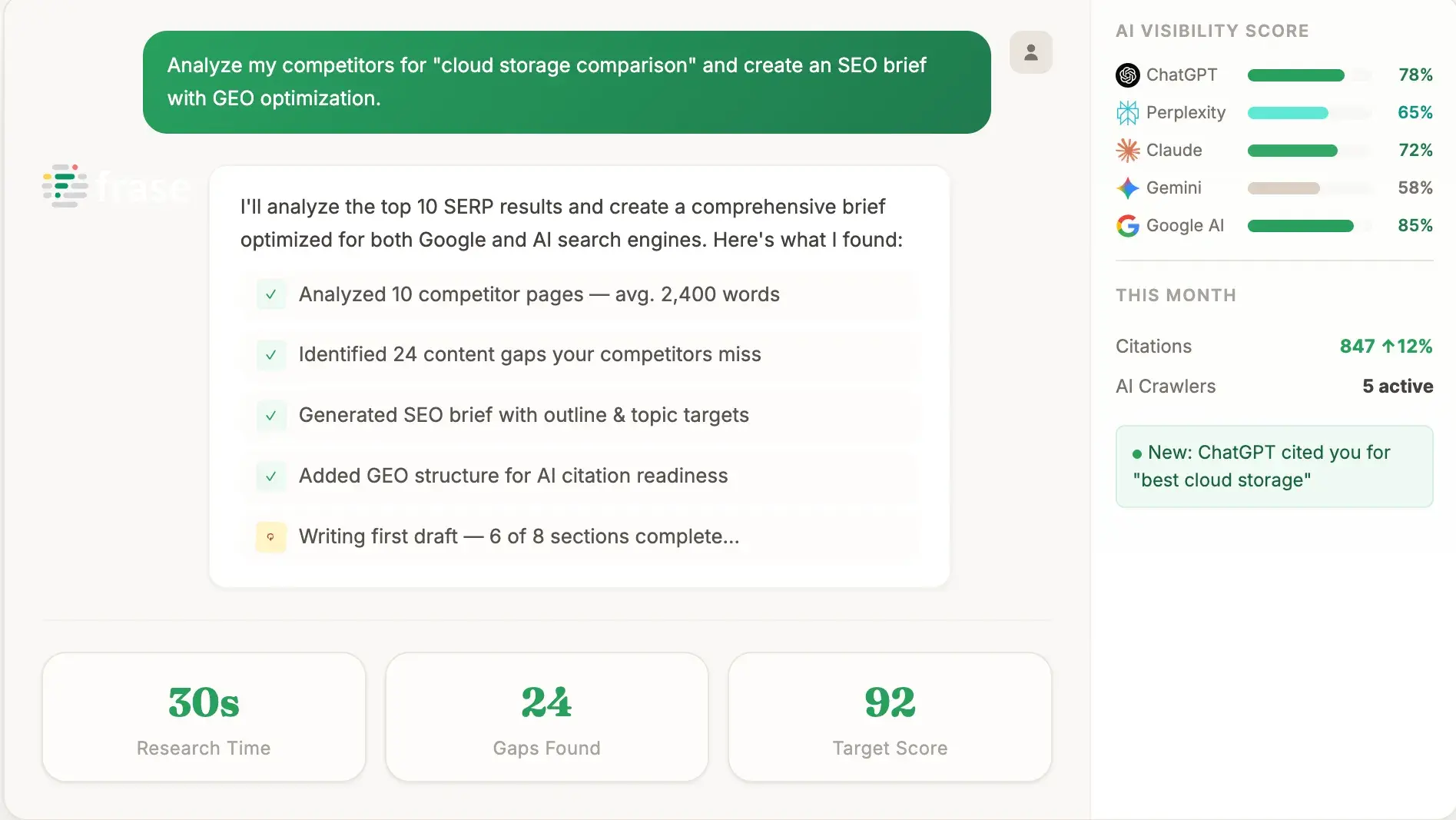
Frase: Frase is designed around a research-to-brief-to-draft workflow, aggregating information from top-ranking pages to generate a comprehensive brief and an AI writing assistant. It is particularly effective for teams producing substantial volumes of informational content. Its rapid research aggregation significantly reduces the time required to generate a working draft. Pricing begins at $49 per month.
On-Page Optimization and Refresh: Enhancing Existing Content
AI tools have made a significant impact on on-page optimization, enabling the scoring of pages against competitors, identification of missing concepts, and flagging of structural issues with speed and consistency.
-
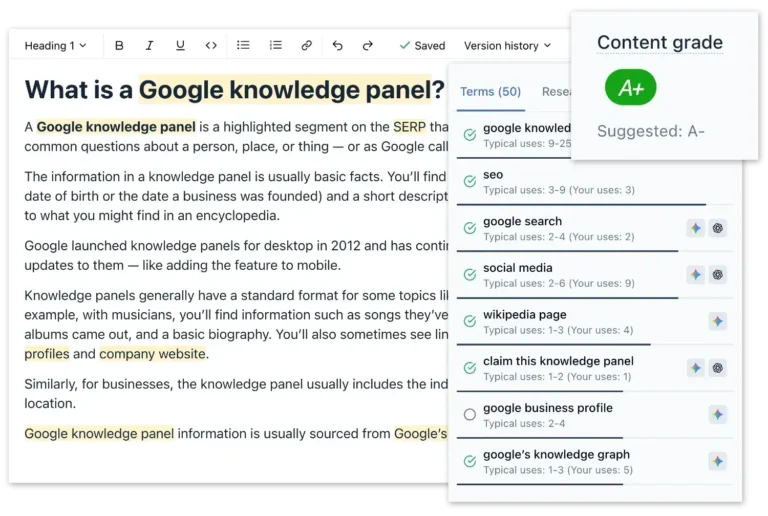
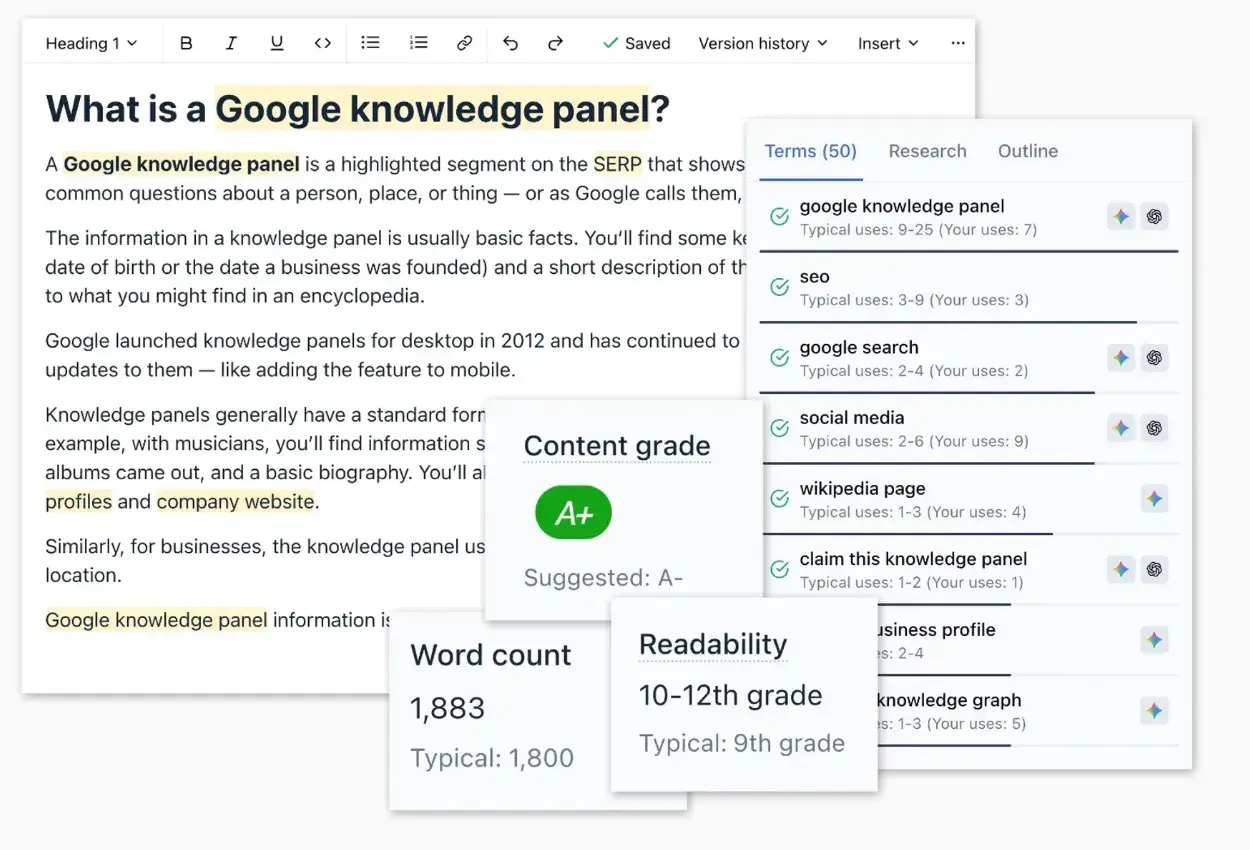
Clearscope: Clearscope grades content based on its thoroughness in covering a topic relative to top-ranking pages. It identifies related terms, assesses overall comprehensiveness, and integrates with Google Docs and WordPress for in-editor optimization. Its clear grading system and focus on topic relevance make it a strong choice for content teams undertaking systematic refresh programs. Pricing starts at $129 per month.
-
MarketMuse: MarketMuse builds a content inventory and scores each piece based on topical depth relative to competitors. Its AI identifies content gaps, generates briefs for missing subtopics, and prioritizes pages for optimization based on difficulty and authority, offering a strategic, site-wide perspective. It is best suited for enterprise and mid-market teams managing extensive content libraries. Pricing varies.
Technical SEO and Audits: Ensuring Site Health
Technical SEO, encompassing crawl efficiency, site speed, structured data, and canonicalization, requires tools capable of emulating search engine crawlers.
-
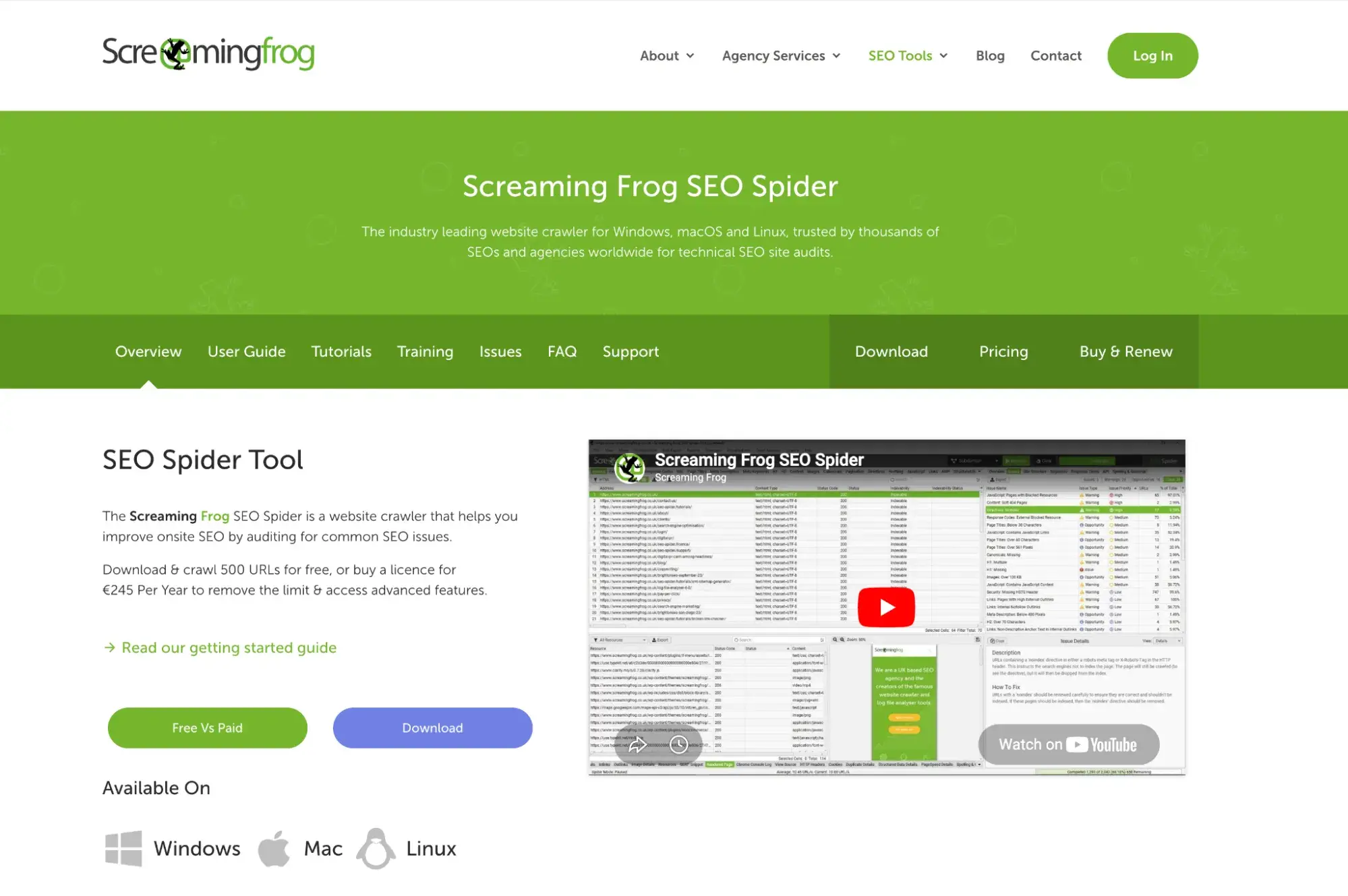
Screaming Frog SEO Spider: This widely used tool crawls websites to gather comprehensive data on response codes, redirect chains, duplicate content, metadata, and more. Recent AI integrations allow for scaled content quality checks and custom extraction prompts during crawls, streamlining the process. It is an indispensable tool for technical SEOs and developers managing site health. Pricing is $279 per year, with a free version available for up to 500 URLs.
-
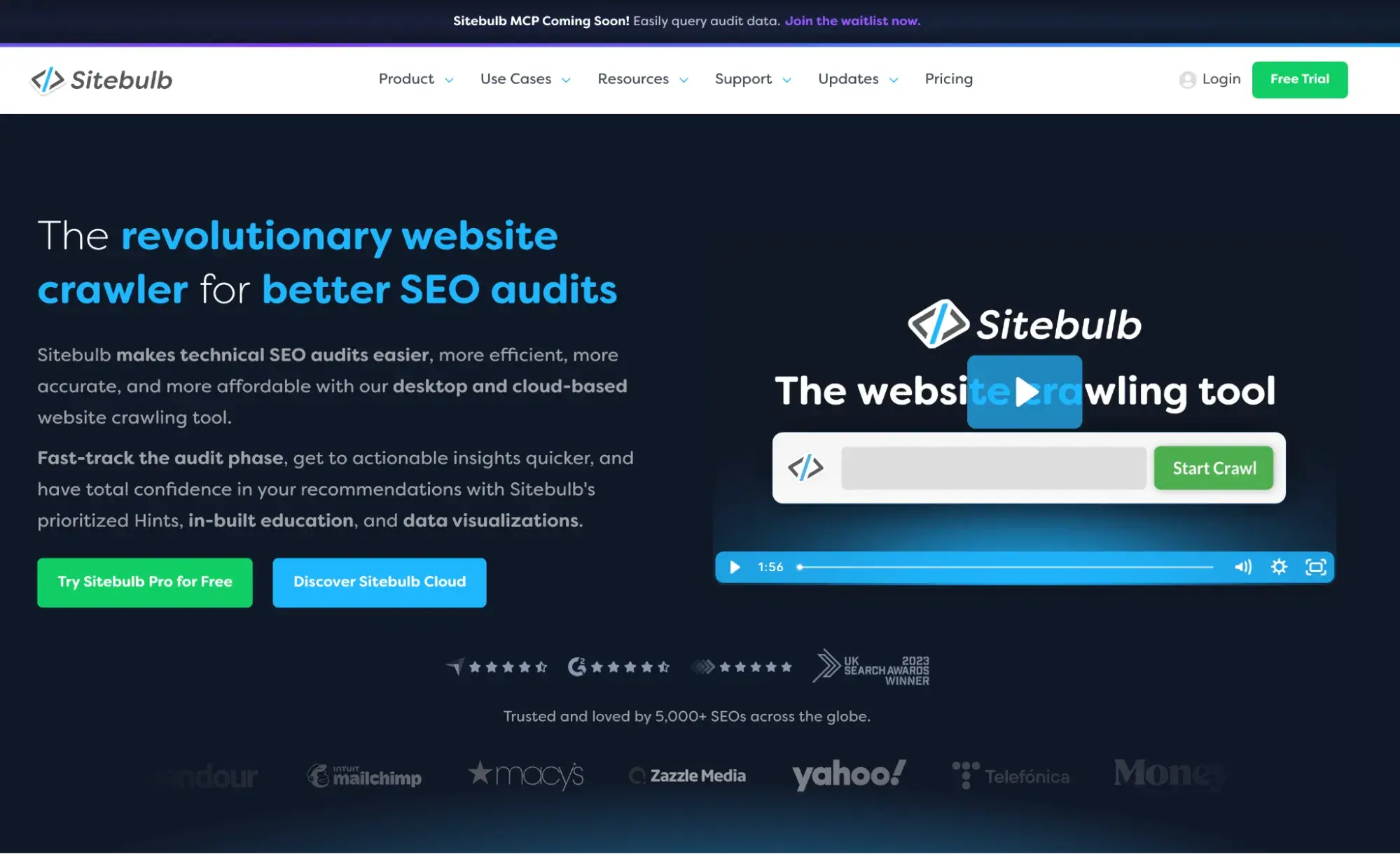
Sitebulb: Sitebulb presents crawl data in a visually intuitive format, featuring AI-generated audit summaries that explain issues in plain language and prioritize fixes by estimated impact. Its visual audit reports simplify the briefing of developers and are highly effective for agencies presenting findings to clients. Pricing starts at $18 per month.
Internal Linking and Site Structure: Optimizing Navigation and Authority
Effective internal linking enhances crawl efficiency, distributes page authority, and signals topic relationships to search engines. AI tools automate the discovery of these opportunities across vast content repositories.
-
Ahrefs: Beyond its renowned backlink and keyword research capabilities, Ahrefs’ Site Audit and internal link reporting tools are valuable for site structure optimization. For existing Ahrefs users, internal linking data is readily available within the platform. Its "Best By Links" report quickly identifies pages with strong authority that can be leveraged to support content needing more visibility. It is best for SEO teams already utilizing Ahrefs for broader research. Pricing starts at $129 per month.
-
Link Whisper: This WordPress plugin uses AI to suggest and insert internal links during content creation and editing. It also provides site-level reporting on orphaned pages and broken links. Its integration with Google Search Console helps surface relevant linking targets based on how Google already associates terms with pages. It is highly effective for WordPress sites with over 50 published pages where manual internal linking becomes a bottleneck. Pricing starts at $97 per year.
AI Visibility and Citations: Navigating the New Frontier of Search
Answer Engine Optimization (AEO) tools focus on improving visibility within AI-generated answers, citations, and brand mentions across platforms like ChatGPT, Perplexity, Google AI Overviews, and Bing Copilot. While distinct from traditional SEO, AEO is a complementary discipline, crucial for building durable visibility in emerging search channels.
-
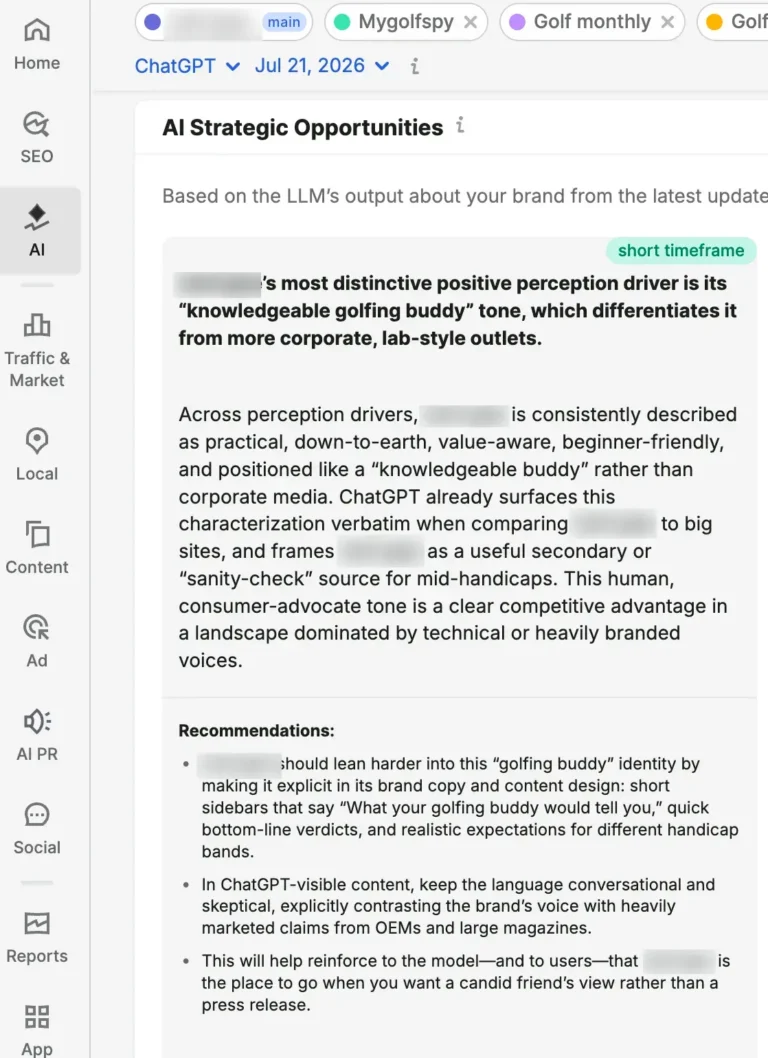
HubSpot AEO: This tool assesses current AI search visibility, helping teams understand where their brand appears in AI-generated answers and why. It identifies cited pages, triggering queries, and visibility gaps across AI engines, all within the same platform used for SEO and content tracking. For demand generation leaders, AEO metrics like citations and share of AI answers are becoming essential alongside traditional SEO reporting. Key features include AI visibility assessment, citation tracking, query analysis, and integrated reporting. It is ideal for growth teams seeking to measure and optimize for both traditional SEO and AI search visibility. Pricing is $50 per month as a standalone tool or included in HubSpot Marketing Hub Pro and Enterprise editions.
-
HubSpot AEO Grader: This free diagnostic tool evaluates how AI engines characterize a brand based on their training data. It assesses sentiment, presence quality, brand recognition, share of voice, and market position across ChatGPT, Perplexity, and Gemini, providing a score out of 100 with interpretive analysis. It serves as an excellent initial step for teams evaluating their AI search positioning without a full audit commitment.
Pro Tip: Utilize the AEO Grader before developing an AI visibility roadmap. It offers a rapid assessment of the most significant gaps, providing a defensible starting point for prioritization.
Automating SEO Responsibly: Maintaining Quality at Scale
Automation can amplify efforts, but poorly implemented automation can also scale content deficiencies, mismatched intent, and inconsistent brand voice. Building an automated SEO workflow that upholds quality at every stage requires a systematic approach:
Step 1: Conduct Batch Keyword Research
Initiate by generating a comprehensive seed list of keywords, either manually, through customer research, or using a dedicated tool. Tools like HubSpot’s SEO suite can identify topic and keyword suggestions based on relevance and competition. Subsequently, upload this list to a clustering tool (e.g., Keyword Insights) to group terms by topic and intent. This ensures a holistic understanding of the topical landscape before committing to content priorities, thereby preventing internal keyword cannibalization.
Step 2: Cluster by Topic and Intent, and Map to Content Types
Once keywords are clustered, map each cluster to one of three content types: pillar content, supporting content, or topical cluster content. This mapping forms the architectural basis for the editorial calendar, moving beyond a mere list of keywords. Document which clusters represent existing content opportunities versus net-new ones, as this distinction dictates whether refresh or new production workflows will be employed.
Step 3: Utilize AI-Assisted Drafts as Starting Points, Not Endpoints
AI drafts serve best as a first draft, a structured research document that necessitates human refinement. This involves investing time in:
- Fact-checking: Verifying the accuracy of all information.
- Adding original insights: Infusing unique perspectives and analysis.
- Ensuring brand voice: Aligning the tone and style with brand guidelines.
- Incorporating subject matter expertise: Leveraging human knowledge to enhance depth and credibility.
Publishing AI drafts without this critical human layer results in content that technically exists but fails to build authority or offer unique value, making it unlikely to be cited or highly ranked.
Step 4: Implement an Editor Review Step
Every content workflow incorporating AI assistance must include a mandatory human review checkpoint. This step should be explicitly defined in Standard Operating Procedures (SOPs) and outline:
- Reviewer roles and responsibilities.
- Specific quality criteria to be assessed.
- A defined turnaround time for reviews.
For high-volume content operations, a checklist-based review process can expedite evaluations while upholding standards.
Step 5: Schedule Systematic Content Audits
A "publish-and-forget" approach leads to a decline in visibility. Quarterly or biannual content audits, utilizing tools like HubSpot’s SEO recommendations or Semrush’s content audit features, are essential for identifying pages that have lost ranking or become factually outdated. These audits help prioritize refresh efforts based on performance signals rather than arbitrary schedules.
Step 6: Act on Internal Link Recommendations
Each content audit should incorporate an internal linking pass, considering:
- Pages with declining rankings: Identify opportunities to link from high-authority pages.
- Orphaned pages: Ensure they are integrated into the site structure.
- New content: Link to it from relevant existing pages.
Internal linking is a high-ROI, low-cost SEO task that is frequently overlooked. Automating its discovery makes it more manageable within production workflows.
Frequently Asked Questions About AI SEO Tools
What are AI search optimization tools?
AI search optimization tools are software platforms employing artificial intelligence and machine learning to enhance how search engines discover, index, and rank content. AI SEO tools assist SEO teams in executing existing tasks more efficiently, while AEO tools address the emerging visibility layer within AI-generated answer surfaces.
Which AI SEO tools are best for small businesses?
Small businesses benefit most from tools that are user-friendly and do not demand specialized technical expertise. HubSpot’s integrated SEO tools, available within Marketing Hub, provide topic and keyword suggestions, on-page recommendations, and performance reporting in a single interface. The priority for small businesses should be comprehensive coverage across critical workflow stages—research, on-page, and technical—rather than accumulating a large number of disconnected tools.
Can AI content rank in search?
AI-assisted content that incorporates original insights, accurate information, proper structure, and genuine expertise can achieve high rankings. Problems arise when AI drafts are published without significant human review, fact-checking, or original perspective. Google’s quality guidelines emphasize the usefulness and expertise of the final content, irrespective of its creation process. Teams that use AI to accelerate production and then invest human effort in refinement can efficiently produce high-ranking content.
How do I measure the ROI of AI SEO software?
Begin by establishing baseline metrics: organic traffic, target keyword rankings, and organic conversion rates. Post-implementation, track these same metrics, along with operational efficiency indicators. The ROI for AI SEO tools typically stems from reduced hours spent on high-volume, repetitive tasks and increased organic traffic gains from content that is optimized and refreshed more systematically than manual workflows permit.
How often should I refresh content with AI tools?
Content related to competitive commercial terms, comparison topics, and data-driven information should be reviewed at least every six months. Informational content on less volatile topics can be reviewed annually. A practical approach involves using AI SEO audit tools to flag underperforming or outdated pages and prioritize refresh efforts based on these signals.
Conclusion: Building a Growth System with AI
AI SEO tools are no longer a luxury but a practical necessity for remaining competitive in an environment where the volume and complexity of SEO work have surpassed the capacity of manual processes. The most effective strategy involves building a technology stack where each tool is leveraged for its specific strengths:

- Research & Clustering: Uncovering comprehensive keyword opportunities.
- Content Briefing & Drafting: Accelerating content creation with AI assistance.
- On-Page Optimization: Refining content for maximum search visibility.
- Technical Auditing: Ensuring a flawless website foundation.
- Internal Linking: Strategically connecting content for authority and navigation.
- AI Visibility (AEO): Securing presence in emerging AI search channels.
The ultimate goal is to achieve automation that liberates resources for human judgment, expertise, and original thought—qualities that search engines and AI systems increasingly value. HubSpot’s integrated SEO tools provide a robust anchor for teams seeking a unified platform for topic suggestions, optimization, and reporting, aligning SEO performance with revenue. For organizations looking to extend their reach beyond traditional search, HubSpot AEO offers the crucial AI visibility layer, enabling a consolidated approach to managing both traditional SEO and AI-generated answer presence. By thoughtfully integrating these tools, businesses can transform SEO and AI visibility into a cohesive and powerful growth system.
About the Author