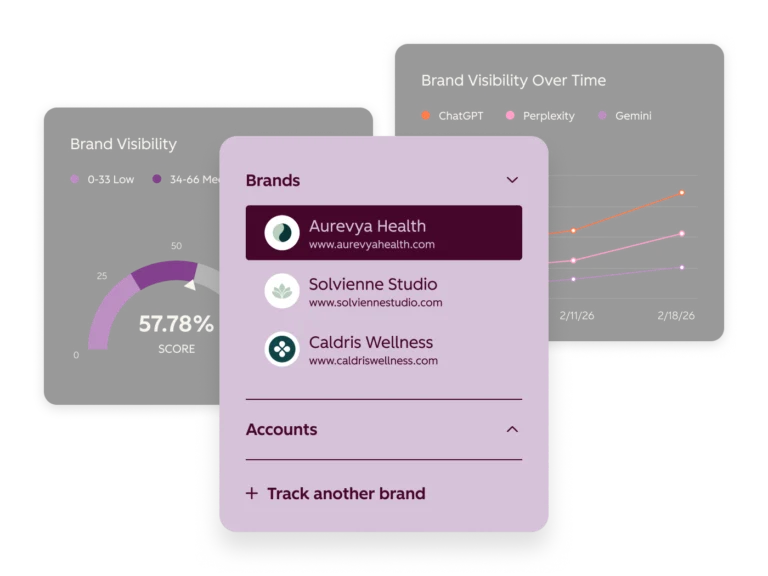
The digital marketing landscape is undergoing a seismic shift as AI-powered answer engines like ChatGPT, Gemini, and Perplexity increasingly become the first point of contact for consumers and businesses researching products and services. This evolving reality has necessitated the rise of Answer Engine Optimization (AEO) tools, prompting a critical evaluation of available solutions. Two prominent contenders in this burgeoning market are HubSpot AEO and Scrunch, each offering distinct approaches to help businesses maintain visibility in this new frontier.
For marketing leaders, SEO strategists, content teams, and RevOps professionals grappling with the implications of AI-driven search, understanding the nuances between these platforms is paramount. HubSpot AEO presents itself as a comprehensive insight-to-execution platform, aiming to seamlessly integrate AI visibility data with existing CRM and content workflows. Conversely, Scrunch positions itself as a specialized monitoring and benchmarking tool, excelling in multi-engine tracking and competitive share-of-voice analysis. The choice between them hinges on whether an organization requires a unified system to bridge the gap from research to action or a dedicated data provider to feed into an established, potentially disparate, operational framework.
The urgency to adapt is underscored by significant shifts in user behavior. HubSpot itself has reported a notable decline in organic traffic for its customers, with a 27% year-over-year drop observed between the 2025 and 2026 fiscal years. Simultaneously, AI referral traffic has witnessed a dramatic surge, tripling over the same period. This data paints a clear picture: companies that fail to actively monitor and optimize their presence within AI answer engines risk ceding valuable early-funnel opportunities to more agile competitors.
Understanding the Core Offerings: A High-Level Comparison
At its core, the decision between HubSpot AEO and Scrunch revolves around workflow integration and the desired depth of specialized functionality.
HubSpot AEO is designed for teams seeking to close the visibility gap within their existing operational ecosystem. It diligently tracks brand presence across key AI platforms such as ChatGPT, Gemini, and Perplexity. Beyond mere tracking, it surfaces prioritized recommendations. Crucially, for users of HubSpot’s Marketing Hub Pro and Enterprise editions, these recommendations are directly linked to the content creation tools and CRM data they already utilize. This native integration promises a shorter time-to-value, enabling teams to move from insight to publication without significant context switching. Pricing for HubSpot AEO starts at $50 per month as a standalone product or is included at no extra cost within the Marketing Hub Pro and Enterprise plans.
Scrunch, on the other hand, is best suited for teams prioritizing comprehensive AI engine benchmarking and a desire to maintain their existing content production infrastructure. Its principal strength lies in its ability to monitor a broad spectrum of AI engines, offering prompt-level visibility, sentiment analysis, and competitive share-of-voice metrics. Scrunch acts as a robust data feed, empowering teams to analyze performance and identify gaps, with the execution of optimizations handled externally.
The fundamental trade-off is evident: HubSpot AEO offers a more streamlined path to action for existing HubSpot users due to its inherent CRM and content tooling integration. Scrunch provides more extensive standalone benchmarking capabilities across a wider array of engines, particularly beneficial for enterprises with complex, multi-vendor technology stacks.
A Deep Dive: Workflow Stages and Feature Parity
To further clarify the distinctions, a detailed examination of how each tool addresses the typical AEO workflow is instructive.
| Workflow Stage | HubSpot AEO | Scrunch |
|---|---|---|
| Research / Prompt Strategy | CRM-informed prompt suggestions based on industries, competitors, and segments. | Manually configured custom prompts; persona segmentation on paid plans. |
| AI Engine Coverage | ChatGPT, Gemini, Perplexity (3 engines, standalone). | Core: ChatGPT, Perplexity, Google AI Overviews, Copilot (4 engines); Enterprise: up to 9. |
| Content Production | Recommendations link to HubSpot’s Content Hub/Blog (Pro/Enterprise); built-in tooling. | No native content generation; recommendations surface gaps, execution is external. |
| Optimization | Prioritized recommendations (create new page, fix technical gap, publish social post, earn citations). | Site audit, content gap analysis, schema guidance; research-oriented optimization workflow. |
| Distribution/Collaboration | Native HubSpot workflows; act on recommendations within the same platform. | No native distribution; data exports and API for external workflows. |
| Measurement/Reporting | Brand visibility score, share of voice, sentiment, citation analysis; native Marketing Hub reporting. | Prompt-level visibility, sentiment, competitive benchmarking; GA4 integration; API. |
| Integrations | Native HubSpot Smart CRM, Content Hub, Marketing Hub, Breeze Assistant. | GA4, Google Search Console, Looker Studio, Tableau, Power BI, Shopify, Webflow; CDN integrations (Enterprise); Data API. |
| Pricing Posture | $50/month standalone; included in Marketing Hub Pro ($800/month) and Enterprise. | Core: $250/month (annual) / $300 monthly; Enterprise: custom. |
| Free Trial | 28-day, no credit card. | 7-day. |
| Governance/Security | HubSpot platform security; SSO/RBAC in Marketing Hub Enterprise. | SOC 2 Type II; SAML/OIDC SSO; RBAC; Enterprise Data API. |
The table highlights a key differentiator: HubSpot AEO’s advantage for teams already invested in the HubSpot ecosystem. The native connection to CRM data allows for highly relevant prompt suggestions, tailored to specific customer segments and industries. Recommendations are not generic but actionable tasks that can be directly initiated within the platform. Scrunch, while robust in its monitoring capabilities, requires a deliberate workflow to bridge the gap between its insights and actual content creation and publication.
Research and Prompt Strategy: The Foundation of AEO
The divergence in approach begins at the research and prompt strategy phase. HubSpot AEO leverages its CRM integration to proactively suggest prompts. For instance, a B2B SaaS company targeting HR departments will receive different prompt recommendations than a professional services firm, based on their defined customer segments and tracked competitors within HubSpot. While custom prompts can be added, the system offers a guided starting point.
Scrunch, in contrast, requires users to define prompts manually. The platform’s intelligence is dependent on the user’s input regarding the questions their target audience might ask. This approach is effective for teams with a well-established understanding of buyer personas and their associated search queries. However, for organizations new to AEO, this can represent a significant initial setup burden.
A useful tip for those embarking on their AEO journey is HubSpot’s free AEO Grader. This tool provides a one-time snapshot of a brand’s current visibility across ChatGPT, Perplexity, and Gemini, serving as a valuable initial assessment before committing to ongoing tracking.
Content Production and Optimization: From Insight to Action
The most pronounced difference between the two platforms lies in their approach to content production and optimization. HubSpot AEO is engineered for a seamless transition from identifying opportunities to executing them. Its recommendations are not merely diagnostic; they are action-oriented, suggesting concrete steps such as creating a new blog post, updating an existing page, publishing a social media update, or earning a third-party citation. For users of Marketing Hub Pro and Enterprise, these recommendations integrate directly with HubSpot’s content creation tools, streamlining the workflow for writers and editors.
Scrunch, while providing thorough site audit data and highlighting visibility gaps, does not offer native content generation capabilities. Content creation and optimization are external processes for Scrunch users, requiring them to manage the workflow between insight and published content independently. Scrunch functions as the intelligence layer, rather than the execution engine.
HubSpot AEO’s strength lies in its ability to transform AEO from a reporting exercise into a tangible production queue. Its recommendations are prioritized and justified, offering content teams clear direction. Scrunch’s thorough site audit functionality and detailed diagnostic data, explaining why a brand might be absent from certain AI answers, are highly valuable for teams with established content operations that can readily integrate these insights.
Distribution and Collaboration: Facilitating Action
The integrated nature of HubSpot AEO provides a significant advantage in distribution and collaboration. Recommendations for social posts, landing pages, or blog content can be directly linked to the publishing tools within the HubSpot platform. This eliminates the need for context switching, allowing teams to act on AEO insights within their existing content creation and distribution workflows, especially for Marketing Hub Pro and Enterprise users.
Scrunch, lacking native distribution features, relies on data exports and APIs for integration into external workflows. Teams utilizing Scrunch typically manage their content pipeline in separate project management or content management systems (e.g., Notion, Asana, Contentful, Webflow) and use Scrunch’s data to inform their backlog prioritization. For teams evaluating Scrunch, it’s crucial to factor in the potential cost and coordination overhead associated with maintaining these parallel workflows.
Measurement and Reporting: Contextualizing Performance
Both HubSpot AEO and Scrunch provide essential AEO metrics, including brand visibility scores, share of voice, sentiment analysis, and citation analysis. The key differentiator lies in how these metrics integrate with broader reporting frameworks.
HubSpot AEO’s reporting is intrinsically linked to the HubSpot platform. For Marketing Hub Pro and Enterprise customers, AI referral traffic data is displayed alongside other marketing analytics, enabling a direct correlation between AEO visibility trends and metrics like lead volume, contact attribution, and campaign performance without the need for custom dashboard development.
Scrunch excels in the granularity and portability of its data. Its integration with Google Analytics 4 (GA4) is a notable feature, providing insights into which AI crawlers are visiting a website and their interaction patterns—a level of detail often absent in traditional analytics tools. Furthermore, Scrunch’s integrations with Looker Studio, Tableau, and Power BI, along with an enterprise-tier Data API, make it attractive to data-forward organizations with established business intelligence infrastructure.
Integrations and Ecosystem: A Strategic Fit
HubSpot AEO’s integration story is intrinsically tied to the HubSpot customer platform. Instead of focusing on connecting to numerous external systems, it inherits seamless integration with the tools already within the HubSpot suite, such as the Smart CRM, Marketing Hub, Content Hub, and Breeze Assistant. This native connectivity eliminates the need for additional connector setups, data syncing, or separate logins for existing HubSpot users, offering a significant advantage in terms of efficiency and reduced complexity. However, for organizations not utilizing the HubSpot CRM, the CRM-powered intelligence features of HubSpot AEO are less accessible without a separate HubSpot CRM subscription.
Scrunch adopts a different strategy, designed to function as an analytics layer within an existing technology stack. Its native integrations span popular platforms like GA4, Google Search Console, Looker Studio, Tableau, Power BI, Shopify, and Webflow. At the enterprise level, advanced integrations with CDN providers like Cloudflare, Vercel, and Akamai are available, enabling the Agent Experience Platform (AXP) for optimized AI content delivery. A Data API further supports custom data pipeline development.
Data Coverage and Engine Scope: Breadth vs. Depth
The comprehensiveness of AI engine coverage is a critical factor in evaluating AEO tools. The landscape of AI answer engines is dynamic, with ChatGPT, Gemini, and Perplexity currently dominating for many B2B and B2C searches. However, engines like Claude, Google AI Mode, Microsoft Copilot, and Meta AI are rapidly gaining traction, and their prominence can vary significantly by industry and audience.
HubSpot AEO, across all its plans, tracks three primary engines: ChatGPT, Gemini, and Perplexity. While these cover a substantial portion of high-intent AI search activity for many businesses, they do not encompass emerging or specialized engines like Microsoft Copilot or Claude. For organizations where these less-tracked engines are material for their buyer journeys, this represents a potential gap.
Scrunch offers broader engine coverage, with its capabilities tiered by plan. The Core plan includes ChatGPT, Perplexity, Google AI Overviews, and Microsoft Copilot. The Enterprise plan expands this to include up to nine engines, such as Claude, Gemini, Meta AI, Google AI Mode, and Grok. It is important to note that the widely cited "nine-engine coverage" is an Enterprise-tier feature and not available at the entry-level pricing.
The choice of engine coverage directly influences the visibility gaps identified and, consequently, content prioritization. A team tracking only ChatGPT, Gemini, and Perplexity might uncover different optimization opportunities than one monitoring a wider array of engines. Therefore, understanding which AI engines are most utilized by a company’s specific buyer personas is crucial before making a selection.
Both HubSpot AEO and Scrunch provide daily updates and trend data, enabling teams to track progress and adapt to shifts in the AI search landscape. This recurring cadence is vital for agile response to competitor activities or model updates.
Pricing and Value Proposition: Total Cost of Ownership
The pricing structures of HubSpot AEO and Scrunch offer different value propositions, extending beyond the monthly subscription fees.
| Feature | HubSpot AEO (Standalone) | HubSpot AEO (Marketing Hub Pro) | Scrunch Core | Scrunch Enterprise |
|---|---|---|---|---|
| Price | $50/month ($45 annual) | Included in Marketing Hub Pro ($800+/month) | $250/month (annual) / $300 monthly | Custom |
| Prompts | 25 (add-on available) | Expanded prompt set | 125 custom prompts | Custom |
| Engines | 3 | 3 | 4 | Up to 9 |
| Users/Seats | N/A | Based on Marketing Hub tier | 5 seats | Custom |
| Free Trial | 28 days, no credit card | N/A (included) | 7 days | N/A |
| Content Tooling | Recommendations only | Full HubSpot content tools | None | None |
| CRM Integration | Native (HubSpot CRM) | Native (HubSpot Smart CRM) | None | None |
When considering the total cost of execution, Scrunch’s pricing only reflects the monitoring component. Organizations must also account for the costs of separate content production tools, publishing workflows, content management systems, and potentially dedicated analytics platforms. HubSpot AEO, particularly when bundled within Marketing Hub Pro, offers a more integrated solution where much of this infrastructure is already in place. For teams that would otherwise invest in separate content, CRM, and analytics tools, the bundled value of Marketing Hub Pro can significantly reduce the overall workflow cost.
For smaller teams or those new to AEO, HubSpot AEO presents a low-risk entry point. Its 28-day free trial, without requiring credit card details, minimizes evaluation friction.
Making the Choice: Aligning with Team Needs
The decision between HubSpot AEO and Scrunch should align with a team’s specific objectives, existing infrastructure, and workflow preferences.
Choose HubSpot AEO if:
- Unified Execution is Key: The primary goal is to seamlessly connect AI visibility insights directly to content creation and action, minimizing operational friction.
- Existing HubSpot User: The organization is already leveraging HubSpot for its CRM, marketing automation, and content management needs.
- Streamlined Workflow is a Priority: The team values a single platform for research, content planning, and publication.
- Budget-Conscious Entry: A low-cost standalone option or bundled value within Marketing Hub Pro/Enterprise is appealing.
HubSpot AEO offers a 28-day free trial, including 25 prompts across ChatGPT, Gemini, and Perplexity, with no credit card required, providing a risk-free opportunity to assess its capabilities.
Choose Scrunch if:
- Deep Benchmarking is Essential: The priority is in-depth monitoring and competitive analysis across a broad range of AI engines.
- Disruption is Undesirable: The organization has a robust, established content production and publishing workflow that it wishes to maintain.
- Data Portability is Paramount: The team requires extensive data export options and integrations with existing BI tools.
- Multi-Engine Coverage is Critical: Access to a wider array of AI engines beyond the core three is a necessity.
Scrunch offers a 7-day free trial for evaluation.
Considering a Hybrid Stack:
For some organizations, a hybrid approach may be beneficial, utilizing HubSpot AEO for day-to-day execution and content workflow integration, while employing Scrunch for broader benchmarking and coverage of engines not supported by HubSpot. This strategy is most practical when specific AI engines outside HubSpot’s native coverage are demonstrably crucial for buyer engagement. However, for many, the added coordination overhead of managing two distinct platforms may outweigh the marginal benefits.
The Evolving AEO Landscape and Alternatives
The AEO tool category is rapidly maturing, with new solutions emerging. Beyond HubSpot AEO and Scrunch, other tools merit consideration depending on specific needs:
- BrightEdge: A comprehensive SEO platform that has expanded to include AI visibility tracking and optimization features.
- Semrush: Known for its extensive SEO toolkit, Semrush also offers AI-driven content optimization and visibility monitoring capabilities.
- Surfer SEO: Focuses on content optimization for search engines and is adapting its features to incorporate AI answer engine considerations.
- MarketMuse: A content intelligence platform that helps teams create and optimize content for authority and relevance, increasingly relevant for AEO.
When evaluating any AEO tool, it’s essential to ask: Where is the biggest workflow gap—monitoring, content production, or reporting? Which AI engines are truly used by target buyers? What does the existing tech stack already cover? For those uncertain, starting with a free assessment tool like the AEO Grader can provide valuable foundational data.
Differentiating AEO from SEO: A Complementary Strategy
Understanding the distinction between Answer Engine Optimization (AEO) and traditional Search Engine Optimization (SEO) is crucial. SEO focuses on improving content ranking on traditional search engine results pages (SERPs), primarily Google and Bing, through keywords, backlinks, and technical site health. The objective is to drive users to a website via a list of links.
AEO, conversely, aims to improve how a brand is represented, cited, and recommended within AI-generated answers on platforms like ChatGPT, Gemini, and Perplexity. The goal is to appear within the answer itself, not just on a results page. AEO emphasizes structured content, entity authority, citation signals, and the accuracy of information used by AI models.
AEO is not a replacement for SEO but a complementary discipline. As buyers increasingly use AI for research, a holistic search strategy must encompass both. Many fundamental principles overlap: high-quality, structured content, strong E-E-A-T (Experience, Expertise, Authoritativeness, Trustworthiness) signals, and authoritative third-party coverage benefit brands across both SEO and AEO. The practical differences lie in measurement (visibility scores vs. rankings), content format (answer-first, structured content vs. keyword-optimized copy), and key signals (entity authority vs. backlinks).
Frequently Asked Questions
Do I need HubSpot Marketing Hub to use HubSpot AEO?
No, HubSpot AEO is available as a standalone product for $50/month (or $45/month billed annually). This includes tracking 25 prompts across ChatGPT, Gemini, and Perplexity, along with access to visibility scores and recommendations. However, advanced features like CRM-informed prompt suggestions and direct actionability within content tools require Marketing Hub Pro or Enterprise.
Can I run HubSpot AEO and Scrunch together?
Yes, there are no technical conflicts. Some teams use HubSpot AEO for integrated execution and Scrunch for broader benchmarking and coverage of additional AI engines. The necessity of this hybrid approach depends on the critical engines for your buyer journey.
How quickly can we expect to see impact?
A visibility baseline is established quickly with both tools. Measurable content-driven impact typically takes 4-8 weeks of consistent action on recommendations, as AEO benefits compound over time through improved content and citations.
Which AI engines should be prioritized first?
Start with ChatGPT, Gemini, and Perplexity, as they represent the majority of high-intent AI search activity. Subsequently, layer in other engines based on specific audience usage patterns, such as Microsoft Copilot for financial services buyers or Meta AI for consumer audiences.
How should content be structured for AI citations?
Content should be answer-first, clearly structured with headings and concise paragraphs, originate from authoritative sources, and be supported by third-party citations. Utilizing structured data and schema markup is also beneficial.
About the Author