CRM projects are notoriously prone to failure, not due to technical shortcomings, but because the human element – user adoption – is often neglected. When the intended users do not embrace the system, training proves ineffective, and post-launch ownership is absent, the result is a costly CRM that fails to deliver on its promises of pipeline visibility and process alignment. This comprehensive guide delves into the essential strategies, team structures, communication plans, and adoption metrics that transform a CRM deployment from a mere software installation into a dynamic tool that actively empowers teams.
The core issue with most CRM implementations lies in their technical focus, often treating the human aspect as an afterthought. Research consistently underscores the critical role of structured change management. A study by Prosci, surveying over 2,600 change practitioners, revealed that projects with excellent change management are nearly twice as likely to meet or exceed their objectives compared to those with poor change management. This stark difference highlights how effectively the human side of a rollout is planned and executed. A well-managed CRM implementation yields compounding benefits: enhanced productivity, improved data quality, and increased revenue. Conversely, neglecting structured change management leads to a rapid decline in data integrity, with reports indicating that 76% of organizations struggle with less than half their CRM data being accurate and complete, according to Validity’s 2025 State of CRM Data Management report. This data degradation directly impacts pipeline visibility, often leading leadership to question the initial CRM investment within six months.
Building a Robust CRM Change Management Plan
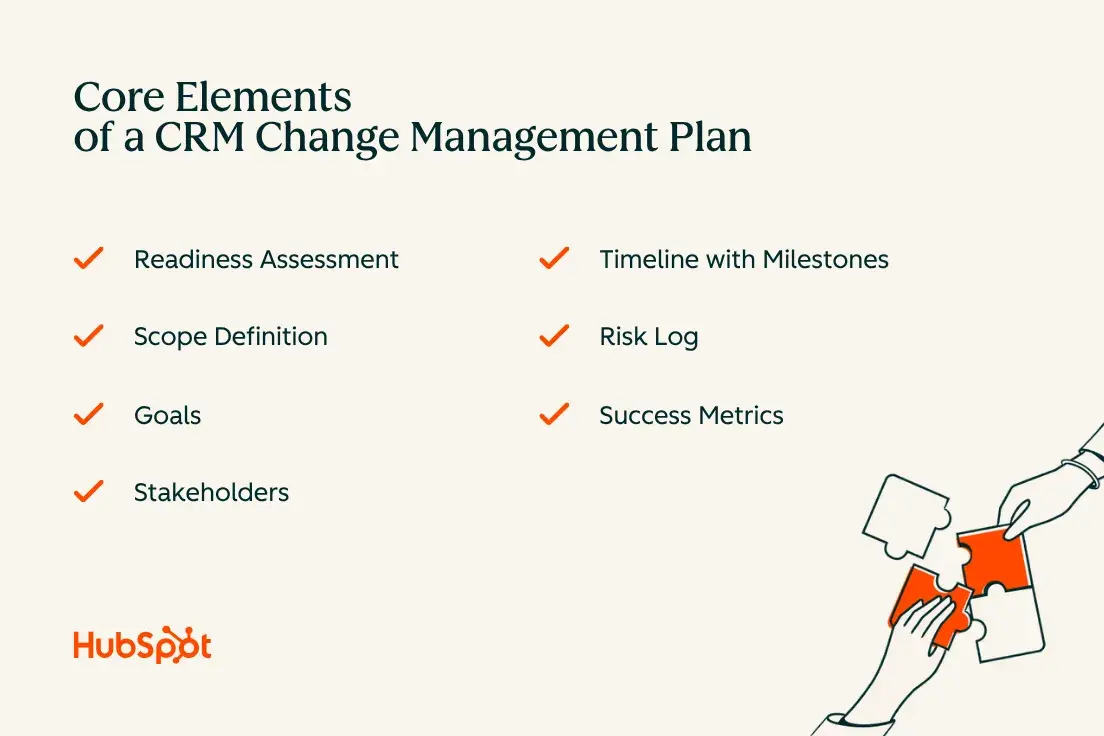
A well-defined CRM change management plan serves as the operational blueprint for a successful rollout. It must encompass seven fundamental elements: readiness assessment, scope definition, clear goals, stakeholder identification, a detailed timeline, a comprehensive risk log, and measurable success metrics. The absence of any of these core components significantly increases the likelihood of encountering unforeseen challenges that can impede adoption or compromise governance.
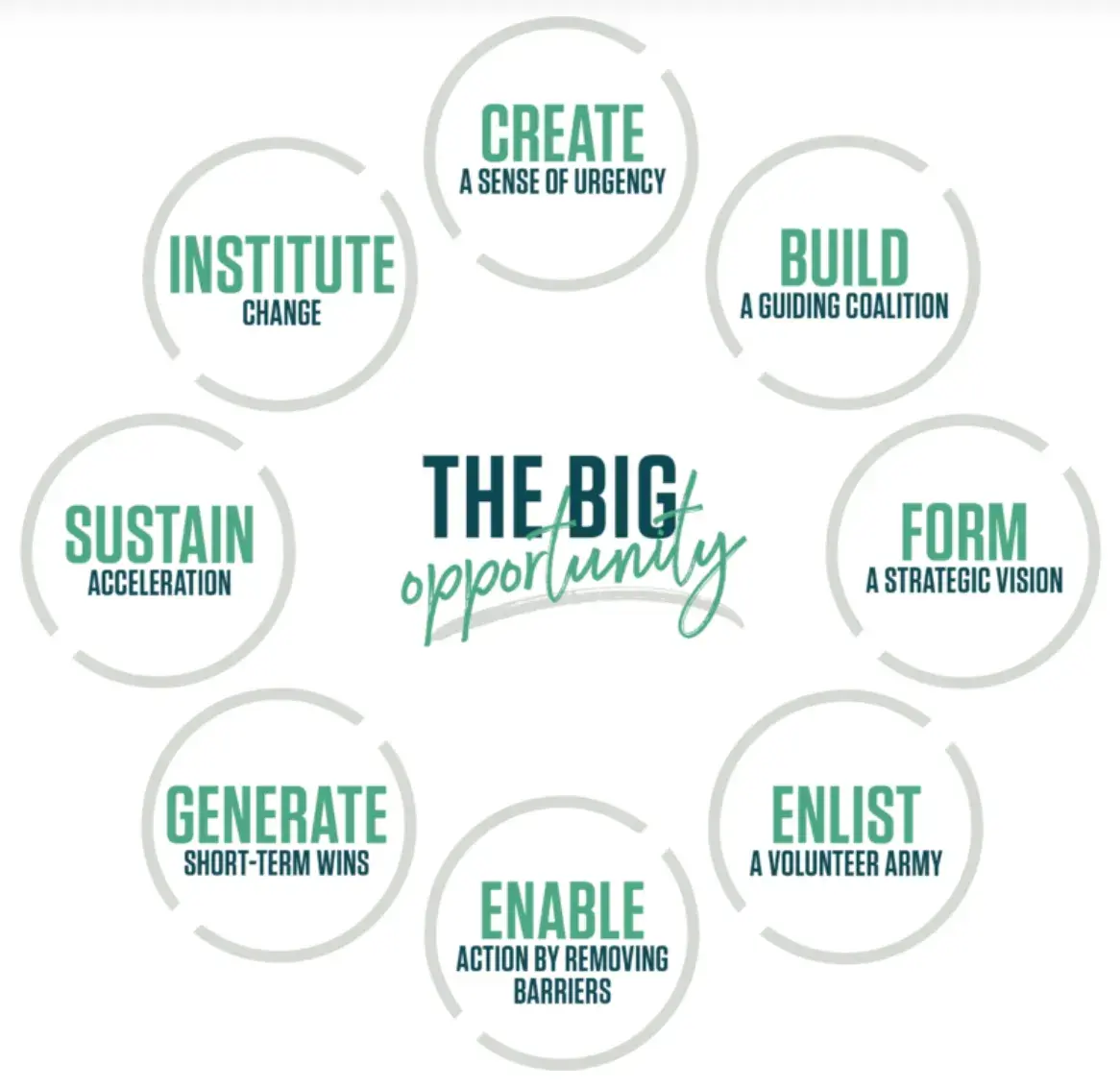
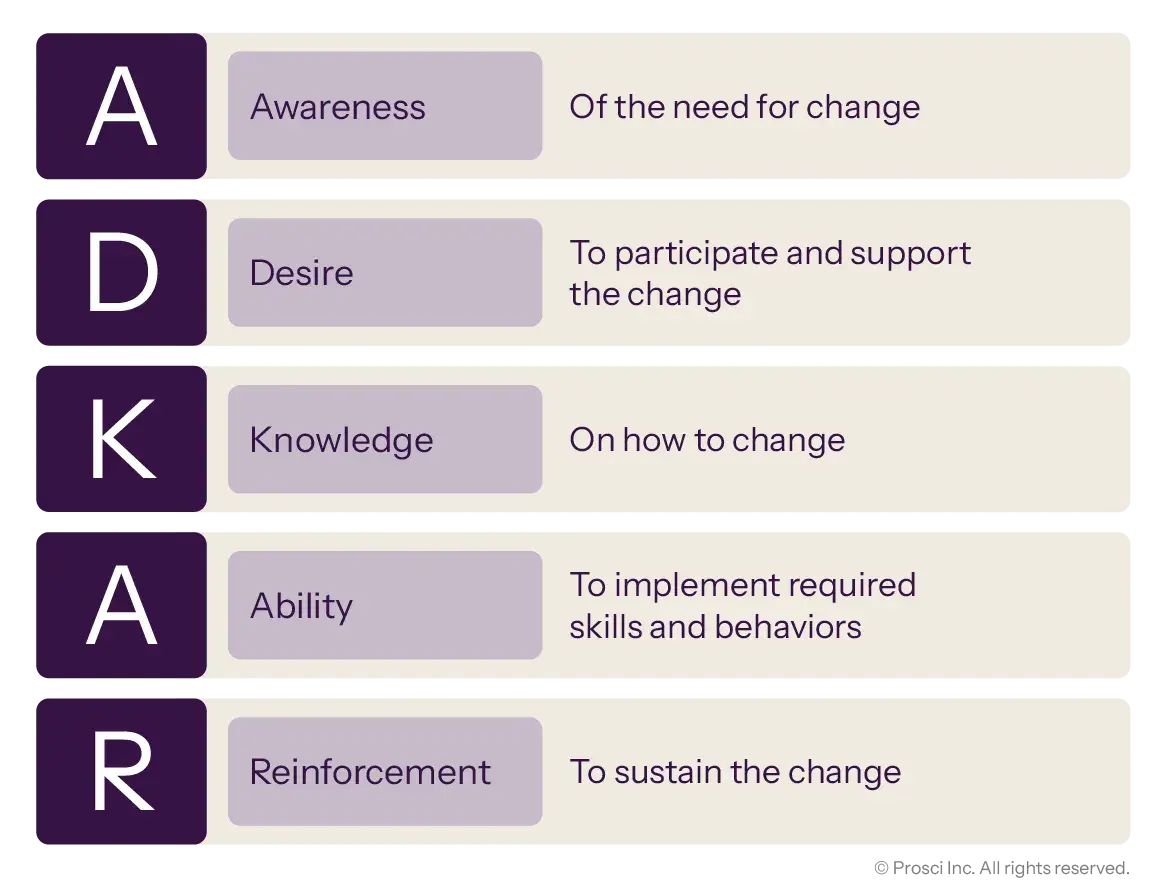
Two prominent frameworks provide valuable scaffolding for CRM change management: the Prosci ADKAR model and Kotter’s 8-step process. The ADKAR model, focusing on individual change, breaks down adoption into Awareness, Desire, Knowledge, Ability, and Reinforcement. This framework is invaluable for diagnosing specific points of failure in user adoption. For instance, understanding that a user has awareness of the CRM but lacks the desire to use it requires a different intervention than a user who desires to use it but lacks the knowledge. ADKAR’s diagnostic power transforms vague issues like "people aren’t adopting" into specific, addressable gaps. A proactive measure is to conduct an ADKAR self-assessment survey with pilot users before a full rollout, identifying areas scoring below a 3 on a 1-5 scale as intervention points.
Kotter’s 8-step process, conversely, operates at an organizational level, encompassing steps like creating urgency, building a coalition, forming a strategic vision, communicating it effectively, removing obstacles, generating short-term wins, sustaining acceleration, and anchoring change in culture. For large-scale CRM rollouts across diverse business units, the coalition-building and urgency-creation steps are particularly crucial. Visible executive sponsorship is paramount; without it, adoption directives can be perceived as optional. The most effective approach often involves leveraging ADKAR for individual-level diagnostic and intervention, while employing Kotter’s framework to structure organizational leadership and communication strategies.
Assembling the CRM Change Management Team
Effective CRM change management hinges on assigning clear accountability for outcomes. A dedicated change team should comprise leaders from marketing, sales, service, operations, IT, enablement, and analytics. Formalizing roles and responsibilities prior to launch is essential. A practical RACI (Responsible, Accountable, Consulted, Informed) assignment for a mid-size CRM rollout typically includes an Executive Sponsor to champion the rollout and remove blockers, a CRM Program Lead to manage the plan and coordinate workstreams, Sales and Service Leaders to drive user adoption within their respective departments, a RevOps/CRM Administrator for system configuration and data governance, an Enablement Lead for training design and delivery, IT/Security for technical aspects, and Marketing/Service Leads for their departmental workflows. Adapting these roles to specific organizational structures is key, but the principle of clear accountability for every aspect of the change management plan remains paramount.
Governance cadences, established before go-live and maintained post-launch, are vital. This often includes weekly adoption stand-ups for the initial 90 days, monthly steering committee reviews for the first year, and quarterly data governance audits.
Driving Adoption Through Communication and Training
Clear, consistent communication is the bedrock of successful CRM adoption. It involves explaining what is changing, what is not, and, crucially, why it matters, across multiple channels and for diverse audiences at various stages of the rollout. A single launch email is insufficient. Developing an audience message map, tailoring core messages to the specific concerns of revenue operations leaders, sales reps, service agents, and marketing managers, is highly effective. A sales rep might prioritize how the CRM simplifies their daily tasks, while a service lead focuses on CSAT visibility and SLA tracking.
The "What’s Changing / What’s Not Changing" tracker is a powerful, low-effort tool that alleviates anxiety and focuses attention on actual workflow adjustments, mitigating the spread of misinformation. Communication should follow a layered approach: an executive sponsor kick-off, team-level briefings, and ongoing reinforcement via channels like Slack or email.

Role-based training is instrumental in reducing resistance. Training that directly maps to daily workflows builds confidence, whereas generic, one-size-fits-all approaches can breed resistance. The most effective training architectures integrate four layers: foundational onboarding, role-specific modules, advanced feature workshops, and ongoing learning resources. Platforms like HubSpot Academy offer free certification courses that can be integrated into structured enablement plans, particularly for new hires post-rollout. Proactively building a training completion dashboard and providing managers with visibility into their teams’ progress incentivizes completion and facilitates targeted follow-up. Feedback loops, implemented through pulse surveys at 30, 60, and 90-day intervals and anonymous feedback forms, provide early warnings of adoption issues before they become ingrained habits.
Navigating Common CRM Change Management Pitfalls
Several predictable patterns can derail CRM implementations. Unclear ownership is a primary culprit; when no single entity is accountable for adoption metrics, low adoption becomes an accepted reality. This often results in diffused responsibility where IT, sales, and RevOps departments blame each other. Establishing a named CRM program lead with defined authority before project kickoff is crucial.
Weak or absent executive sponsorship is another significant hurdle. When leadership champions a CRM at launch and then disengages, it signals that the system is optional. Prosci’s research consistently shows a strong correlation between visible leadership advocacy and project success rates. Integrating regular CRM updates into existing leadership forums like Quarterly Business Reviews (QBRs) and all-hands meetings helps maintain momentum.
Generic training, as previously mentioned, wastes valuable time and indicates a lack of consideration for user workflows. Designing role-specific training tracks prior to go-live, or conducting targeted micro-sessions on specific knowledge gaps identified post-launch, are effective remedies. Over-customization, while sometimes driven by good intentions, can create an unwieldy system that becomes a maintenance burden and an adoption friction point. Establishing a formal request process with a compelling business case for any new customization, and conducting regular audits to archive unused properties, can mitigate this.
Poor data governance is a direct contributor to bad reports, which in turn erode trust in the system and lead to low adoption. Validity’s research highlights the pervasive issue of inaccurate CRM data, underscoring the need for robust governance from the outset. Defining required fields, data entry standards, and a duplicate management protocol before go-live are essential preventive measures. Finally, ignoring frontline feedback can destroy adoption trust. Implementing a documented feedback review cycle and communicating how input is being acted upon is vital for rebuilding credibility.

Measuring and Sustaining CRM Adoption Post-Launch
Sustaining CRM adoption requires continuous monitoring of key metrics. These include login frequency, activity completion rates, data hygiene scores, and pipeline hygiene. Tracking these at defined intervals, not just at launch, differentiates organizations that achieve lasting adoption from those that plateau. A 30-60-90 day structure provides concrete benchmarks:
- Login Frequency: Aim for over 60% of users logging in weekly by Day 30, increasing to 80% by Day 60, and 90% by Day 90, establishing login as a default habit.
- Key Activity Completion: By Day 30, at least 50% of deals should have a next step logged. This should rise to 75% by Day 60, with 90% compliance and same-day activity logging by Day 90.
- Data Hygiene Score: Required fields should be complete on over 70% of new records by Day 30, increasing to 85% by Day 60, with 95% completeness and zero-duplicate audits passed by Day 90.
- Pipeline Hygiene: All open deals should have a close date and stage set by Day 30. Stale deals should be flagged and reviewed by Day 60, with weekly pipeline reviews and forecast variance under 15% by Day 90.
- Time-to-First-Value: The first deal or ticket should move through the pipeline in the CRM by Day 30. A full lead-to-close cycle within the CRM by Day 60, with the CRM becoming the source of truth for pipeline reviews by Day 90.
- Case Response Adherence (Service): At least 80% of incoming cases should be created as tickets in the CRM by Day 30, with SLA response tracked for 90% by Day 60, and CSAT captured in the CRM with SLA adherence over 95% by Day 90.
Post-launch governance, as outlined in the team structure section, becomes the ongoing operating model. Combining CRM and project management effectively means treating adoption metric reviews as formal deliverables within the project plan. A go-live showing 100% technical completion but only 40% user adoption is not truly complete. Phased project structures, starting with high-priority teams or workflows with high executive visibility, reduce risk for complex rollouts. Documenting learnings from each phase before expansion is crucial for continuous improvement.
The Role of AI in CRM Change Management
Artificial intelligence plays a practical, augmenting role in CRM change management, multiplying manual efforts rather than replacing human judgment. AI assistants can accelerate content creation for training materials and communication plans, summarize user feedback to identify common themes, and personalize training recommendations based on user roles and identified knowledge gaps. AI-powered agents can further extend these capabilities into ongoing operations, such as researching leads, resolving support inquiries, and drafting ongoing communications. While AI can compress the workload, it cannot substitute for executive sponsorship, peer relationships, organizational trust, and the crucial judgment calls that determine whether a rollout is perceived as supported or imposed.
HubSpot’s Approach to Accelerating CRM Change Management
HubSpot’s customer platform is designed to streamline CRM change management at every stage. The Smart CRM acts as a unified source of truth, bringing together contact, company, deal, and ticket data into a single, accessible record. Its G2 rating for "Most Implementable" directly addresses the complexity barrier often associated with CRM adoption.
Sales Hub supports pipeline and sales rep adoption with features like deal pipelines, playbooks, and AI-guided selling, creating intrinsic motivation for users. Service Hub enhances service process and customer experience adoption through help desk management, SLA tracking, and omnichannel workflows. Marketing Hub can be leveraged for internal change communications and campaign coordination, running the CRM adoption communication campaign directly from the platform. HubSpot Academy’s free certification courses provide structured enablement resources, complementing live training and supporting self-paced learning.
Organizations that combine phased communication plans, role-based training, and weekly adoption reviews consistently achieve the most significant gains in the crucial 30 to 90-day post-launch window. The common denominators in high-performing rollouts include pre-defined adoption metrics, a dedicated program lead with executive backing, and a governance cadence that proactively addresses issues before they become ingrained habits.
Frequently Asked Questions About CRM Change Management
How long should a CRM change management rollout take?
Most CRM rollouts involve a 3-to-6-month implementation period, followed by a 90-day adoption stabilization phase. Complex enterprise-level rollouts or those involving legacy system migrations may extend to 9-12 months. It’s crucial to plan for adoption milestones at 30, 60, and 90 days post-launch as formal project deliverables.
What are the most important CRM adoption metrics to track?
Key metrics include weekly login frequency, completion of critical activities (e.g., logging next steps on deals), data hygiene scores (required field completion), pipeline hygiene (current stages and close dates on open deals), time-to-first-value (how quickly users complete their initial workflow cycle), and for service teams, case response adherence (ticket creation and SLA tracking). These metrics should be paired with named owners responsible for weekly review and escalation.
How do we handle resistance from veteran reps without stalling the rollout?
Involving veteran reps early in workflow design and pilot testing can foster ownership. For those who remain resistant post-launch, focusing on the "Desire" aspect of the ADKAR framework by clearly articulating how the CRM solves specific work problems is essential. Mandating use without addressing underlying concerns leads to superficial compliance rather than genuine adoption.
When should we expand training after going live?
A structured refresher at 60-90 days post-launch is advisable to address identified gaps. A second round at six months can cover new features, process updates, and common errors. Ongoing training should be integrated into new hire onboarding and annual CRM capability reviews.
What’s the best way to run a phased rollout across regions or teams?
Phased rollouts reduce implementation risk. The initial cohort should be selected based on high executive visibility and change readiness to ensure early wins and build organizational confidence. Avoid starting with the most resistant teams or technically complex workflows. Documenting learnings from each phase and incorporating them into subsequent phases is crucial.
Putting CRM Change Management Into Practice
The value of CRM change management best practices is realized only through diligent implementation. Beginning with a well-defined plan, assigning clear ownership before go-live, and setting specific 30-60-90 day adoption targets are critical first steps. For organizations evaluating CRM solutions, platforms like HubSpot, designed to minimize rollout friction from the outset, are worthy of serious consideration. By prioritizing the human element alongside technical implementation, businesses can finally unlock the full potential of their CRM investments, driving genuine adoption and achieving sustainable growth.
About the Author