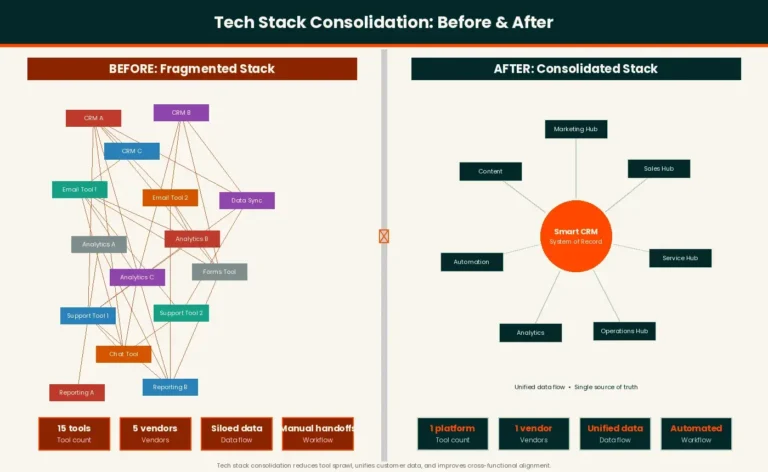
The implementation of a Customer Relationship Management (CRM) system, a cornerstone of modern business operations, often reveals a critical, yet frequently overlooked, foundation: the data model. Without an intentional and robust data model, businesses frequently encounter significant operational friction, leading to inaccurate reporting, inconsistent definitions, and a breakdown in inter-departmental communication. This foundational oversight can manifest as discrepancies in pipeline reports, where marketing and sales teams operate with conflicting interpretations of the same terminology, or as unforeseen consequences where new integrations inadvertently disrupt essential sales pipeline reporting streams. These issues are not isolated incidents; they are symptomatic of a deeper organizational challenge rooted in the absence of a thoughtfully designed CRM data model.
According to a comprehensive study, "The State of CRM Data Management in 2025" by Validity, a staggering 37% of CRM users have directly experienced revenue loss attributed to poor data quality. Furthermore, a mere 9% of businesses express sufficient trust in their CRM data to confidently generate reports. This highlights a pervasive gap in data strategy, far more common than many organizations realize. The design and implementation of a coherent CRM data model are therefore not merely technical exercises but strategic imperatives that can significantly impact cross-team clarity and operational efficiency.
Understanding the CRM Data Model: A Blueprint for Customer Data
At its core, a CRM data model serves as the structural blueprint that dictates how customer information is organized within a CRM system. It meticulously defines the types of entities, or "objects," that will be housed within the system, the specific attributes, or "properties," each object possesses, and the intricate relationships that connect these objects to one another. Crucially, it also establishes the rules governing data entry and the progression of customer interactions through various pipeline stages.
To draw an analogy, a CRM database is akin to a vast library, storing individual records. The data model, conversely, is the cataloging system and the architectural design of the library itself. It specifies which sections (objects) exist, what information (properties) is contained within each book (record), and how these sections are interconnected. This concept mirrors that of a database schema in traditional information technology, which outlines tables, their columns, and their interdependencies.
In essence, a CRM data model is a comprehensive framework encompassing objects, their associated properties, the defined relationships between them, the defined sales or service pipelines, logged activities, and unique identifiers. The CRM database then serves as the physical repository for the data that conforms to this defined model.
The Paramount Importance of a CRM Data Model for Business Outcomes
The significance of a well-structured CRM data model cannot be overstated, as it directly underpins the accuracy of reporting, the seamlessness of inter-departmental handoffs, and the integrity of sales pipelines. Validity’s research underscores this point, revealing that 76% of organizations report less than half of their CRM data as accurate and complete. This pervasive data quality issue has tangible financial consequences, with 37% of companies admitting to direct revenue losses and only 9% feeling confident in their reporting capabilities.
A common scenario observed across industries involves the import of disparate spreadsheets into a CRM system, only for users to find themselves questioning pipeline figures months later. The root cause is almost invariably an inadequately designed data model that was never established with a clear strategic vision. A well-conceived data model fosters a shared vocabulary for customer data across all teams, ensuring that crucial context accompanies a deal handover. For organizations grappling with existing trust issues in their reporting data, comprehensive guides on rectifying such problems are essential.
Deconstructing the CRM Data Model: Key Components
A robust CRM data model is typically comprised of six fundamental elements, each playing a vital role in the overall structure and functionality of the system:
- Objects: These are the fundamental building blocks representing distinct entities within the CRM. Common examples include Contacts, Companies, Deals, and Tickets.
- Properties: These are the specific data fields associated with each object, capturing details about that entity. For instance, a "Contact" object might have properties like "First Name," "Email Address," and "Lifecycle Stage."
- Associations: This element defines how different objects are connected to one another. For example, a "Deal" might be associated with multiple "Contacts" and a single "Company."
- Pipelines: These represent the sequential stages through which a deal or a customer interaction progresses, providing a visual flow for sales or service processes.
- Activities: These encompass all interactions and tasks associated with an object, such as emails, calls, meetings, and tasks.
- IDs: Unique identifiers are assigned to each record to ensure distinctness and facilitate seamless data integration and retrieval.
Beyond these core components, governance rules form the overarching structural layer. These rules dictate operational protocols such as who has the authority to create new fields, the naming conventions to be adhered to, and the process for retiring outdated properties. This governance is critical for ensuring the long-term reliability and consistency of objects, properties, associations, and pipelines.
Illustrative Examples of CRM Data Models: Leveraging HubSpot Objects
HubSpot’s Smart CRM, for instance, is architected around four primary standard objects: Contacts, Companies, Deals, and Tickets. For organizations with more specialized business needs, the Enterprise edition introduces custom objects. These custom objects are designed to represent unique business entities that do not fit neatly into the standard categories, such as Subscriptions, Locations, or Projects.
| Object | Primary Use | Example Properties |
|---|---|---|
| Contacts | Individual people: leads, customers, partners | First name, email, lifecycle stage, lead source |
| Companies | Organizations that contacts belong to | Company name, industry, annual revenue |
| Deals | Revenue opportunities in a pipeline | Deal name, amount, close date, deal stage |
| Tickets | Customer support cases | Subject, status, priority, ticket owner |
| Custom Objects | Business-specific entities (Enterprise) | Subscription, Location, Project (examples) |
HubSpot’s CRM customization tools empower teams to configure object names, define mandatory fields, and establish association labels directly within the user interface, often eliminating the need for specialized developer resources.
The Mechanics of Relationships and Associations
In systems like HubSpot, associations are the linchpin that connects various records. These associations are not merely functional but can also be labeled to provide granular context. For example, within a single deal, different contacts can be designated with specific roles, such as "Decision Maker" or "Technical Evaluator." This capability is particularly valuable in complex B2B sales cycles where multiple stakeholders influence purchasing decisions.
A Step-by-Step Guide to Designing a CRM Data Model
Designing an effective CRM data model is a structured process that can be facilitated by specialized tools. HubSpot’s Data Model Builder, for instance, provides a visual canvas for configuring and documenting the CRM structure.
Step 1: Initial Assessment and Canvas Exploration
Begin by accessing the data model builder and carefully reviewing the existing canvas. Interacting with each object card and observing how connections highlight will reveal the actual structure of the model, which may differ from team assumptions.
Step 2: Activating Necessary Objects
Standard objects like Contacts, Companies, Deals, and Tickets are typically activated by default. However, optional objects such as Appointments, Courses, or Listings can be enabled within the builder based on specific organizational needs. This is particularly beneficial during CRM migrations, where activating only essential objects before data transfer can prevent future data cleanup challenges.
Step 3: Populating Objects with Properties
Each object can be expanded to reveal its properties. New properties can be created by defining their details in a right-hand panel. Tools like HubSpot’s Breeze Assistant can streamline this process by allowing users to create properties using natural language prompts, such as "Create the contact property Secondary email."

Step 4: Configuring Associations
The Associations tab within the data model builder allows for the management of how objects are interconnected. Robust association design is crucial for maintaining clean customer data integration, preventing records from becoming orphaned due to integration misalignment.
Step 5: Implementing Custom Objects for Niche Entities
When core business entities do not align with standard CRM objects, the creation of custom objects becomes necessary. This process involves defining the new object’s properties and its place within the overall data structure. Custom objects are typically available on enterprise-level plans. Common examples include Subscriptions, Locations, and Projects. It is advisable to thoroughly pressure-test the use case with multiple teams before creating a custom object, as restructuring after data accumulation can be costly.
Step 6: Documentation and Validation
Prior to system launch or major updates, it is imperative to export and document the data model. Running test records through all pipeline stages and confirming that associations function as intended is a critical validation step. Comprehensive documentation typically includes an Entity-Relationship Diagram (ERD), a data dictionary detailing each property, its owner, and acceptable values, and a change log recording all modifications.
Adapting CRM Data Models for Diverse Business Models
The design of a CRM data model must be tailored to the specific business model it serves.
- B2B CRM Data Models: These models primarily revolve around companies, contacts, and opportunities. Given that B2B buying groups often involve multiple decision-makers, B2B models require robust association labeling and the capability to track multiple contacts per deal, moving beyond a single-contact record. Effective customer lifecycle management across diverse stakeholders is paramount.
- B2C CRM Data Models: In contrast, B2C models focus on individual contacts and their lifecycle data. Company information may be less relevant. The key relationships are between a contact and their transaction history, subscription status, or lifecycle stage. B2C models prioritize high-volume performance and rapid segmentation across millions of contacts.
- B2B2C CRM Data Models: This hybrid model often necessitates the inclusion of intermediary entities, such as partners or locations. A company operating through channel partners, for example, needs to track the end customer, the partner organization, and the contractual relationship between them. These intermediary entities are frequently implemented as custom objects with explicit associations to both the end customer and the partner organization, alongside their own consent and Service Level Agreement (SLA) properties. Reliable customer data integration is particularly critical in B2B2C scenarios due to the complexity of data flow across multiple systems and business relationships.
Canonical Data Model vs. CRM Data Model: Distinct Purposes
While both are critical for data management, a canonical data model (CDM) and a CRM data model serve different primary purposes. A CDM standardizes data definitions across multiple systems using a neutral schema that all applications translate to and from. This approach simplifies system upgrades and replacements, as changes only require updating two transformations (the "on-ramp" and "off-ramp" for that specific system) rather than rebuilding every integration.
A CRM data model, on the other hand, is optimized for operational workflows within a single CRM system. It is not a neutral integration layer but rather a reflection of how customer-facing teams operate. Mature organizations often employ both: a canonical model governs inter-system connections, such as CRM-to-ERP integrations, while the CRM data model dictates the day-to-day data usage by sales, marketing, and service agents.
| Dimension | Canonical Data Model | CRM Data Model |
|---|---|---|
| Primary Purpose | Cross-system interoperability | In-CRM workflow design |
| Audience | Integration architects | CRM admins, RevOps |
| Scope | Entire enterprise tech stack | Within the CRM platform |
| Stability | Designed for long-term stability | Evolves with team needs |
Establishing Governance and Optimization for Your CRM Data Model
Without robust governance, even a meticulously designed data model can degrade over time. Data governance frameworks establish controls over field creation, naming conventions, data ownership, and audit cadences. Every property should have a designated owner, and the creation of new fields should necessitate a documented request process, rather than being open to any user with sufficient permissions. Organizations have reported situations where a significant percentage of contact properties were created by individual representatives and subsequently became unused beyond initial data entry.
Regular audits, conducted quarterly, should assess property fill rates and duplicate record counts. Tools like HubSpot’s Data Hub offer features to identify low fill-rate properties, duplicate records, and formatting inconsistencies. Complementing these audits with consistent data hygiene practices—including standardization, deduplication, and enrichment—is essential for maintaining model reliability as contact volume grows.
Visualizing and Documenting Your CRM Data Model for Clarity
HubSpot’s data model builder provides an interactive view of objects and associations. For formal documentation, exporting this information to an ERD tool such as Lucidchart or Draw.io is recommended. A strong understanding of database schemas facilitates this translation. A comprehensive documentation package should include:
- ERD Diagram: Visually representing objects and their relationships.
- Data Dictionary: A detailed list of every property, its owner, and acceptable values.
- Change Log: A record of every modification, including the date and reason for the change.
Including a "decision record" section in the change log, documenting the rationale for declining field requests, can prevent the repeated proposal of low-value fields.
The Symbiotic Relationship Between AI, Analytics, and a Clean CRM Data Model
The effectiveness of AI-powered features and analytics is directly contingent upon the quality of the underlying data model. Validity’s research indicates that 45% of companies’ CRM data is not prepared for AI deployment due to incomplete associations, inconsistent field values, and missing unique identifiers. AI agents and analytical tools rely on clean fields, complete relationships, and trustworthy identifiers to produce reliable outputs.
A readiness checklist for AI integration typically includes: duplicate rates below 3% across all object types; property fill rates exceeding 70% for required fields; every deal linked to at least one contact and one company; and no deals remaining in a pipeline stage for longer than twice the average sales cycle. When these thresholds are met, features like predictive lead scoring and deal health summaries can deliver accurate and actionable insights.
Indicators of a Successful CRM Data Model
Positive signals that a CRM data model is functioning effectively include:
- Consistent reporting across departments.
- Seamless data flow between sales, marketing, and service.
- High user adoption and trust in CRM data.
- Accurate pipeline forecasting.
- Reduced data entry errors.
Conversely, warning signs include:
- Conflicting reports from different teams.
- Frequent data quality issues.
- Difficulty in integrating new tools.
- Low user trust and adoption.
- Inaccurate sales forecasts.
Frequently Asked Questions About CRM Data Models
- Is a CRM data model the same as a CRM database? No. The data model is the blueprint defining structure and relationships, while the database is the storage for the actual data.
- How is a CRM data model different from a canonical data model? A CRM data model is for internal CRM workflow optimization, whereas a canonical data model is for enterprise-wide system interoperability.
- Do small teams need custom objects, or can they start with standard objects? Most small teams should begin with standard objects and validate use cases. Custom objects are for core business entities not covered by standard types.
- What is the best way to document my CRM data model? An ERD diagram, a data dictionary, and a change log are essential components for comprehensive documentation.
- How do I adapt the model for B2B2C? Implement intermediary entities as custom objects with clear associations to both end customers and partner organizations, defining specific properties and terms.
Conclusion
A CRM system’s true value is unlocked through a well-defined and consistently governed data model. Organizations that prioritize intentional design, robust governance, and diligent documentation will reap the benefits of more trustworthy reporting, faster inter-departmental collaboration, and more effective AI-driven insights. Tools like HubSpot’s Smart CRM offer the necessary infrastructure and capabilities to build and maintain scalable data models that align with evolving business needs, ultimately driving better business outcomes.
About the Author