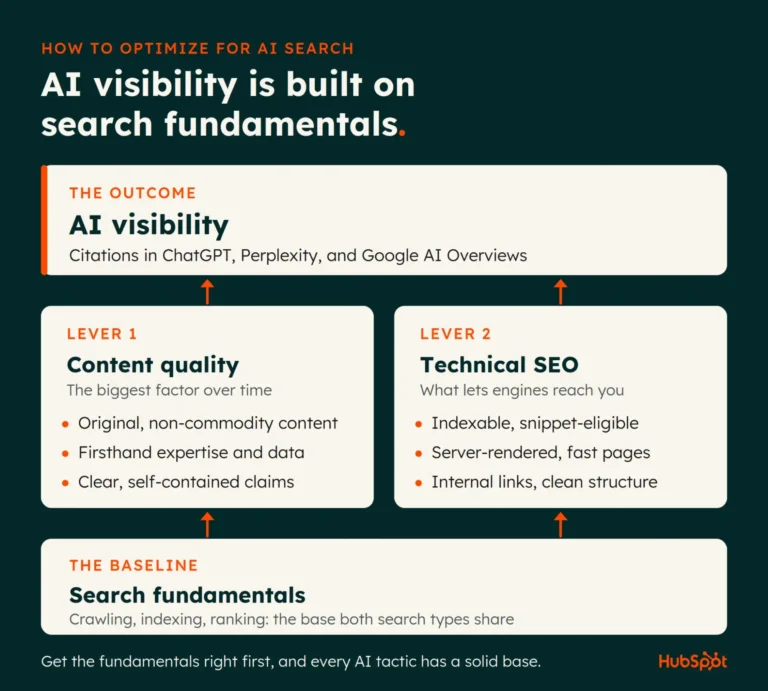
A fundamental shift is underway in how individuals and businesses seek information online, moving away from traditional search engine result pages (SERPs) filled with hyperlinks towards synthesized, direct answers provided by artificial intelligence. This burgeoning trend, spearheaded by platforms like ChatGPT, Perplexity AI, and Google’s nascent AI Overviews, is compelling marketers to rethink their digital strategies, prioritizing visibility within these new AI-driven information ecosystems. The critical question for marketers is no longer solely about ranking on Google, but rather about whether their brand and offerings are even mentioned by AI search tools.
The implications of this paradigm shift are profound, affecting every stage of the buyer’s journey. Consumers and B2B decision-makers are increasingly bypassing the multi-step process of sifting through links, opting instead for AI-powered tools that can provide consolidated, direct responses to their queries. This evolution necessitates a deeper understanding of what AI search tools are, how they are being adopted, and how marketers can adapt to ensure their brands remain discoverable and relevant in this rapidly changing landscape.
Understanding the Spectrum of AI Search Tools
At its core, an AI search tool or AI search software leverages artificial intelligence to facilitate the crawling, finding, retrieval, or synthesis of information. However, this broad definition encompasses a diverse range of applications, each serving distinct purposes within the broader information ecosystem. These tools can generally be categorized into three primary functions: research, visibility, and optimization. Recognizing these distinctions is crucial for marketers to accurately assess their needs and select the most appropriate tools for their strategies.
-
Answer Engines: These are the generative AI conversational platforms, such as ChatGPT, Google Gemini, and Claude. Users interact with them through natural language prompts, receiving synthesized answers compiled from various sources. While some provide citations, others rely on their extensive training data. Their primary objective is to deliver a singular, coherent response, rather than presenting a list of links for the user to explore. These engines are increasingly becoming the first port of call for both consumer and professional research.
-
AI Site Search Tools: These tools are integrated directly into a company’s website, application, or internal knowledge base. They enhance the user experience by enabling visitors to find specific products, information, or answers without leaving the platform. Leading examples include Algolia and Coveo. For businesses with extensive content libraries, e-commerce operations, or complex product offerings, effective AI site search is paramount to preventing user frustration and ensuring they find what they need internally before seeking external answers.
-
AEO (Answer Engine Optimization) Tools: These are marketer-facing platforms designed to measure and enhance a brand’s presence within AI-generated answers. They track brand mentions, benchmark visibility against competitors, and provide actionable recommendations to improve AI search rankings. As AI search becomes a dominant discovery layer, AEO tools are emerging as critical components of a modern digital marketing stack.
The Transformative Impact on Buyer Research
The traditional model of buyer research, which often involved extensive browsing of search engine results and vendor websites, is undergoing a radical transformation. Buyers are now leveraging AI tools to conduct significant portions of their research before ever engaging with a vendor.

Data from Forrester indicates a substantial adoption of AI in B2B purchasing processes, with 94% of B2B buyers reporting AI use in recent purchase journeys. Specifically, 55% utilized AI for vendor comparison, 54% for product research, and 47% for building internal business cases. This suggests that by the time a sales representative is contacted, a significant portion of the buyer’s decision-making process has already been influenced by AI-generated insights. AI answer engines have, in many instances, surpassed traditional sources like vendor websites, sales representatives, and product experts as the primary avenue for initial vendor research.
The consumer landscape mirrors this trend. McKinsey research reveals that approximately 50% of consumers across all age demographics, including Baby Boomers, employ AI-powered search for purchasing decisions. Further Adobe Digital Insights data highlighted that 56% of U.S. consumers utilized generative AI during the 2025 holiday shopping season, marking a significant increase from the previous year.
This shift implies that the established marketing playbook of solely focusing on "ranking on Google, getting traffic" is no longer sufficient. Visibility within AI answer engines is rapidly becoming the primary discovery layer, particularly for queries driven by purchase intent. The journey from initial awareness to purchase consideration is increasingly being navigated within AI interfaces, presenting both a challenge and an opportunity for businesses.
Evolution of AI Search Tools and Their Market Impact
The rise of AI search tools can be viewed as a natural progression of information retrieval technologies, accelerated by advancements in large language models (LLMs) and natural language processing (NLP). Early search engines relied on keyword matching, evolving to understand semantic meaning. AI search tools represent the next frontier, capable of not only understanding intent but also synthesizing information from disparate sources to provide direct, conversational answers.
The market for these tools is rapidly expanding, with significant investment flowing into both consumer-facing answer engines and enterprise-level AI site search solutions. This surge in development and adoption is reshaping the digital advertising and content marketing landscapes. For instance, the decline in click-through rates from traditional search engines, as noted by Bain & Company (where 60% of searches now end without a click), is directly attributable to the effectiveness of AI in providing immediate answers. This means that brands that successfully appear in AI-generated responses are the ones that gain crucial visibility in a landscape where users are less inclined to navigate away from the initial AI interface.
The Role of Answer Engines in Modern Research
Answer engines, exemplified by platforms like ChatGPT and Google Gemini, have become powerful tools for both consumers and professionals. For marketers, understanding how these platforms synthesize information is key. While the exact algorithms remain proprietary, the underlying principle involves processing vast datasets to generate coherent, contextually relevant answers.
Marketers cannot directly control the specific output of these engines, but they can influence them. This influence is exerted through the creation of high-quality, credible, and well-sourced content that AI models are likely to cite. This practice is often referred to as Answer Engine Optimization (AEO), a strategic approach focused on ensuring brand prominence and accuracy within AI-generated responses. As HubSpot’s AI Trends Report indicates, a significant portion of marketers (40%) are already turning to these tools for research, data analysis, and content generation, underscoring their growing importance in the marketing workflow.
Enhancing User Experience with AI Site Search
While answer engines focus on external information discovery, AI site search tools address the crucial need for efficient information retrieval within a company’s own digital properties. For businesses with extensive product catalogs, detailed technical documentation, or broad content repositories, a robust internal search function is indispensable.

Platforms like Algolia and Coveo are at the forefront of this domain, offering sophisticated AI-powered search capabilities that understand natural language queries and deliver highly relevant results. For SaaS companies, e-commerce brands, and large enterprises, the effectiveness of their site search directly impacts user engagement, conversion rates, and customer satisfaction. Failure to provide a seamless internal search experience can lead to user frustration, abandonment, and a greater reliance on external answer engines, which may not always direct users back to the original vendor.
The Strategic Imperative of AEO Tools
Answer Engine Optimization (AEO) tools represent a crucial evolution in digital marketing measurement and strategy. These marketer-centric platforms provide the necessary insights into a brand’s performance within the AI search landscape. By tracking how often a brand appears in AI-generated answers, comparing this visibility against competitors, and offering data-driven recommendations, AEO tools empower marketers to adapt their content and SEO strategies for this new environment.
The implications of not engaging with AEO are significant. As Bain & Company highlights, a substantial percentage of searches now conclude without a click to a website. This means that brands that are not visible in AI answers are effectively invisible to a growing segment of potential customers. AEO tools are therefore becoming essential for maintaining and growing brand visibility in an era where direct answers are prioritized over link exploration.
Navigating the AI Search Tool Landscape: A Use-Case Approach
Selecting the right AI search tool hinges on understanding specific marketing objectives and use cases. The market is dynamic, and while many tools offer overlapping functionalities, their strengths and ideal applications vary.

Measuring Brand Visibility: HubSpot AEO
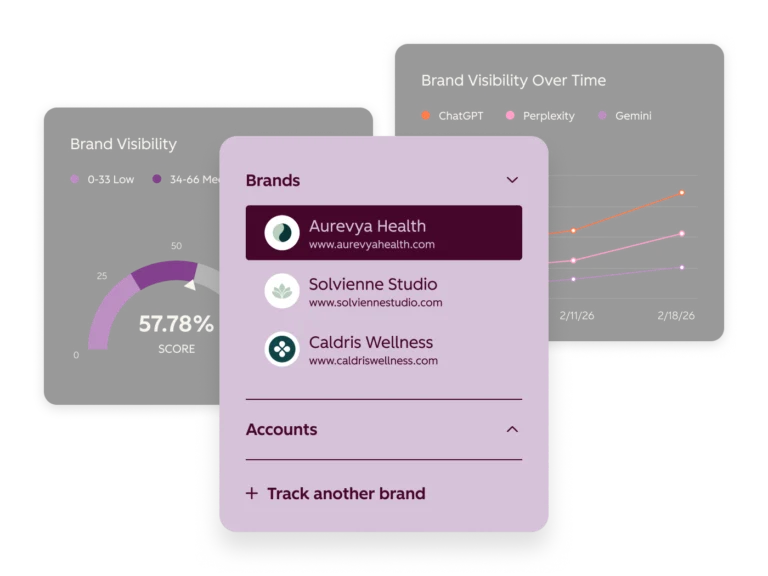
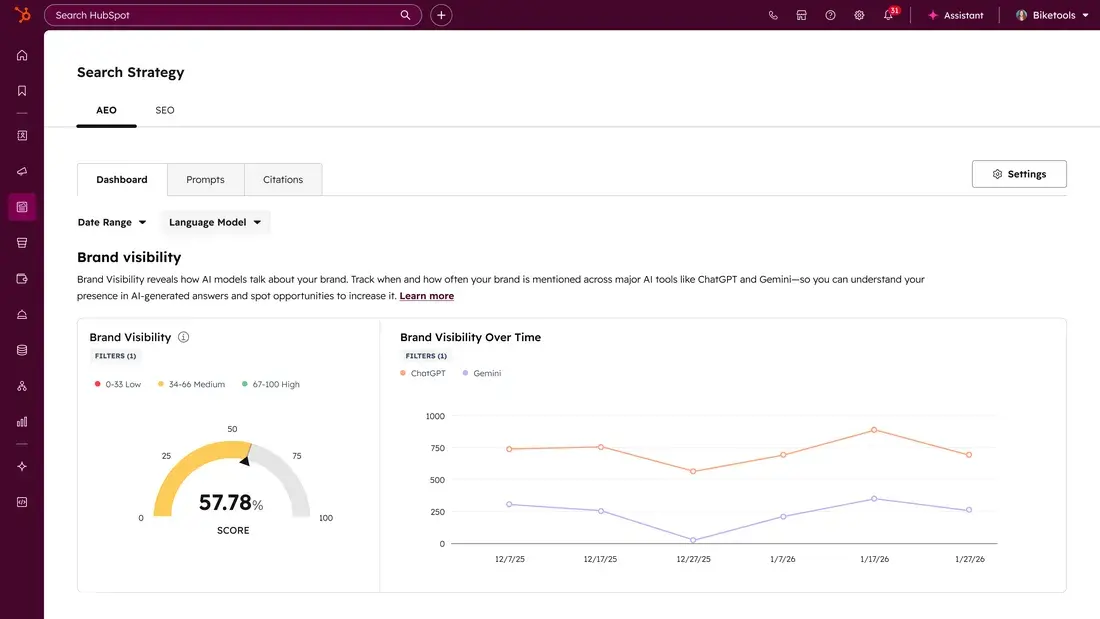
For marketers aiming to understand and improve their brand’s presence within AI answer engines, HubSpot AEO emerges as a specialized solution. Unlike generic SEO tools, AEO focuses specifically on the AI search ecosystem, tracking visibility across major platforms like ChatGPT, Perplexity, and Gemini. A key differentiator for HubSpot AEO is its integration with CRM data. This allows it to predict the prompts that actual buyers are most likely to use, grounding optimization efforts in real-world customer behavior rather than abstract industry guesswork.
Early adopters of the AEO beta program have reported significant increases in AI referral traffic, even amidst broader declines in organic search traffic. This underscores the potential of a targeted AEO strategy in navigating the evolving search landscape.
- Best For: HubSpot customers and marketers prioritizing ongoing visibility tracking, competitor benchmarking, citation analysis, and actionable recommendations across major answer engines.
- Pricing: Available with HubSpot Marketing Hub Pro and Enterprise, or as a standalone solution.
- Getting Started: HubSpot’s free AI Search Grader offers a one-time diagnostic snapshot of a brand’s AI search presence, serving as an accessible entry point for initial assessment.
Everyday Research and Synthesis: ChatGPT
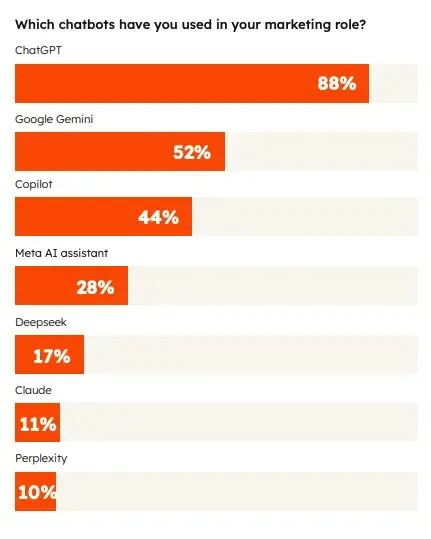
For a versatile AI assistant capable of handling a wide range of research, content ideation, and synthesis tasks, ChatGPT remains a dominant force. Its widespread adoption, even among marketers (88% according to HubSpot research), highlights its utility as a daily research companion. With billions of prompts processed daily, ChatGPT excels at everything from creative writing and market analysis to coding assistance.
Its ability to process and summarize information makes it invaluable for gathering competitive intelligence, brainstorming content ideas, and conducting preliminary market research. The platform’s extensive user base and continuous development position it as a central tool for many professionals seeking efficient information processing.
- Best For: Marketers, writers, and researchers requiring a flexible AI assistant for open-ended exploration, drafting, and information synthesis.
- Pricing: Offers a free tier, with a paid ChatGPT Plus subscription providing enhanced features.
- Integration: HubSpot’s ChatGPT connector allows for the integration of CRM data, enabling more personalized and data-driven AI interactions.
Ensuring Accuracy and Sourcing: Perplexity AI
When accuracy and verifiable sourcing are paramount, Perplexity AI distinguishes itself with its commitment to providing cited answers. While appearing similar to other conversational AI tools, Perplexity was fundamentally designed around real-time, sourced information. Every response includes inline citations, making it a more reliable choice for tasks requiring factual verification and deep research.
Despite the ongoing challenges with citation accuracy across all AI models, Perplexity has demonstrated a lower error rate compared to its peers, as noted by the Columbia Journalism Review. This makes it an attractive option for professionals who need to conduct due diligence, fact-check information, or perform in-depth competitive analysis with a higher degree of confidence in the sources.
- Best For: Fact-checking, competitive research, academic inquiries, and technical topics where accuracy and clear sourcing are critical.
- Pricing: Available with a free tier and a paid Perplexity Pro subscription.
Internal and Site Search Enhancement: Algolia or Coveo
For organizations grappling with the challenge of users being unable to find information on their own websites or within internal knowledge bases, AI site search tools are the solution. Algolia is renowned for its speed and developer flexibility, making it a popular choice for e-commerce and SaaS platforms that require robust, customizable search experiences. Its recent expansion into generative AI features further enhances its capabilities for natural language querying.
Coveo offers a more enterprise-focused solution, particularly for organizations with complex knowledge bases and extensive integration needs with platforms like Salesforce or SAP. Its strengths lie in delivering personalized recommendations and managing intricate data structures across customer-facing portals. For businesses that rely heavily on their internal content and customer interactions, investing in AI site search is vital for maintaining user engagement and operational efficiency.

- Best For: E-commerce sites, SaaS documentation portals, large knowledge bases, and enterprise intranets requiring intelligent, AI-powered internal search.
- Pricing: Algolia offers a free tier with quote-based pricing for advanced plans. Coveo’s pricing is available upon request.
Evaluating AI Search Tools: Key Considerations for Marketers
The AI search market is characterized by rapid innovation and a proliferation of tools, often with superficially similar feature sets. To make informed decisions, marketers should look beyond superficial comparisons and focus on critical evaluation criteria:
- Relevance to Business Goals: Does the tool directly address a specific marketing challenge or opportunity?
- Data Integration Capabilities: Can the tool integrate with existing marketing technology stacks (e.g., CRM, analytics platforms) to provide richer insights?
- Accuracy and Reliability: How dependable are the tool’s outputs, particularly in terms of factual accuracy and sourcing?
- Scalability and Performance: Can the tool handle the volume of data and queries required by the business?
- User Experience and Ease of Use: Is the platform intuitive for the intended users (marketers, researchers, etc.)?
- Cost-Effectiveness: Does the return on investment justify the subscription or implementation costs?
- Future-Proofing: Does the tool demonstrate a commitment to ongoing development and adaptation to the rapidly evolving AI landscape?
Frequently Asked Questions About AI Search Tools
Are AI search tools the same as chatbots?
While many AI search tools utilize conversational interfaces akin to chatbots, their primary function is information retrieval and synthesis, rather than pure conversation or task completion. Chatbots are designed for interaction, while AI search tools are built for finding and processing information. Tools like ChatGPT bridge this gap, offering both conversational capabilities and robust search functionalities.
What is the difference between AI search tools and AEO tools?
AI search tools are the end-user applications, such as ChatGPT or Perplexity, used for finding information. AEO tools, on the other hand, are measurement and optimization platforms for marketers. They help businesses understand and improve their visibility within these AI search tools. They operate on opposite sides of the AI search equation: one is the channel, and the other is the analytics and optimization layer for that channel.
How can marketers measure brand visibility in AI answers?
Traditional search analytics platforms do not capture visibility within AI answer engines. There is no equivalent of a "ChatGPT Search Console." AEO tools fill this gap by simulating user queries to AI models, recording brand appearances, and tracking changes over time. Tools like HubSpot AEO employ CRM data to prioritize prompts that reflect actual buyer behavior, providing a more accurate assessment of market presence.

When does AI site search matter more than web search?
AI site search becomes critical when users are already on a company’s website or within its product ecosystem and need to find specific information. For businesses with extensive content, product catalogs, or complex documentation, an effective AI site search enhances user experience, drives conversions, and reduces support costs. If users cannot find what they need internally, they are likely to leave and use external AI search tools, potentially without returning.
The Future of Discovery: Embracing AI-Driven Insights
The landscape of online information discovery has irrevocably shifted. Answer engines are now the primary destination for consumers researching products and B2B buyers evaluating vendors, offering a direct path to answers that bypasses traditional search result pages. While many marketers recognize this change, proactive adaptation remains a significant opportunity.
The tools discussed – answer engines for general research, AI site search for internal engagement, and AEO tools for measuring external visibility – address distinct but interconnected needs. The immediate priority for most marketers should be understanding their presence in the AI search ecosystem. Beginning with a diagnostic tool like HubSpot’s free AI Search Grader can provide an initial assessment, followed by ongoing tracking and optimization with a dedicated AEO platform.
The era of simply optimizing for traditional search engines is drawing to a close. The future of discovery lies in understanding and leveraging the power of AI. By embracing these new tools and strategies, marketers can ensure their brands remain discoverable, relevant, and influential in this evolving digital world. The time to act and adapt is now.
About the Author