The way consumers discover and research products and services has undergone a seismic shift. Beyond traditional search engines like Google, a new breed of conversational AI platforms, including ChatGPT, Gemini, and Perplexity, are now front and center in the buyer’s journey. This evolving consumer behavior necessitates a fundamental rethinking of digital marketing strategies, with "Answer Engine Optimization" (AEO) emerging as a critical discipline for brands seeking to maintain relevance and consideration. Understanding the nuances between dedicated AEO tools and comprehensive SEO suites is paramount for businesses navigating this new frontier.
The increasing reliance on AI-powered search tools is not merely a trend; it’s a fundamental change in information consumption. A recent analysis of buyer behavior within the CRM market revealed that a significant 42% of potential buyers are integrating AI search into their evaluation processes. This shift has had a tangible impact on traditional organic traffic, with reports indicating a year-over-year decline of 27% for some businesses, while AI-driven referral traffic has seen a threefold increase. Perhaps most compellingly, leads generated through AI referrals demonstrate a conversion rate three times higher than those originating from traditional search. This data underscores the urgency for brands to adapt.
Answer Engine Optimization (AEO), sometimes referred to as Generative Engine Optimization (GEO), represents the AI-era counterpart to Search Engine Optimization (SEO). While SEO traditionally focuses on securing high rankings on search engine results pages (SERPs), AEO aims to ensure a brand’s positive representation and inclusion within the answers generated by AI models. This distinction is crucial: a consumer asking an AI chatbot "What is the best CRM?" might receive a direct, synthesized answer that names a brand favorably, potentially leading to conversion without ever needing to click through to a website. Data from Ahrefs supports this, indicating that AI search visitors have exhibited a remarkable 23x better conversion rate compared to traditional organic search visitors.
The strategic imperative for AEO is clear, but the practical implementation raises questions for marketing teams. The central debate revolves around whether a specialized AI visibility tool, such as HubSpot AEO, is necessary, or if a comprehensive SEO platform with integrated AI tracking features, like SE Ranking, can suffice. This comparison aims to delineate the distinct capabilities and target audiences of these solutions.
Understanding the Players: Specialists vs. Generalists
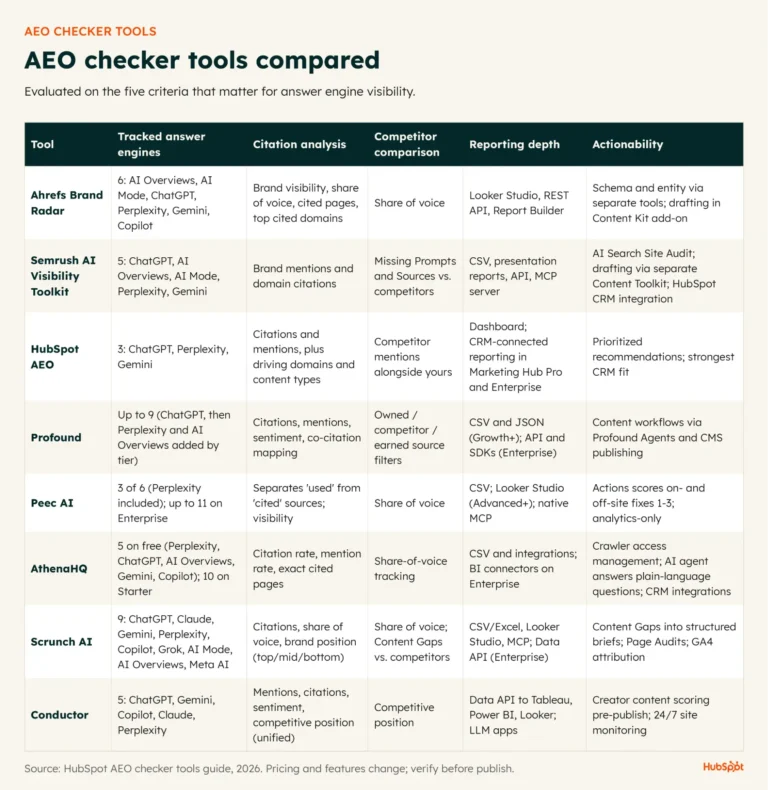
At its core, the distinction lies between specialized and generalized approaches. HubSpot AEO is engineered as a specialist tool, meticulously designed to monitor and optimize a brand’s visibility within AI-generated answers across platforms like ChatGPT, Gemini, and Perplexity. Its focus is on providing actionable insights directly related to AI-driven discovery.
Conversely, SE Ranking operates as a generalist, offering a robust suite of traditional SEO tools, including rank tracking, site audits, and backlink analysis. While SE Ranking has incorporated AI tracking features into its broader platform, its dedicated AEO capabilities have historically been less pronounced. To directly address the AEO market, the SE Ranking team has introduced SE Visible, a separate and distinct product. SE Visible is purpose-built for AI visibility monitoring, offering its own login, pricing structure, and feature set, making it the most direct competitor to HubSpot AEO. Therefore, a true apples-to-apples comparison for dedicated AI visibility tracking lies between HubSpot AEO and SE Visible. SE Ranking, in its own right, remains a comprehensive SEO solution with added AI monitoring functionalities.

At-a-Glance Comparison: Features and Focus
| Feature Area | HubSpot AEO | SE Visible (by SE Ranking) | SE Ranking |
|---|---|---|---|
| Primary focus | AI visibility + actionability | AI visibility monitoring | SEO research + rank tracking |
| AI visibility tracking | Yes (ChatGPT, Gemini, Perplexity) | Yes (ChatGPT, Gemini, Perplexity, Google AI Overviews, Google AI Mode) | Yes (via AI Search Toolkit) |
| Prompt tracking | Daily, custom prompts (25 on base plan) | 200-1,000 prompts (plan dependent) | 100 prompts/day (Core plan) |
| Competitor Benchmarking | Yes (shows AI citation sources) | Yes (source category breakdowns, top cited URLs) | Limited (mentions tracked, not deep citation intel) |
| Multi-country/language | Yes (competitor citation comparison) | Yes (visibility, sentiment, source gap analysis) | Limited within AI toolkit |
| Citation analysis | Not specified | Yes (7 countries, 5 languages) | Limited |
| SEO rank tracking | Not included | Not included | Core feature |
| Site audits | Not included | Not included | Yes (120+ technical SEO metrics) |
| Keyword research | Not included | Not included | Yes (gap analysis, competitor keywords) |
| CRM integration | Native (recommendations tied to CRM data) | None | Zapier, Make, n8n, Looker Studio, GSC |
| Content workflow | Built-in (recommendations in Marketing Hub) | Not included | Content marketing tool available on some plans |
| Pricing entry point | $50/month (28-day free trial) | $79/month annually; $99/month monthly (10-day free trial) | $103.20/month Core plan (14-day free trial) |
| Standalone option | Yes | Yes | Yes |
| Best for | Growth teams, in-house marketers, HubSpot users | Brands, agencies, PR teams focused on AI visibility | SEO agencies, freelancers, multi-project teams |
Deep Dive into Features: HubSpot AEO vs. SE Visible
When evaluating the specific features that drive value for AI visibility, both HubSpot AEO and SE Visible offer distinct strengths.
Performance Monitoring & Analysis:
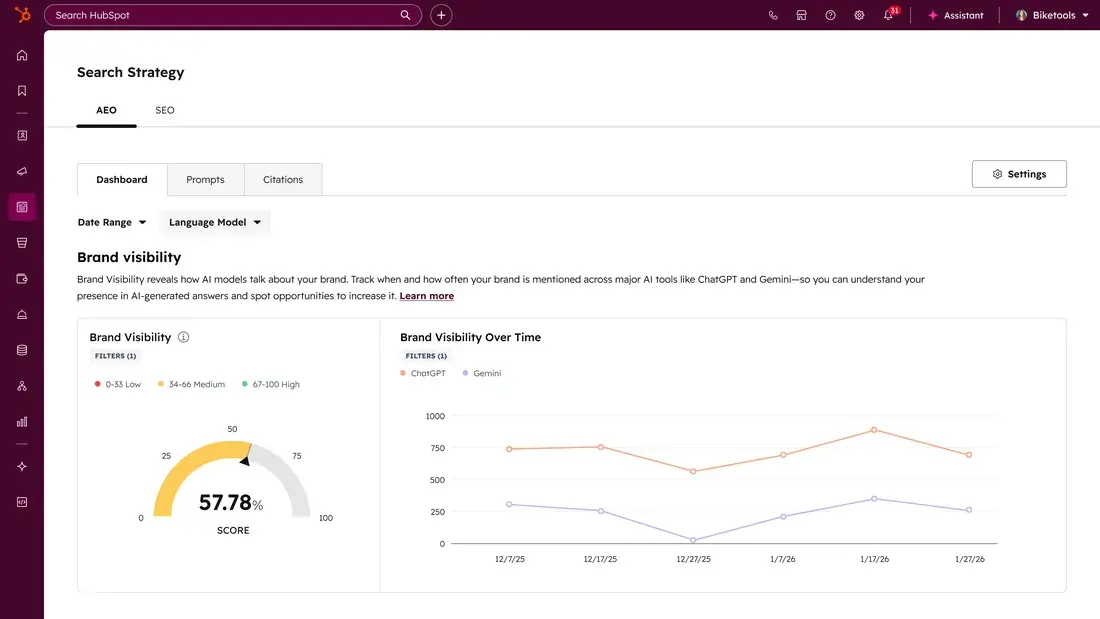
HubSpot AEO is purpose-built for AI answer engines, excelling in tracking brand visibility across ChatGPT, Gemini, and Perplexity. Its four core features include:
- AI Visibility Score: A proprietary metric that quantifies a brand’s overall presence and performance in AI-generated answers.
- AI Visibility Trends: Visualizations that track how a brand’s visibility evolves over time, allowing for the identification of patterns and the impact of optimization efforts.
- AI Visibility Charts: Detailed breakdowns of visibility by specific AI engines, enabling granular analysis and targeted strategy adjustments.
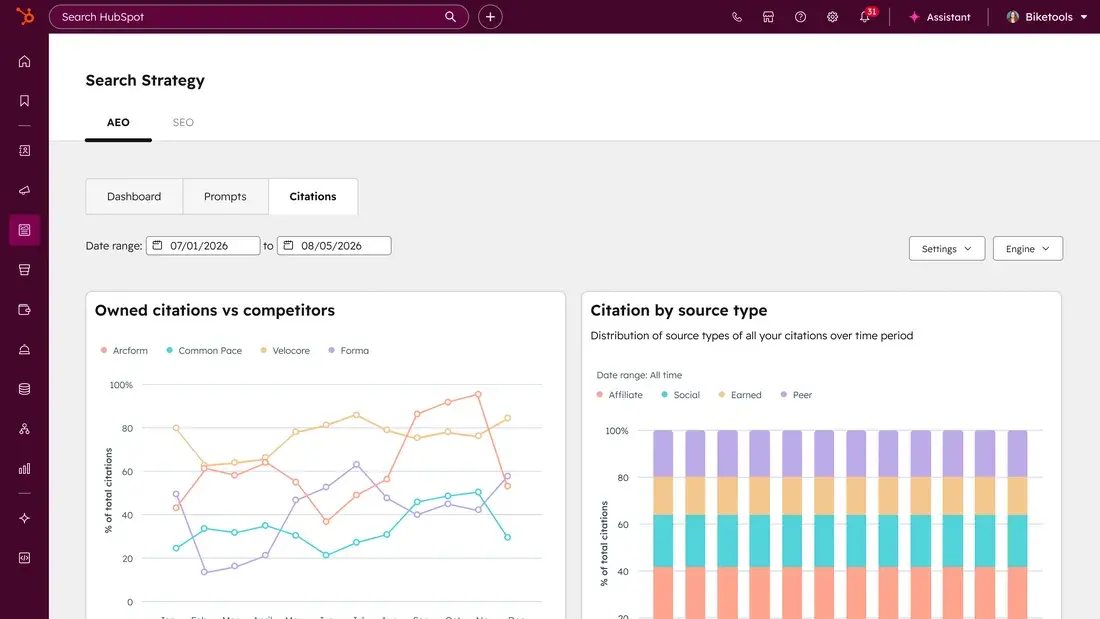
- Citations Tab: An analysis of where AI models are sourcing information, highlighting owned citations versus competitor mentions and the types of sources being leveraged.
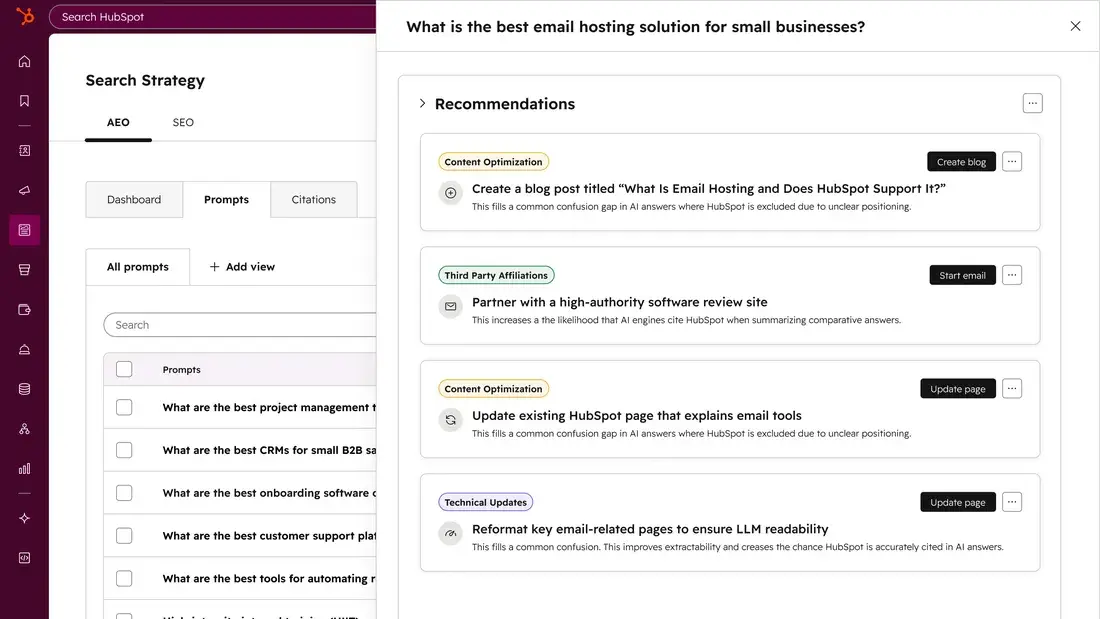
- Recommendations: Actionable, AI-powered suggestions for content optimization, aimed at improving a brand’s appearance in AI responses. These recommendations are intelligently linked to CRM data within the HubSpot ecosystem, offering a personalized approach to content strategy.
SE Visible, while also focused on AI visibility, presents a slightly different feature set:
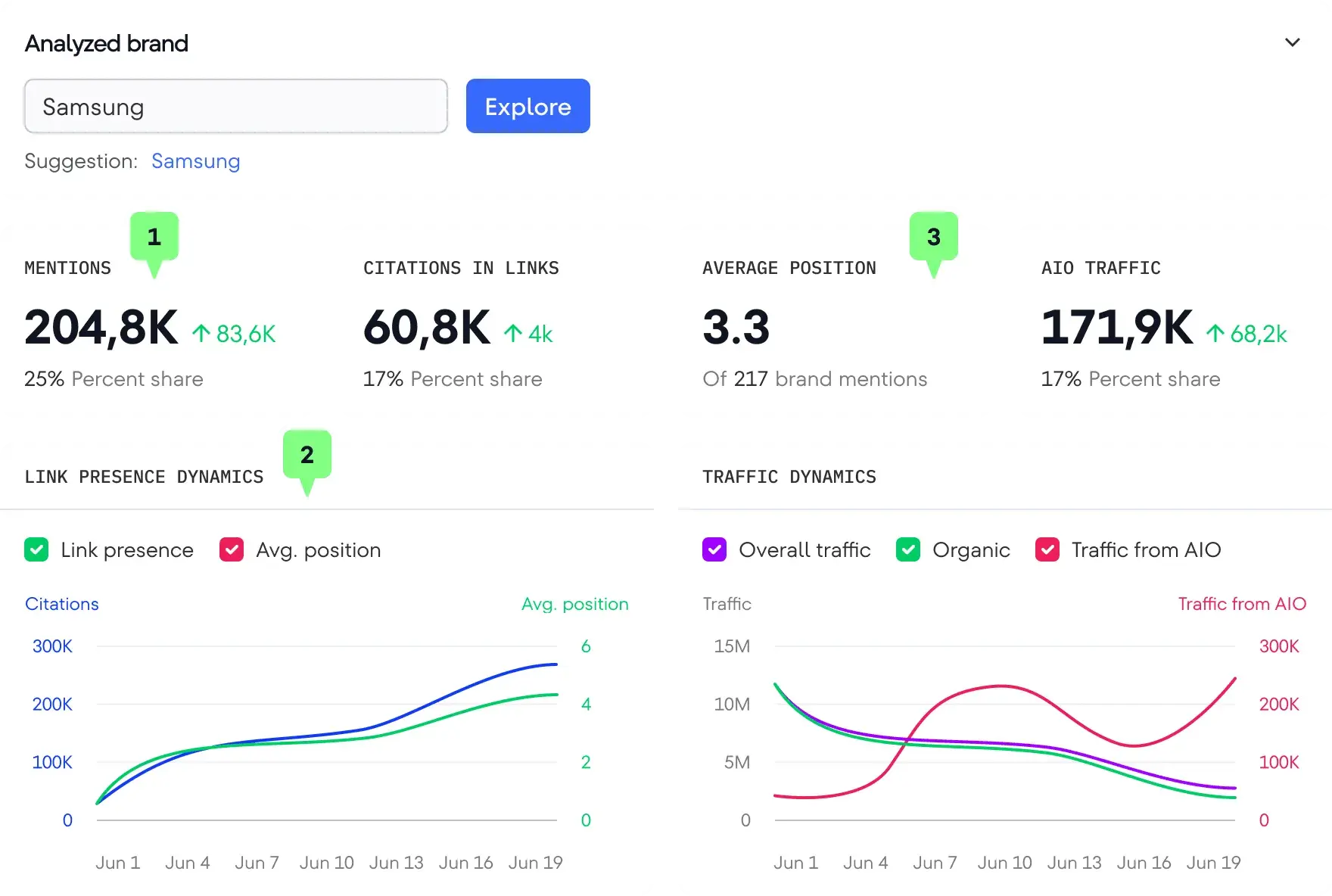
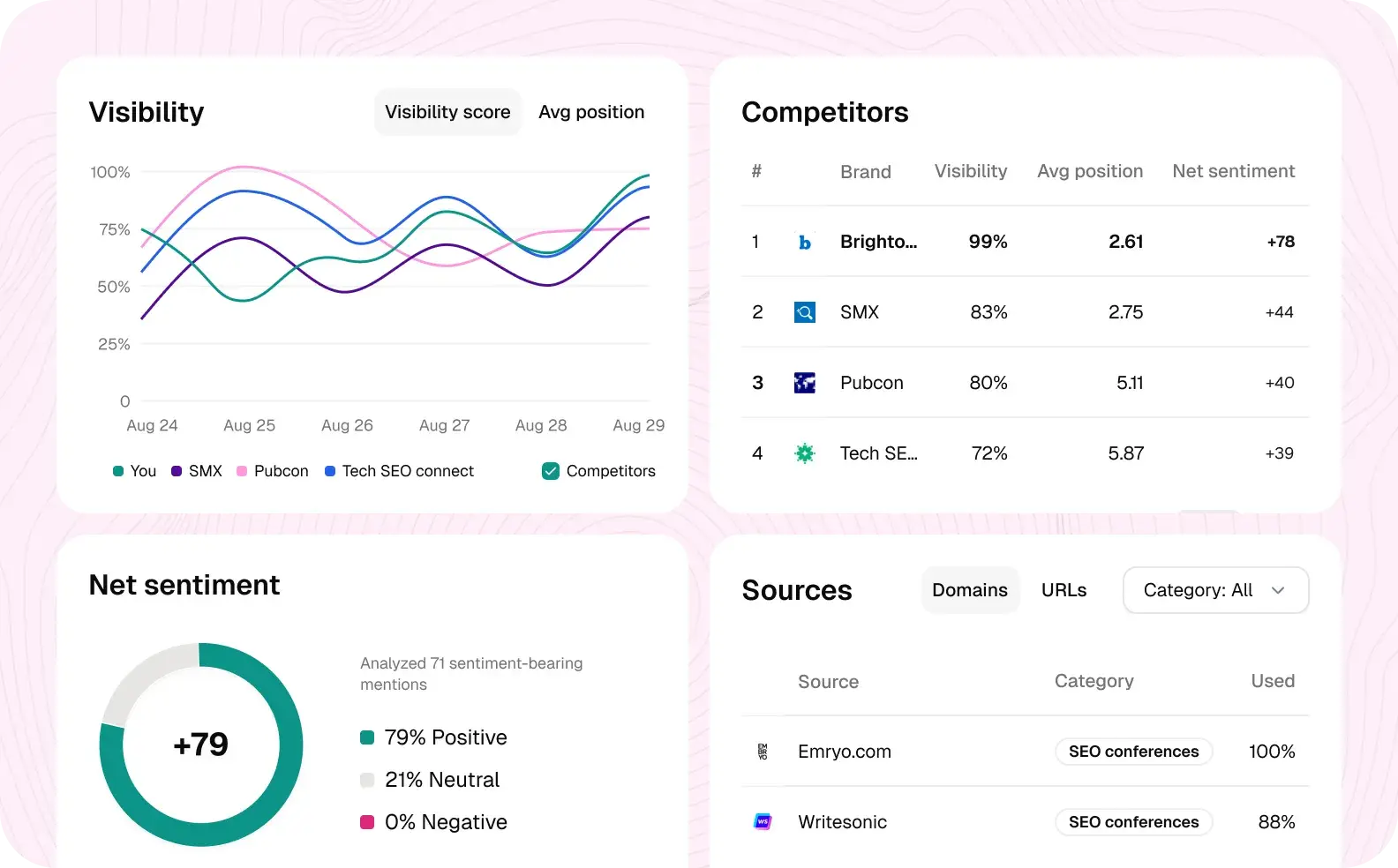
- AI Visibility Dashboard: Provides a consolidated view of brand performance, including competitor comparisons, average position tracking, and sentiment analysis metrics related to AI mentions.
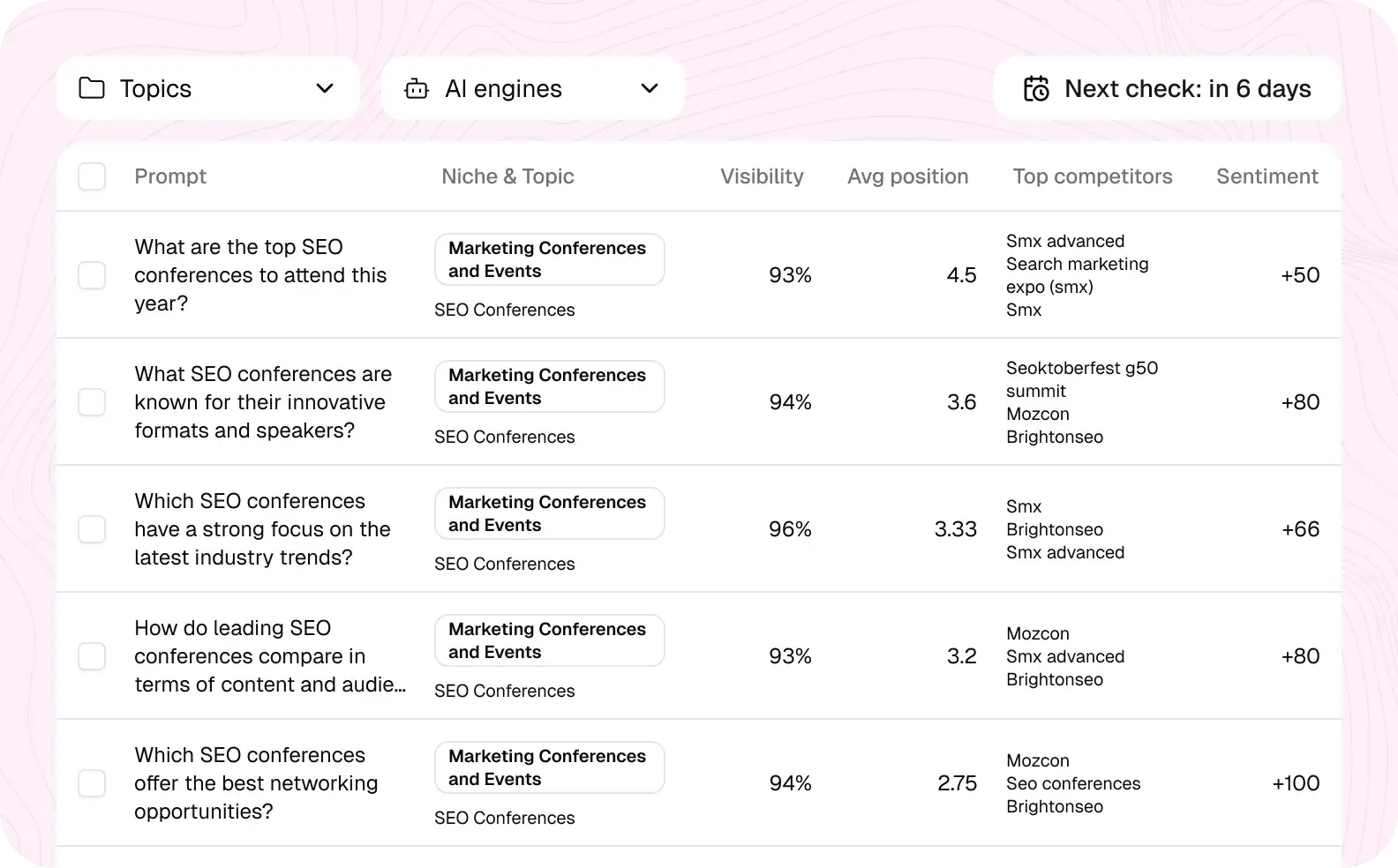
- AEO Tracking Table: Compares prompts across various metrics, including visibility, average position, and competitor sentiment changes, offering a detailed look at performance.
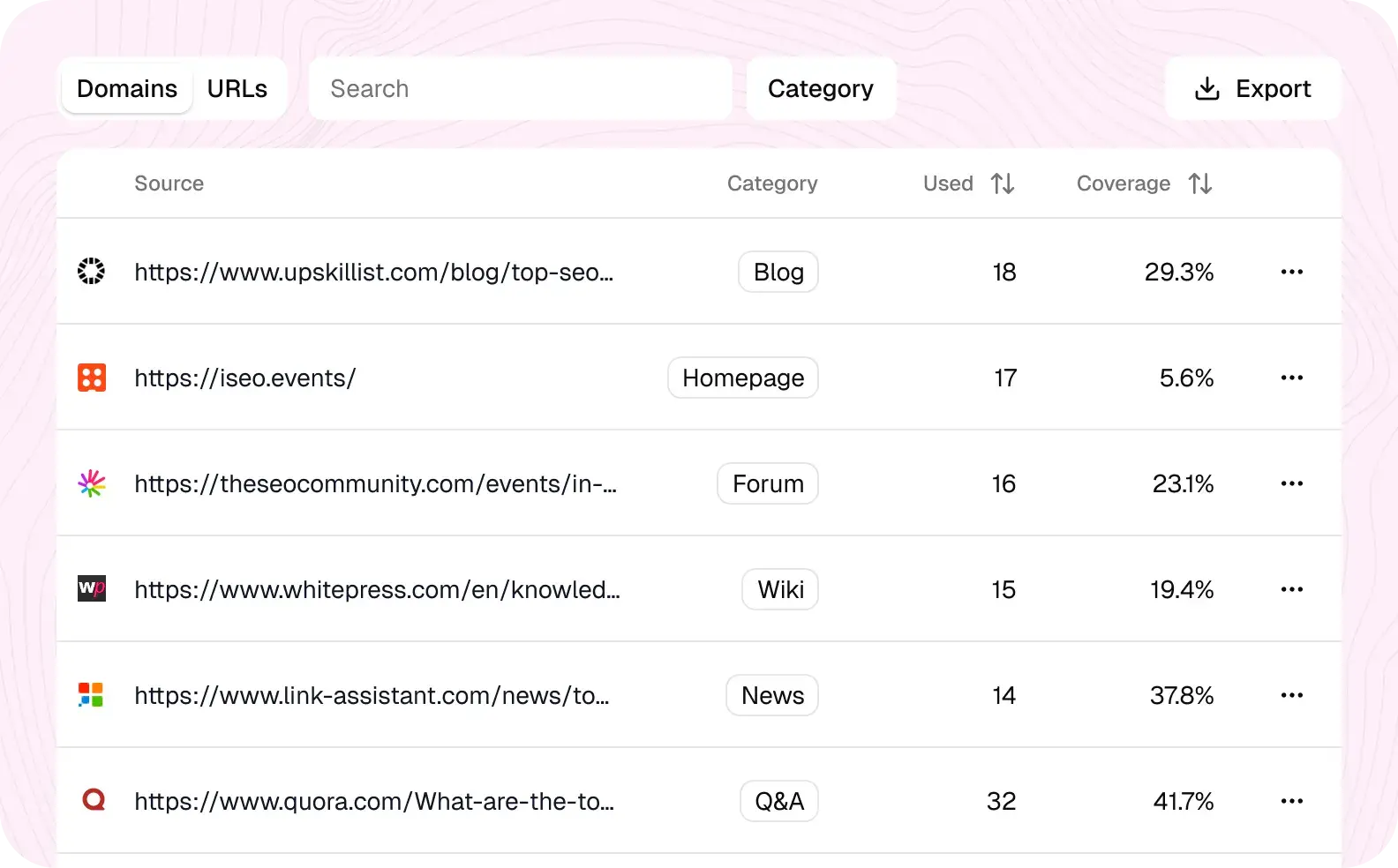
- Citation Sources: A comprehensive list of domains and URLs that AI engines are citing, categorized by type (media, blogs, forums), along with coverage percentages. This feature is particularly robust for understanding the competitive landscape of content sources.
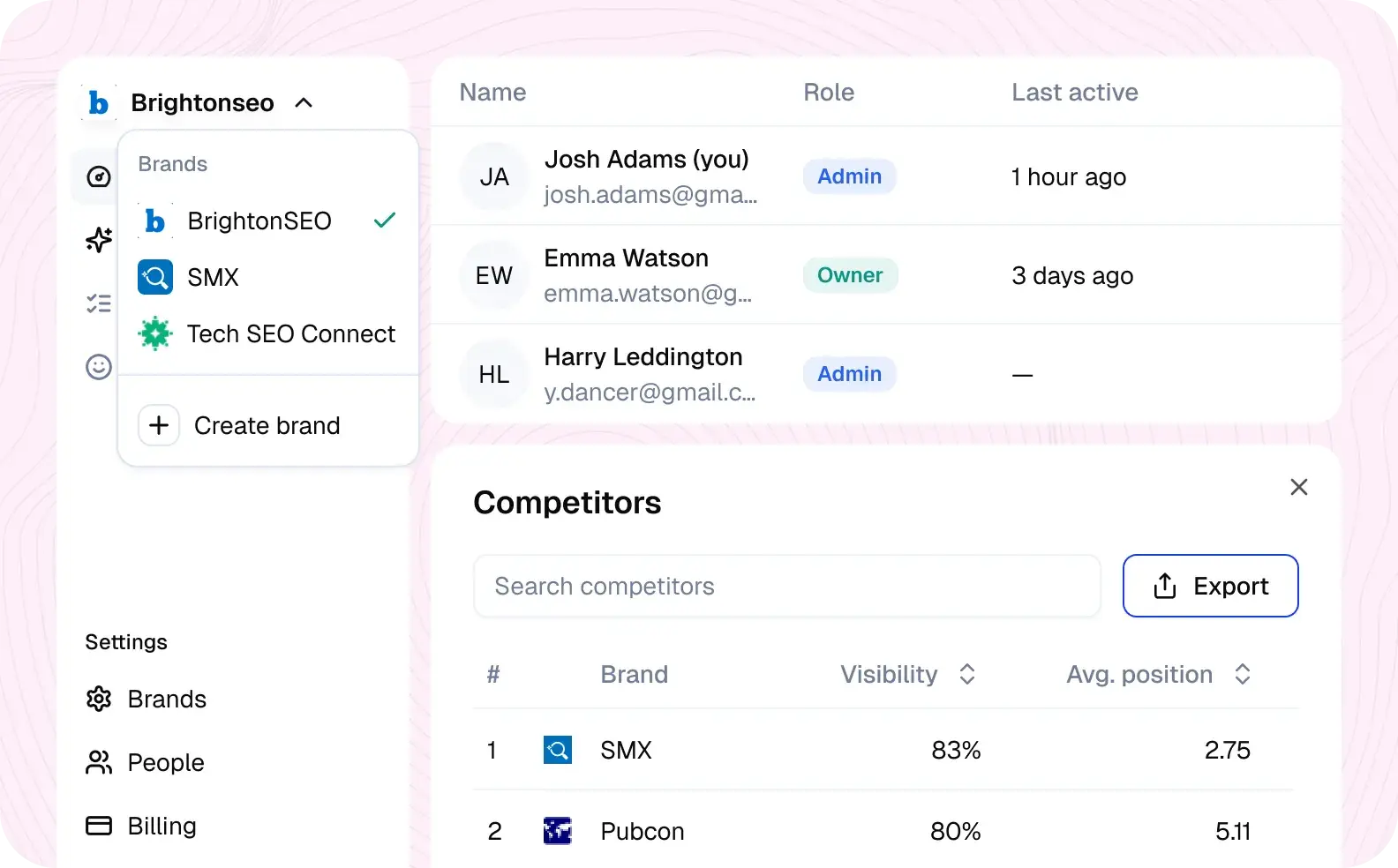
- Brand Management: An interface for monitoring multiple brands, displaying competitor visibility and average position data, crucial for agencies or large organizations managing numerous entities.
A key differentiator for SE Visible is its extensive multi-country and multi-language support, covering seven countries and five languages. This is a significant advantage for brands with international operations or agencies managing global clients, offering a strategic edge in understanding regional AI search dynamics that HubSpot AEO does not currently match.
SE Ranking’s AI Search Toolkit, while integrated into its broader SEO platform, also offers monitoring across ChatGPT, Gemini, Perplexity, and Google AI Overviews and AI Mode. Its core strength lies in its traditional SEO capabilities, which complement its AI tracking features.
Task Automation:
The dynamic nature of AI models necessitates continuous monitoring and adaptation. AEO is an ongoing practice, and tools that automate repetitive tasks are invaluable.
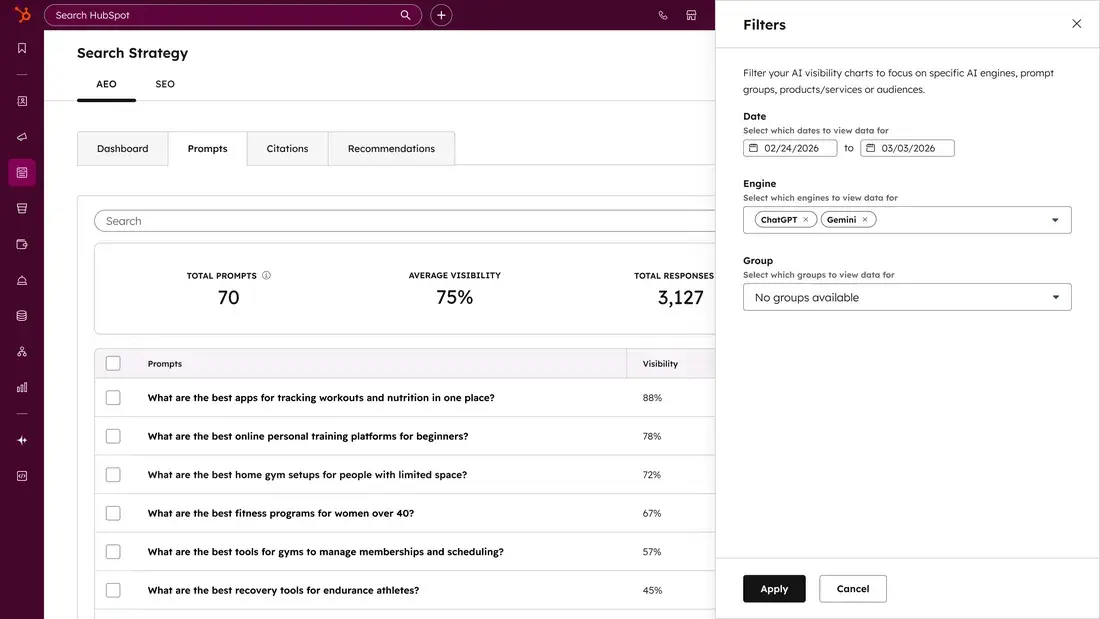
HubSpot AEO automates the entire AEO workflow. Once configured, it runs prompts daily against major answer engines and automatically updates prioritized recommendations based on shifts in AI visibility. This seamless integration within the HubSpot marketing platform ensures teams have a current action list without manual data collection.
SE Visible automates AI visibility monitoring at the brand level, providing weekly data updates on mention frequency, sentiment, and source behavior. While it lacks the daily cadence and built-in content action layer of HubSpot AEO, its focus on pure visibility measurement is its primary strength.
SE Ranking automates traditional SEO workflows, including daily keyword rank checks, scheduled site audits, and client reporting. For custom automated reporting, it relies on integrations with platforms like Zapier and Make.
Pricing and Value Proposition
The pricing models for these tools reflect their differing focuses.
HubSpot AEO Pricing:
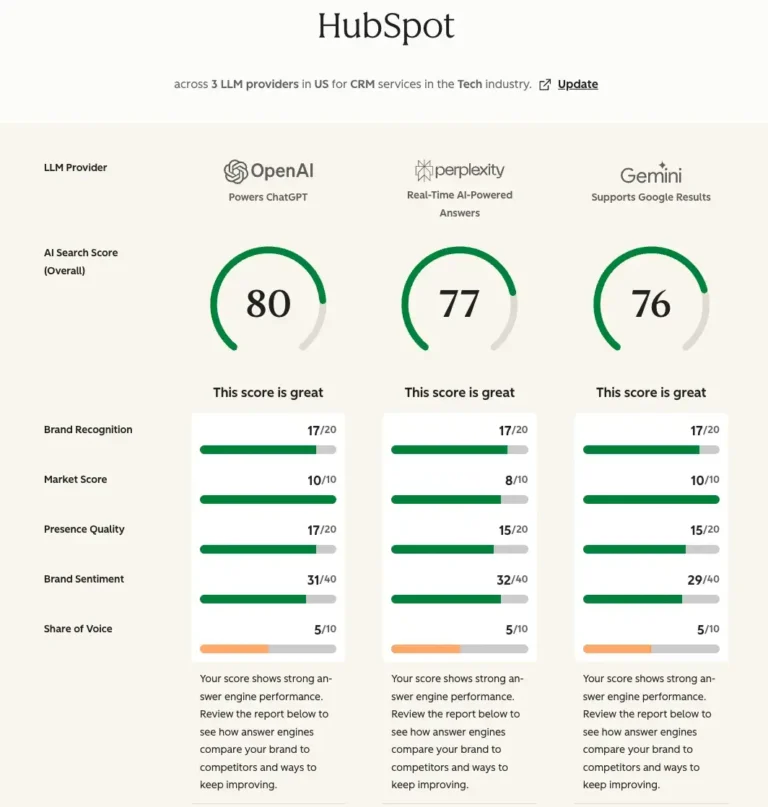
HubSpot AEO offers an accessible entry point with a free AEO Grader tool that assesses baseline brand visibility across five key dimensions. The standalone AEO product is priced at $50 per month (or $45 per month annually), including a 28-day free trial. This tier covers 25 prompts across ChatGPT, Gemini, and Perplexity, deep citation analysis, and prioritized recommendations. For existing HubSpot Marketing Hub Pro or Enterprise users, AEO tools are included at no additional cost, highlighting a strong value proposition for current HubSpot customers.
SE Visible Pricing:
SE Visible provides three pricing tiers, starting at $99 per month (billed monthly) for the Basic plan, which includes 200 prompts and approximately 12,000 AI answers analyzed monthly. The Plus plan scales to $355 per month. Annual billing offers a 20% discount. SE Visible supports all five AI engine integrations, unlimited users, and CSV exports. While its entry price is higher than HubSpot AEO, SE Visible offers a greater prompt volume at its base tier, making it cost-effective for teams focused on large-scale AI visibility monitoring, particularly across multiple brands or markets.
SE Ranking Pricing:
As a comprehensive SEO suite, SE Ranking has a higher entry cost. The Core plan begins at $103.20 per month (billed annually) or $129 monthly, including 2,000 daily keyword checks, site audits, backlink analysis, and tracking for 100 GEO prompts daily. It’s important to note that SE Ranking’s tracking limits can be influenced by the number of keywords multiplied by the number of search engines tracked, potentially affecting the overall cost. For businesses needing a consolidated SEO platform that also includes AI monitoring, SE Ranking offers a compelling, albeit more expensive, solution.
Execution and Integrations: Turning Insights into Action
The true value of any analytics tool lies in its ability to translate data into actionable strategies.
HubSpot AEO excels in connecting AI visibility insights to CRM-informed recommendations and content workflows. When the tool identifies areas where competitors outperform a brand, it generates prioritized recommendations. For users of HubSpot Marketing Hub Pro or Enterprise, these recommendations directly integrate with content creation tools and CRM data, streamlining the drafting process. This seamless integration is particularly beneficial for content audits and refreshing content libraries, ensuring AI-driven intelligence informs content strategy directly.
SE Visible functions primarily as a monitoring and analysis platform. It provides the data on brand representation in AI answers, along with source and competitor information, enabling teams to inform their content and PR strategies externally. For brand and PR teams, this direct data feed into existing workflows is often the desired outcome.
SE Ranking serves as an insights platform with robust integration capabilities. It connects with Google Search Console, Google Analytics, Looker Studio, Zapier, Make, and n8n, facilitating the implementation of its findings. While it doesn’t directly connect to a CRM, its automated audits, scheduled reporting, and automatic rank monitoring are critical components of a holistic digital strategy.
Who Benefits Most?
The ideal tool depends on a team’s specific needs and existing infrastructure:
Choose HubSpot AEO if:
- You are already a HubSpot user, leveraging its CRM and marketing tools.
- You need a straightforward, integrated solution for AI visibility and content optimization.
- Your primary goal is to drive measurable improvements in AI-generated search results directly linked to content creation and CRM data.
- You prioritize actionable recommendations tightly coupled with your customer data.
Choose SE Visible if:
- Your primary focus is comprehensive AI visibility monitoring and competitive analysis across multiple AI platforms.
- You manage multiple brands or international markets and require robust multi-country and multi-language support.
- You are an agency or PR team that needs detailed data to inform external strategies without requiring direct CRM integration.
- You are looking for a dedicated AI visibility tool separate from a broader SEO suite.
Choose SE Ranking if:
- You require a comprehensive SEO suite that includes rank tracking, site audits, and backlink analysis, with added AI monitoring capabilities.
- You are an SEO agency or freelancer managing multiple projects and need a consolidated platform.
- You prioritize traditional SEO metrics alongside emerging AI visibility data.
- You are comfortable leveraging integrations to connect SEO insights with other platforms and workflows.
Accelerating AI Visibility: A Two-Week Sprint
Embarking on Answer Engine Optimization does not require extensive implementation periods. AI models are constantly processing and re-indexing information, allowing for rapid data capture and strategic adjustments. A 14-day sprint can establish a baseline and initiate content optimizations.
Getting Started with HubSpot AEO:
- Baseline Assessment: Utilize HubSpot’s free AEO Grader to establish an immediate baseline score across key dimensions like sentiment, share of voice, presence quality, brand recognition, and market position.
- Free Trial Activation: Launch the 28-day free trial and set up 25 prompts that reflect actual buyer questions. This helps gauge AI credit usage and provides valuable data.
- Data Analysis: After a few days, review the brand visibility score and citation analysis to understand AI sourcing patterns.
- Recommendation Execution: Identify and assign the top two to three high-impact content actions from the prioritized recommendations to the content team.
- Two-Week Comparison: Compare the visibility score to the initial baseline to identify early trends and inform further content prioritization.
Getting Started with SE Visible:
- Trial Setup: Begin the 10-day free trial and set up projects for your brand or clients.
- Prompt and Topic Configuration: Input relevant buyer questions and product topics, leveraging localized suggestions for multi-country monitoring.
- Visibility and Source Analysis: Examine which domains AI engines cite and the breakdown of source categories to focus PR and content outreach.
- Competitor Benchmarking: Compare your brand’s AI visibility and sentiment against competitors to identify strategic gaps.
Getting Started with SE Ranking:
- Trial and Setup: Start the 14-day free trial and connect your domain to establish a traditional SEO baseline.
- Site Audit: Conduct a full site audit to identify and address critical technical SEO issues that could impact AI visibility.
- AI Search Toolkit Configuration: Set up the toolkit to monitor brand mentions across key AI platforms.
- Keyword Gap Analysis: Utilize keyword research tools to identify topics and queries where competitors are ranking but your brand is absent, informing content sprints.
Conclusion
The rise of AI-powered search marks a significant evolution in how consumers engage with brands. Answer Engine Optimization is no longer a niche concern but a fundamental pillar of a modern digital strategy. Whether opting for the specialized, CRM-integrated approach of HubSpot AEO, the dedicated AI monitoring capabilities of SE Visible, or the comprehensive SEO suite with AI tracking of SE Ranking, understanding the unique strengths and applications of each tool is crucial for ensuring brand visibility and relevance in this dynamic new landscape. The key takeaway is that neglecting AI-driven discovery is akin to ignoring a rapidly growing segment of the consumer market, with significant implications for future growth and conversion rates.
About the Author