The benchmark for effective Business-to-Business (B2B) Search Engine Optimization (SEO) tools has fundamentally changed, moving beyond traditional page-one rankings. As B2B buyers increasingly leverage artificial intelligence (AI) for vendor discovery, the ability of SEO strategies to generate qualified leads and drive revenue is paramount. This evolution necessitates a new generation of tools that not only enhance search engine visibility but also provide actionable insights into the entire buyer journey, from initial query to closed deal.
For years, the primary goal of B2B SEO was to achieve high rankings on search engine results pages (SERPs), particularly on the coveted first page. However, recent industry shifts, underscored by findings from sources like Responsive.io’s "Inside the B2B Buyers Mind 2025" whitepaper, indicate a significant pivot. Buyers are now actively seeking answers from AI-powered search engines, fundamentally altering how they encounter and evaluate potential vendors. While a strong Google ranking remains a critical component of online visibility, the emergence of AI search presents a new frontier. B2B teams must now strategically optimize for both traditional search engines and AI-driven responses to capture traffic that is genuinely predisposed to convert.
This comprehensive guide delves into the leading B2B SEO tools, meticulously selected for their capacity to propel pipeline growth and revenue, rather than merely inflating traffic metrics. Each tool featured possesses the requisite features to navigate and capitalize on the burgeoning AI-driven search era, ensuring businesses remain competitive in this dynamic digital landscape.
Understanding the Evolution of B2B SEO Tools
B2B SEO tools are sophisticated software platforms designed to enhance a business’s search engine optimization efforts. Their core functions typically encompass:

- Keyword Research: Identifying relevant terms that potential customers use to find products and services.
- Content Creation & Optimization: Guiding the development and refinement of website content to align with search engine algorithms and user intent.
- Technical SEO Auditing: Diagnosing and resolving website issues that can impede search engine crawling and indexing.
- Competitor Analysis: Monitoring the SEO strategies of rivals to identify opportunities and threats.
- Performance Tracking: Measuring the effectiveness of SEO initiatives through key metrics.
While many SEO tools cater to a broad spectrum of businesses, certain platforms offer distinct advantages for B2B organizations. The B2B sales cycle is inherently different from Business-to-Consumer (B2C) marketing. It is characterized by extended sales cycles, the involvement of multiple decision-makers, and often an account-based marketing (ABM) approach. Consequently, B2B SEO tools must go beyond superficial metrics. They need to facilitate the mapping of content to complex buyer journeys and, crucially, demonstrate a tangible contribution to the sales pipeline, a persistent challenge given the often lengthy decision-making processes that can span months or even years.
Essential Features for Modern B2B SEO Tools
To effectively address the complexities of B2B marketing and the evolving search landscape, B2B SEO tools should possess five key capabilities:
1. Intent-Filtered Keyword Research
B2B purchasing decisions are rarely impulsive. The long sales cycles and the necessity of gaining consensus among multiple stakeholders mean that SEO specialists must deeply understand the buyer’s journey for various roles within an organization. This includes individuals from end-users and technical teams to procurement and finance departments. An effective keyword tool must transcend simple search volume data. It needs to surface terms that clearly signal a buyer’s stage in their decision-making process, whether they are in the problem-discovery phase, solution-comparison phase, or actively seeking a demonstration.
Intent-filtered keyword data empowers marketing teams to create content that resonates with genuine potential buyers at every touchpoint. This involves distinguishing between three critical layers of intent:
- Informational Intent: Buyers are seeking information to understand a problem or explore potential solutions. Keywords might include "how to improve supply chain efficiency" or "benefits of cloud migration."
- Navigational Intent: Buyers are looking for a specific brand or website. Examples include "[Company Name] pricing" or "login to [Software Name]."
- Transactional Intent: Buyers are ready to make a purchase or take a specific action, such as requesting a demo or downloading a case study. Keywords here could be "B2B CRM software demo" or "hire a cybersecurity consultant."
2. CRM Integration and Pipeline Attribution
A critical differentiator for B2B SEO tools is their ability to integrate with Customer Relationship Management (CRM) systems. Without this crucial link, SEO teams are often forced to manually aggregate data from disparate tools, leading to guesswork regarding which content truly drives qualified opportunities. Seamless CRM integration closes the loop between organic traffic and closed revenue, providing SEO with the attribution it deserves. This attribution is instrumental in securing stakeholder buy-in and justifying continued investment in SEO strategies.

A prime example of this capability is HubSpot’s Smart CRM, which directly links organic search data to contact and deal records. This integration allows SEO teams to present concrete evidence in pipeline reviews, demonstrating precisely how specific content influences open opportunities and contributes to revenue generation. Understanding the direct impact of SEO efforts on tangible business outcomes is no longer a luxury but a necessity for B2B marketing success.
3. Competitor and Content Gap Analysis
A fundamental aspect of any robust B2B SEO strategy is a thorough understanding of what competitors are ranking for and, equally importantly, where a business’s own content falls short. The best competitor analysis tools excel at identifying these content gaps, enabling content teams to prioritize topics that offer the highest potential to attract qualified traffic away from rivals. This proactive approach ensures that content creation efforts are strategically aligned with market opportunities and competitive pressures.
4. Technical SEO Monitoring
Technical SEO is the bedrock upon which a strong online presence is built. It directly impacts site health and conversion rates. In the B2B landscape, where buyers often conduct extensive evaluations of multiple vendors simultaneously, a slow-loading or error-ridden website can silently sabotage conversions. Effective technical SEO monitoring tools provide continuous crawl monitoring, track Core Web Vitals, and offer prioritized, actionable recommendations. This goes beyond a mere list of errors; it empowers marketers and developers to focus on the most impactful fixes, ensuring optimal website performance.
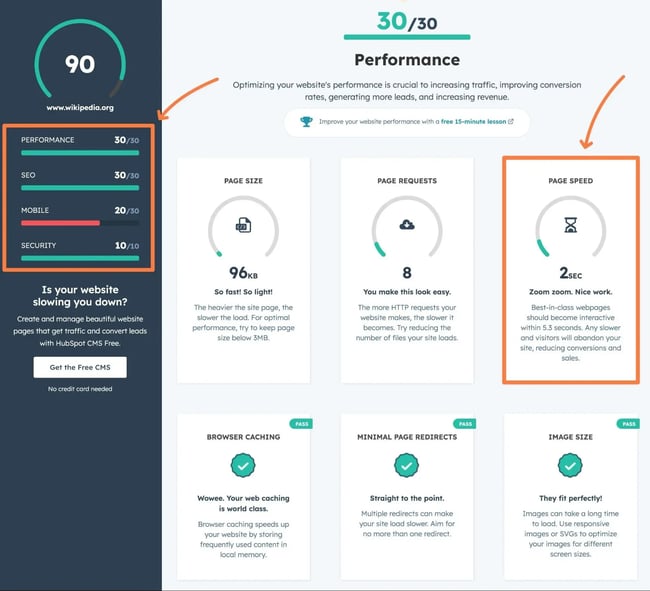
For instance, while manual checks with tools like Google Lighthouse can be insightful, they often require significant technical expertise. Paid tools offer automated, scheduled analyses, providing a more consistent and scalable approach. Even free options like HubSpot’s Website Grader can offer a rapid assessment of technical health, including page speed, performance, mobile-friendliness, and security, providing a baseline for improvement.
5. Content Optimization and AI Suggestions
The competitive nature of the B2B buying journey often demands a substantial volume of high-quality content. The most advanced content marketing tools now incorporate AI capabilities to assist teams in optimizing existing pages, identifying new content opportunities, and maintaining consistency and quality at scale. These AI-driven suggestions can range from optimizing meta descriptions and headings to suggesting related topics based on current trends and user search behavior, significantly streamlining the content creation and optimization process.
Leading B2B SEO Tools for Pipeline Growth and AI Visibility
The selection of the right B2B SEO tools can significantly impact a company’s ability to drive pipeline and revenue. The following tools represent a diverse range of capabilities, catering to different needs within the B2B marketing ecosystem.
HubSpot’s SEO Tools (within Marketing Hub): The All-in-One Platform for B2B Pipeline Growth
HubSpot Marketing Hub stands out as an AI-powered marketing platform designed for B2B SEO. It consolidates the entire SEO workflow into a single interface, eliminating the need for multiple, disconnected tools. This unified approach streamlines processes from initial topic ideation through to ongoing performance analysis.
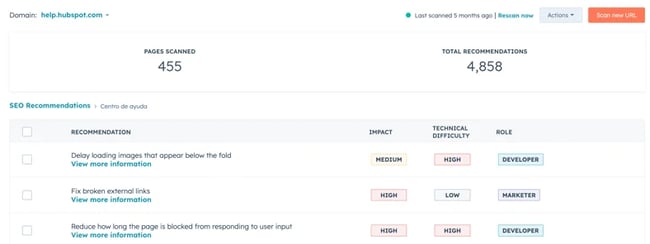
The platform’s AI-driven SEO Recommendations feature conducts comprehensive scans of live websites, including those hosted outside of HubSpot. It delivers prioritized suggestions across technical SEO, on-page optimization, and accessibility. These recommendations are intelligently sorted by impact, difficulty, and role, allowing teams to focus their efforts efficiently.
Crucially, many of HubSpot’s SEO recommendations extend into the realm of AI-powered optimization (AEO). Features such as structured data guidance and schema markup implementation help format content in a way that AI systems can readily parse and cite. This is vital for ensuring visibility in AI-generated answers, which are increasingly serving as the initial touchpoint in B2B buyer journeys.
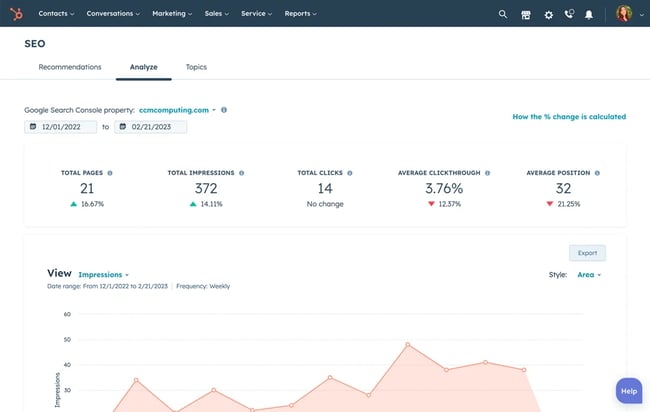
Analyzing SEO performance within Marketing Hub is a seamless experience. Teams can track key metrics like organic sessions, impressions, and keyword positions over time, both at the domain and individual page levels. The native CRM integration is a significant advantage for B2B teams, enabling direct SEO-to-pipeline attribution. This allows marketing leaders to demonstrate precisely how organic search efforts contribute to demos, opportunities, and ultimately, closed revenue.
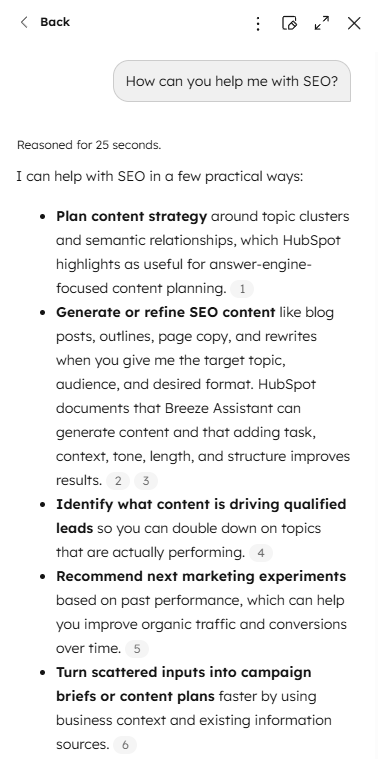
Furthermore, Breeze Copilot, an integrated AI tool within Marketing Hub, accelerates SEO and content tasks. It assists B2B marketers with everything from drafting content briefs to generating optimization recommendations, all without the need to expand headcount. Breeze tailors its suggestions based on the specific account data it is working with, offering personalized insights.
Best for: B2B marketing teams seeking a unified platform that integrates SEO, CRM, and content performance data, with a clear pathway from organic traffic to pipeline and revenue.
What sets it apart: For organizations already utilizing HubSpot for marketing automation and CRM, activating Marketing Hub’s SEO features is a straightforward path to connecting SEO activities with crucial pipeline metrics. HubSpot’s extensive integration capabilities also ensure seamless compatibility with existing tech stacks.
HubSpot’s Content Hub: The SEO-Integrated CMS for B2B Content Teams
HubSpot Content Hub is a robust Content Management System (CMS) specifically designed to support content creation and optimization workflows. For B2B teams producing content at scale, it offers a uniquely seamless experience, encompassing the entire content lifecycle from briefing and writing to publishing and optimization.
A key differentiator of Content Hub is the real-time SEO guidance integrated directly into the editing experience. As content creators work within the platform, they receive immediate SEO recommendations, reducing the reliance on separate optimization tools and allowing for the resolution of most SEO queries without constant intervention from specialists.
The platform’s support for structured data and schema markup is particularly valuable for B2B teams investing in AEO. By embedding structured data within the HTML, content becomes more accessible and citable by AI crawlers, enhancing visibility in AI-driven search results.
The built-in AI Content Writer further enhances content production by facilitating AI-assisted drafting that aligns with SEO requirements. This capability allows B2B content teams to scale their output efficiently.
Best for: B2B content teams that require embedded SEO and AEO guidance within their writing workflow and aim to produce schema-ready content at scale without extensive developer involvement.
What sets it apart: By integrating SEO and AEO directly into the CMS, HubSpot Content Hub allows teams to manage their entire content operation within a single, cohesive environment. This unified approach significantly boosts adoption rates compared to fragmented toolsets.
HubSpot AEO Grader: The Premier Free Tool for B2B AI Search Visibility
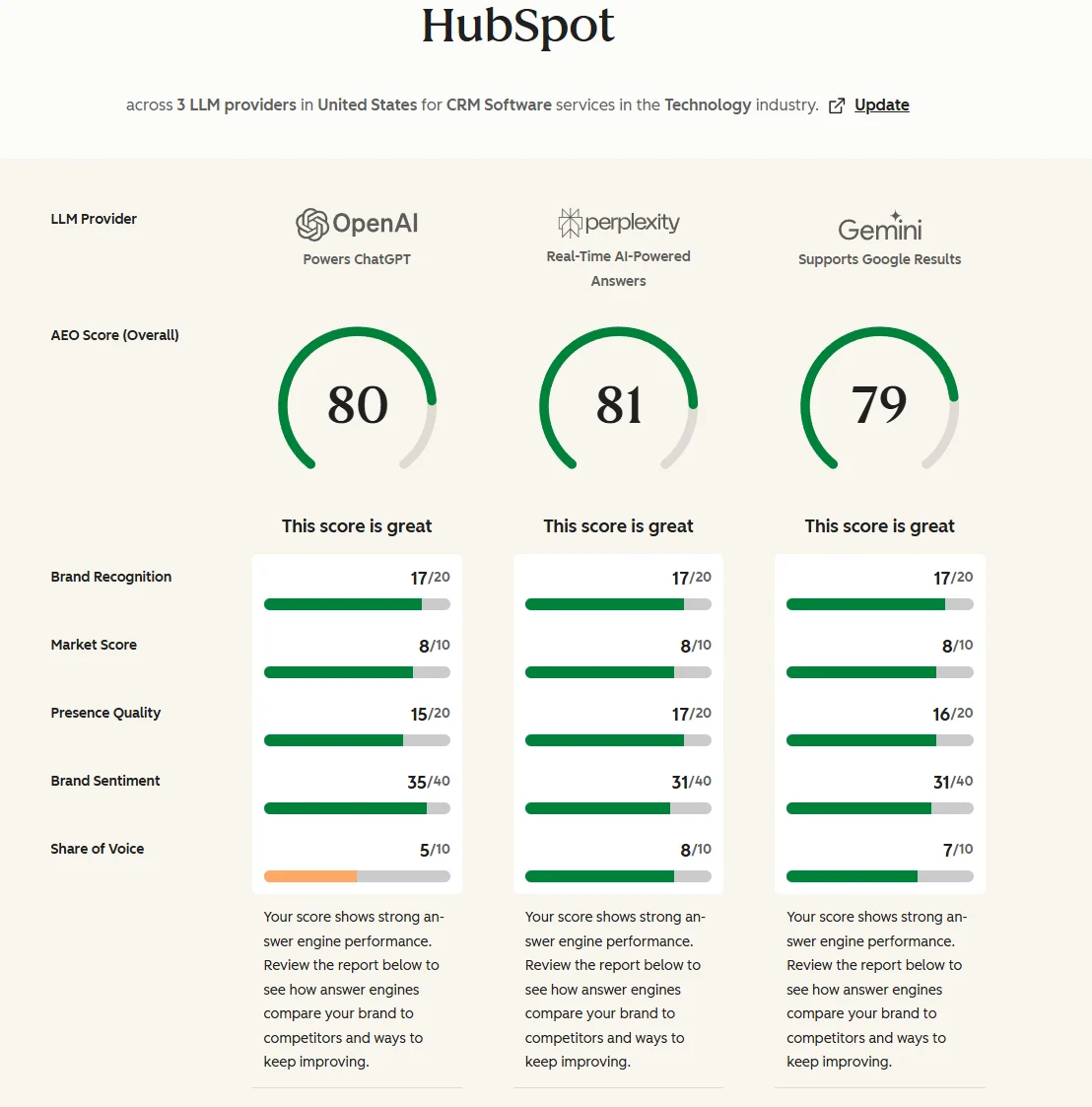
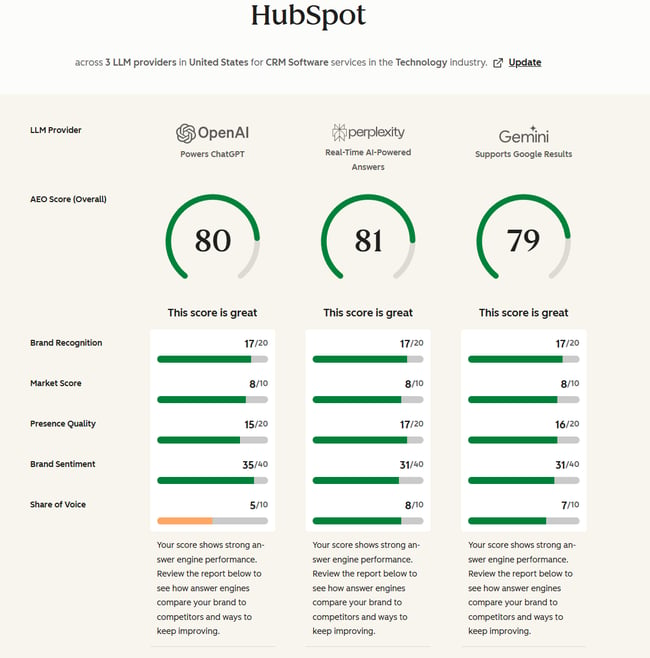
HubSpot’s AEO Grader is an invaluable free resource for B2B teams navigating the shift towards AI-generated answers. It assesses a brand’s visibility across major AI search environments, including ChatGPT, Perplexity, and Gemini, providing critical insights into how a company is perceived in this new search paradigm.
The tool generates a comprehensive brand performance score across five key dimensions:
- Website Accessibility: How easily AI models can access and understand website content.
- Content Quality: The relevance, depth, and authority of the content presented.
- Brand Mentions: The frequency and context of brand mentions across AI outputs.
- Sentiment: The overall tone and perception associated with brand mentions.
- Structured Data: The implementation of schema markup to enhance machine readability.
The competitive analysis feature is equally impactful. By allowing users to run reports for their own domain and those of their competitors, marketing teams gain a direct comparison of how AI engines represent them relative to the market. This allows for the identification of successful messaging angles and content themes that can be incorporated into an AEO strategy.
Best for: B2B marketers seeking to understand and enhance their brand’s visibility in AI-generated search results, and benchmark their AI search positioning against competitors, all at no cost.
What sets it apart: In mere minutes, the AEO Grader provides a wealth of actionable information. Its free accessibility and competitive benchmarking capabilities make it an essential starting point for any B2B team exploring AEO.
Semrush: The Comprehensive SEO Platform for B2B
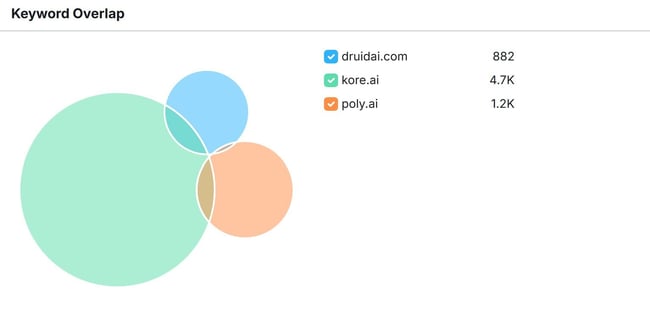
Semrush is a widely recognized and comprehensive SEO toolkit that offers extensive capabilities for B2B teams. It functions as an all-in-one research and auditing platform, covering keyword research, competitor analysis, content strategy, and AI search optimization.

Ramona Joita, SEO Consultant and Founder of Marketez, highlights Semrush’s strength in integrating keyword research, competitor analysis, and content strategy into a cohesive workflow. The Keyword Overlap/Gap tool is particularly useful for comparing multiple competitors, identifying ranking discrepancies, and uncovering content opportunities. This data-driven approach allows for the development of content plans focused on high-intent topics that directly contribute to pipeline growth.
Core Features:
- Keyword Research: Extensive tools for discovering and analyzing keywords.
- Competitor Analysis: In-depth insights into competitor strategies.
- Site Audit: Comprehensive technical SEO analysis.
- Content Marketing Platform: Tools for content optimization and ideation.
- AI Search Optimization: Features to adapt to evolving AI search trends.
Pricing: Plans typically start at $139.95/month for core SEO features, with plans including AI capabilities starting around $199/month.
What sets it apart: Semrush has consistently adapted to the evolving search landscape, incorporating AI features early on. Its long-standing reputation and extensive data provide B2B marketing teams with robust tools to navigate the complexities of AI search.
Contentsquare (formerly Hotjar): Understanding On-Page Behavior
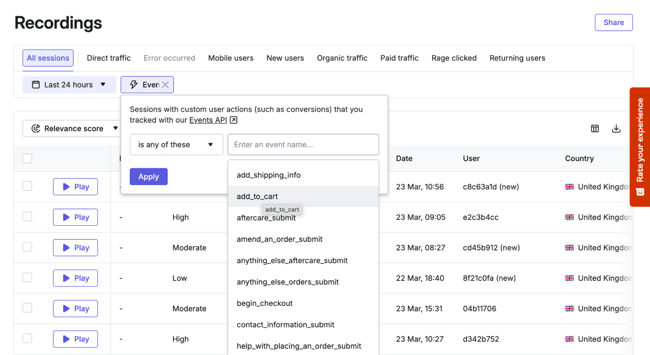
Contentsquare, which acquired Hotjar, provides B2B teams with critical insights into user behavior on their websites. Through heatmapping, scroll depth analysis, click patterns, and session recordings, it helps understand how organic traffic interacts with content.
Emina Demiri-Watson, Head of Digital Marketing at Vixen Digital, shared a compelling case study where integrating GA4 with Contentsquare led to a significant uplift in engagement and revenue for a B2B e-commerce client. By analyzing user behavior after they arrived from organic search, her team identified and addressed friction points, resulting in a 217% increase in menu clicks and a 64% rise in revenue. This detailed understanding of user interaction is vital for converting organic visitors into leads.
Core Features:
- Session Recordings: Visual playback of user interactions.
- Heatmaps: Visual representation of where users click, move, and scroll.
- Surveys & Feedback: Gathering qualitative user input.
- Analytics Dashboards: Comprehensive data visualization.
Pricing: A free plan is available. Paid plans commence from $39/month (billed annually) or $49/month (billed monthly).
What sets it apart: Contentsquare offers unparalleled qualitative data through session recordings. The ability to filter these recordings by specific user actions, such as adding to cart, provides invaluable insights into what is working and what can be improved to enhance the user experience and drive conversions.
Lead Forensics: Connecting Organic Visits to Pipeline
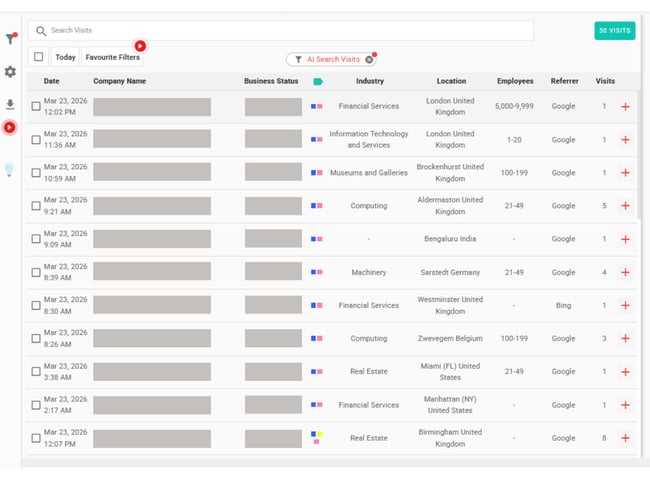
Lead Forensics specializes in identifying companies visiting a website and linking those visits to tangible pipeline opportunities. This capability makes it an exceptionally powerful tool for B2B teams aiming to demonstrate the direct revenue impact of their organic search efforts.
Laura Nineham, Head of Organic Search and Content at Lead Forensics, emphasizes attribution as a core benefit. The ability to connect company visits to specific interactions and track them through to closed deals provides a clear, data-backed narrative of SEO’s contribution to pipeline growth. Furthermore, Lead Forensics aids in identifying companies that arrive via organic search or AI referrals, allowing teams to use firmographic data to confirm alignment with their ideal customer profile and track these leads through the sales funnel.
Pro tip: Integrating Lead Forensics with HubSpot allows for automated record creation based on predefined criteria (firmographics, website engagement, source). This enrichment provides clearer attribution of how SEO activities feed into the sales pipeline.
Core Features:
- Website Visitor Identification: Reveals the companies visiting your site.
- Lead Scoring: Qualifies leads based on engagement.
- CRM Integration: Seamless data flow with existing CRM systems.
- Sales Intelligence: Provides detailed company and contact information.
Pricing: Custom pricing based on traffic volume and team size.
What sets it apart: Lead Forensics provides undeniable evidence of marketing’s contribution to revenue. By clearly linking specific companies to website visits driven by organic search, marketing teams can confidently present their impact in stakeholder discussions.
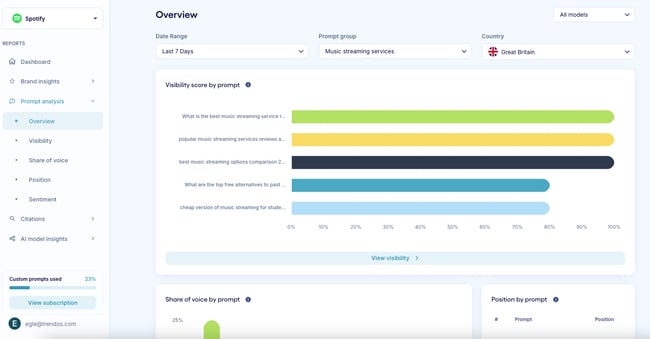
Trendos: Tracking AI Search Visibility Over Time
Trendos is a specialized tool focused on monitoring a brand’s appearance in AI-generated search results. It tracks a brand’s presence and performance across various AI answers over time, offering crucial insights into how AI models are interpreting and presenting information about a company.
Eglė Kliukevičienė, Marketing Lead at Trendos, frames AI search visibility as a critical pipeline issue. Platforms like ChatGPT and Gemini are now influential in how buyers discover and compare B2B brands, often before they even visit a vendor’s website. Trendos allows marketers to observe not only current brand placement but also how its presence and sentiment have evolved.
A practical application of Trendos is tracking how brands surface in AI-generated lists of "best tools" or "top platforms," which are often key components of a B2B buyer’s initial research and shortlisting process. Additionally, the platform provides insights into advertising within ChatGPT, offering a unique perspective for paid advertising teams.
Core Features:
- AI Search Monitoring: Tracks brand visibility across AI search engines.
- Trend Analysis: Monitors changes in AI search presence over time.
- Competitive Benchmarking: Compares brand performance against competitors.
- AI Advertising Insights: Reveals advertising strategies within AI interfaces.
Pricing: A free tier is available, with paid plans starting from $169/month (billed annually) or $199/month (billed monthly).
What sets it apart: Trendos addresses a nascent but rapidly growing area of SEO. Its focus on long-term AI search visibility and competitive AI advertising intelligence provides a forward-looking perspective essential for B2B strategy.
Google Keyword Planner + Claude: The Free Workflow for B2B Keyword Intent Analysis
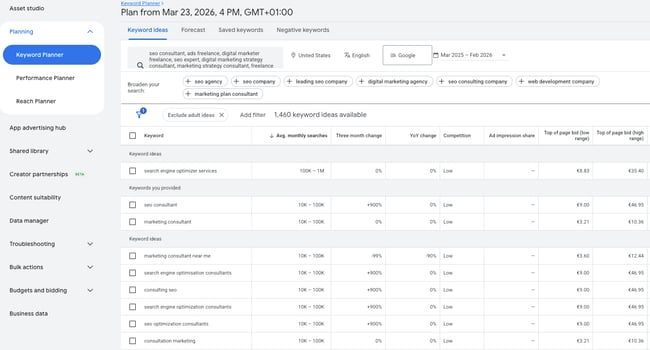
A powerful and cost-effective approach to B2B keyword research involves pairing Google Keyword Planner with Claude, an advanced AI language model. Google Keyword Planner provides essential data on search volume and keyword variations, while Claude excels at interpreting the nuances of language to discern buyer intent.
Laura I. Abreu, Lead Generation, Ads, and SEO Manager at Global and Search, utilizes this workflow to transform raw keyword data into actionable insights on buyer intent. By analyzing the language used in search queries, Abreu can distinguish between different stages of the buyer’s journey. For example, a search for "SEO expert" or "hire an SEO expert" signals a higher level of intent and willingness to invest compared to "SEO specialist" or "SEO consultant," even though the surface intent appears similar. Claude’s ability to flag these subtle distinctions is invaluable for B2B marketing teams aiming to target prospects with precise messaging.
Core Features:
- Google Keyword Planner: Provides search volume, competition data, and keyword ideas.
- Claude: Analyzes keyword language to infer buyer intent and decision-making stage.
Pricing: Both tools are free to use.
What sets it apart: This workflow democratizes sophisticated keyword intent analysis. It leverages readily available free tools to extract deep insights that can significantly refine B2B content and advertising strategies, focusing on high-value keywords that indicate strong purchasing intent.
Frequently Asked Questions About B2B SEO Tools
What are the best SEO tools for B2B SaaS companies?
For B2B SaaS companies, the ideal SEO toolset typically includes a robust CRM like HubSpot Marketing Hub for pipeline attribution, alongside tools for in-depth keyword research, competitive intelligence, and user behavior analysis. For AI search optimization (AEO), HubSpot’s AEO Grader is essential for understanding brand visibility in AI-generated answers, which are increasingly the first point of contact for SaaS buyers.
Which free B2B SEO tools should I start with first?
Begin with Google Search Console for insights into organic queries driving traffic and HubSpot’s AEO Grader for understanding AI search visibility. These free tools provide foundational data on performance in both traditional and AI-driven search environments without any cost.
How do I prove SEO’s impact on the pipeline in my CRM?
The most effective method is using a Smart CRM, such as HubSpot’s, that directly integrates with your SEO platform. This enables direct SEO-to-pipeline attribution by linking organic traffic data to contact and deal records, allowing you to track the journey of content and keywords that lead to closed-won deals. Manual data aggregation is prone to errors and often fails to capture the full impact.
When should you add technical monitoring to your stack?
Technical SEO monitoring should be implemented as soon as a website grows beyond a few pages. As B2B sites expand with new product pages, landing pages, and blog content, technical issues like crawl errors or Core Web Vitals problems can emerge and silently degrade rankings and conversions if not actively managed.
What’s the best way to evaluate the easiest SEO platform for B2B?
The easiest platforms are those that consolidate critical workflows—keyword research, content optimization, technical monitoring, and CRM attribution—within a single interface. HubSpot’s Marketing Hub is a strong contender, as it directly links SEO performance data to pipeline, minimizing the integration complexities that often hinder B2B SEO adoption.
Conclusion: The Right B2B SEO Tools Drive Revenue, Not Just Traffic
The most effective B2B SEO tools share a common characteristic: they demonstrably connect organic visibility to revenue generation. Whether it’s HubSpot’s Marketing Hub attributing a closed deal to a specific blog post or Lead Forensics identifying target accounts arriving via organic search, the focus has shifted from vanity metrics to tangible business outcomes.
For B2B marketing teams looking to enhance their SEO strategy in the current landscape, prioritizing tools that offer unified workflows, AI integration, and robust pipeline attribution is paramount. The evolution of search, driven by AI, demands a strategic re-evaluation of SEO tools to ensure they not only drive traffic but also contribute meaningfully to pipeline growth and revenue.
About the Author