The way B2B software buyers conduct their initial research is undergoing a seismic shift, with a significant portion now turning to AI chatbots over traditional search engines like Google. This emergent trend, highlighted by G2’s 2026 Answer Economy research, which found that 51% of B2B software buyers start their research with an AI chatbot more often than Google, presents a critical new challenge for marketing teams. The implication is clear: marketers must now not only monitor traditional search engine performance but also meticulously track how AI assistants and answer engines mention, cite, and recommend their brands. This evolving digital ecosystem necessitates a re-evaluation of brand visibility tools, prompting a closer look at alternatives to established platforms like Ahrefs Brand Radar.
The rise of AI in B2B research has created a demand for specialized tools that can navigate this new frontier. While Ahrefs Brand Radar offers a robust solution for tracking brand mentions and citations across major AI answer engines, including custom prompt monitoring, marketers are increasingly seeking alternatives that provide a different mix of AI model coverage, evidence granularity, integration capabilities, pricing structures, and workflow compatibility. This exploration is driven by specific needs, ranging from a desire for more detailed, prompt-level data to cost-effectiveness and a more direct link between AI visibility and tangible business outcomes like pipeline generation and revenue growth.
The Emergence of AI in B2B Research: A New Paradigm
The fundamental change lies in the user’s journey. Historically, a B2B buyer would initiate their search with keywords typed into a search engine. The results page, often a list of organic and paid links, would then guide them to various websites for further investigation. However, the advent of sophisticated AI chatbots and answer engines has introduced a conversational layer to this process. Buyers can now pose complex questions and receive synthesized answers, complete with citations, directly from the AI. This shift means that a brand’s visibility is no longer solely determined by its ranking in a search results page, but also by its inclusion and prominence within AI-generated responses.
G2’s research underscores the speed of this adoption. The "Answer Economy" report indicates that by 2026, a majority of B2B software buyers will prioritize AI chatbots for their initial research. This statistic is not merely a prediction; it reflects an ongoing behavioral change. Consequently, marketing teams are under pressure to adapt their measurement strategies and invest in tools that can provide actionable insights into this new competitive landscape. The traditional metrics of SEO are still vital, but they are no longer sufficient on their own.
Why Marketers are Examining Ahrefs Brand Radar Alternatives
Ahrefs, a well-regarded SEO platform, expanded its offerings with Brand Radar to address the growing importance of AI visibility. This tool aims to track brand mentions and citations across prominent AI answer engines and supports custom prompt monitoring. However, the market is dynamic, and the specific needs of different organizations can lead them to explore alternatives. Several key drivers are prompting this evaluation:

1. The Need for More Granular Data and Reporting Flexibility
While a broad visibility score can offer a general overview, larger organizations and those operating in niche B2B markets often require a deeper understanding of the context surrounding their brand mentions. Alexandra Novikava, a marketer at Truck1, shared her team’s experience: "At first, we used Ahrefs Brand Radar to observe what sorts of references were being made to us by AI engines but have now transitioned toward custom API tracking and alternative SEO intelligence tools." Novikava’s team sought more detailed insights into the specific queries where competitors gained visibility and greater adaptability in their data collection processes. Although Ahrefs has since enhanced its custom prompt tracking capabilities, this sentiment highlights a recurring need for tools that offer granular, prompt-level context and reporting flexibility beyond a general visibility score.
2. The Demand for Prompt-Specific Tracking in Specialized Markets
In highly specialized B2B sectors, the relevance and intent of a single mention can far outweigh the volume of generic mentions. Colleen Barry, head of marketing at Ketch, articulated this point precisely: "In B2B, one mention in the right context matters more than ten generic mentions." Ketch initially adopted Ahrefs Brand Radar in early 2025 to establish a baseline for AI search visibility. However, as their strategy matured, they required more control over industry-specific prompt libraries. This was crucial for evaluating how conversational engines handled nuanced privacy and compliance queries and for determining the influence of thought-leadership content on these responses. This need for highly specific, context-aware tracking is a significant driver for seeking alternatives that excel in prompt-level detail.
3. The Pursuit of More Cost-Effective Solutions
Pricing is an undeniable factor in the adoption of any new marketing technology. Ashot Nanayan, founder and CEO of B2BSEO, noted that during the open beta of Ahrefs Brand Radar, the estimated monthly cost for the necessary subscription and AI monitoring add-ons was around $800. At the time, he also sought localized prompt customization and broader AI model coverage. While Ahrefs has since adjusted its packaging, with standalone Brand Radar starting at $199 per month and custom prompt packages at $50 per month, the initial cost perception and the desire for a more integrated, potentially lower-cost, dedicated AI visibility platform influenced Nanayan’s decision. He ultimately opted for a solution offering broader coverage at a more favorable overall cost for his team’s specific use case.
4. The Imperative to Link AI Visibility with Customer Actions and Business Outcomes
For Matthew Kinneman, founder of Bully Max, Ahrefs Brand Radar provided a valuable starting point for understanding brand mentions in AI search. However, his team moved towards a more comprehensive measurement approach because visibility alone did not demonstrate a clear connection to critical business metrics such as website traffic, user engagement, or conversion rates. Kinneman emphasized, "The biggest lesson for me was that AI visibility is only valuable if you can tie it back to actions customers take afterward. Otherwise, it’s easy to end up optimizing for a metric that looks good but doesn’t drive business growth." This realization underscores the need for AI visibility tools that integrate seamlessly with CRM systems, attribution models, pipeline tracking, and revenue reporting, allowing marketers to measure the true business impact of their AI presence.
Evaluating Alternatives: Key Features for AI Visibility Tools
As marketers navigate this evolving landscape, a robust AI visibility tool should be assessed based on several key criteria:
- AI Model Coverage and Data Freshness: Buyers interact with multiple AI platforms, making broad model coverage essential for a comprehensive view. Data freshness is critical as AI-generated answers are dynamic; frequent prompt reruns and ample historical data are crucial for effective optimization and trend analysis.
- Granular Data and Segmentation: Aggregated scores can mask performance variations. The ability to segment prompts by buyer persona or journey stage is vital for understanding visibility across different stages of the buyer’s decision-making process. G2’s research further supports this, noting that 71% of B2B software buyers rely on AI chatbots at some point in their research.
- Integrations and Reporting: Seamless integration with existing marketing stacks (CRM, analytics, BI tools) is paramount to avoid data silos. High-quality reporting, including historical trends, exportable evidence, and customizable dashboards, enables teams to connect AI visibility with tangible business outcomes.
- Evidence Quality and Audibility: The ability to inspect the underlying AI responses, cited sources, timestamps, and model information is crucial for verifying results and strengthening competitive intelligence.
- Pricing and Team Fit: Evaluating the total cost of ownership, including all necessary monitoring programs and add-ons, is essential. The tool must also align with the team’s workflow, technical capabilities, and strategic objectives.
A Comparative Look at Leading Ahrefs Brand Radar Alternatives
The market is responding to these demands with a variety of specialized tools. Here’s a look at some prominent alternatives:
| Tool Name | Key Features | Best For | CRM Integration | Pricing | Tradeoffs |
|---|---|---|---|---|---|
| HubSpot AEO | Brand visibility & sentiment; competitor share of voice; prompt tracking & prioritized recommendations. | Teams connecting AI visibility with content & CRM context. | Included in Marketing Hub Professional/Enterprise; standalone AEO does not require HubSpot. | $50/month | Tracks ChatGPT, Perplexity, Gemini; continuous tracking is paid after a 28-day trial. |
| Profound | Answer Engine Insights; Agent Analytics; Agents & Prompt Volumes. | Larger teams running an enterprise AEO program. | Enterprise API access and integrations. | Starts at $99/month | Starter tracks ChatGPT only; broader model coverage requires higher plans. |
| Peec AI | Multi-model visibility tracking; citation & competitor analysis; prompt management. | SEO & content teams needing broad model coverage & collaborative workflows. | Looker Studio (Advanced); API & SSO (Enterprise). | Starts at $95/month | Pricing scales with prompt, project, country, and model requirements. |
| Xofu | Bottom-of-funnel prompt tracking; competitive benchmarking; citation-gap analysis. | SaaS companies & agencies focused on commercial-intent AI visibility. | CRM integration is not a core focus. | Free plan; starts at $99/month | Narrower focus on buyer & purchase-intent prompts may not suit broad brand-monitoring programs. |
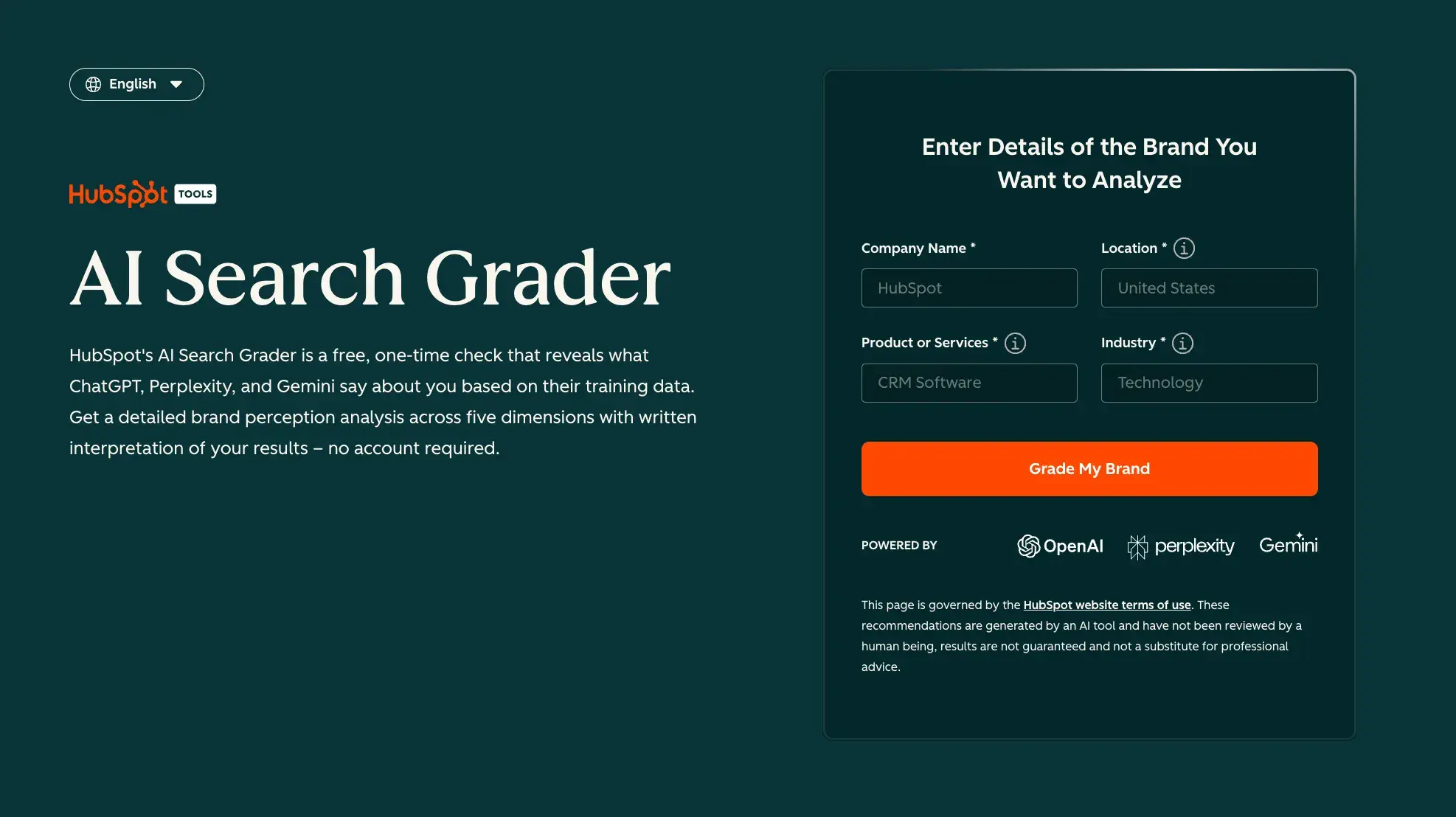
| Mangools AI Search Grader | AI Search Score; model-level visibility & ranking results; competitor benchmarking. | Teams wanting a free AI visibility baseline. | Standalone diagnostic, not a CRM workflow. | Free | Designed for point-in-time diagnosis, not continuous monitoring. |
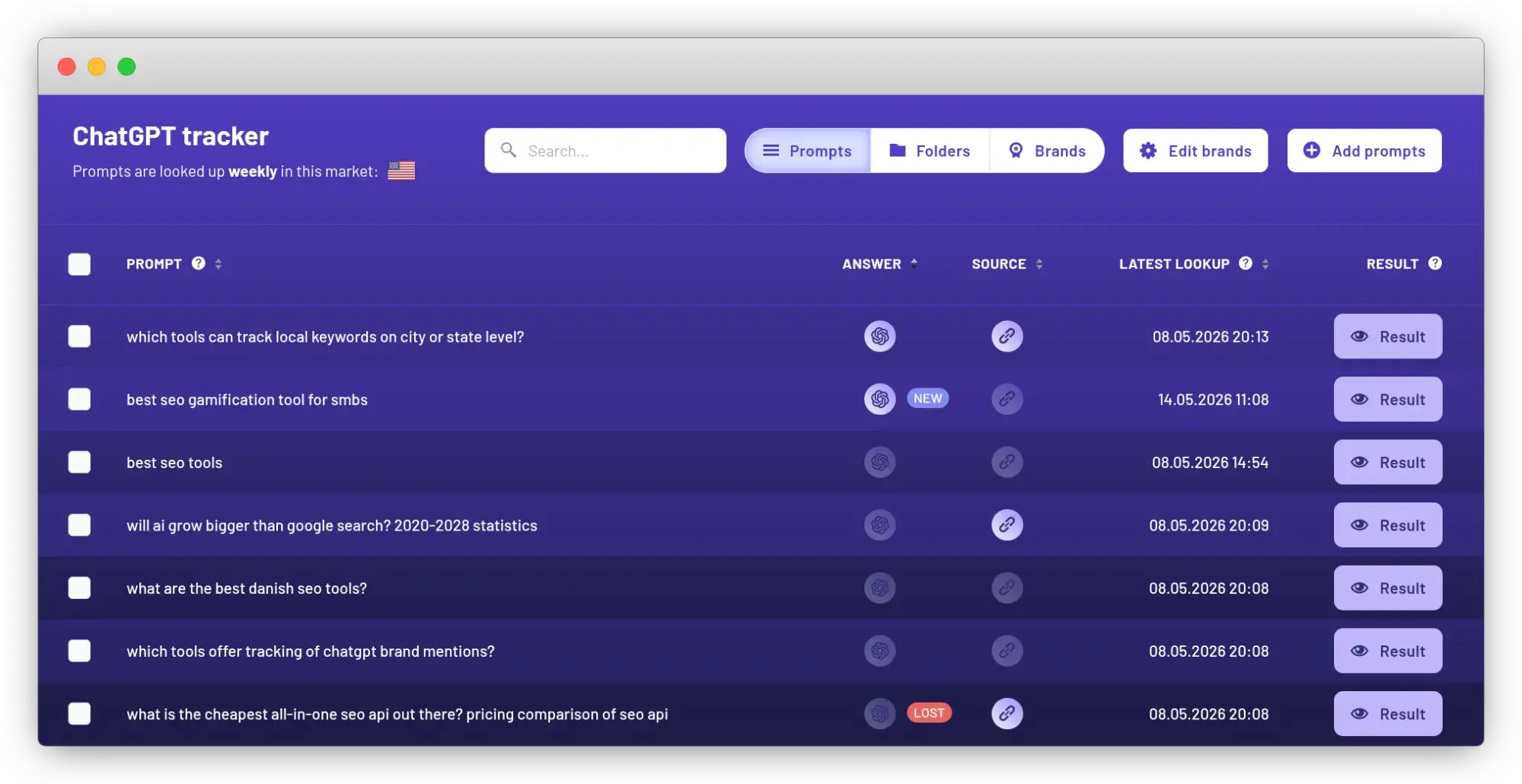
| Morningscore ChatGPT Rank Tracker | ChatGPT prompt tracking; brand mentions & citation evidence; competitor comparisons. | Teams wanting ChatGPT visibility & traditional SEO in one product. | CRM integration is not a core focus. | Starts at $69/month | ChatGPT prompt lookups are weekly; narrower engine coverage than multi-model platforms. |
Spotlight on Key Platforms
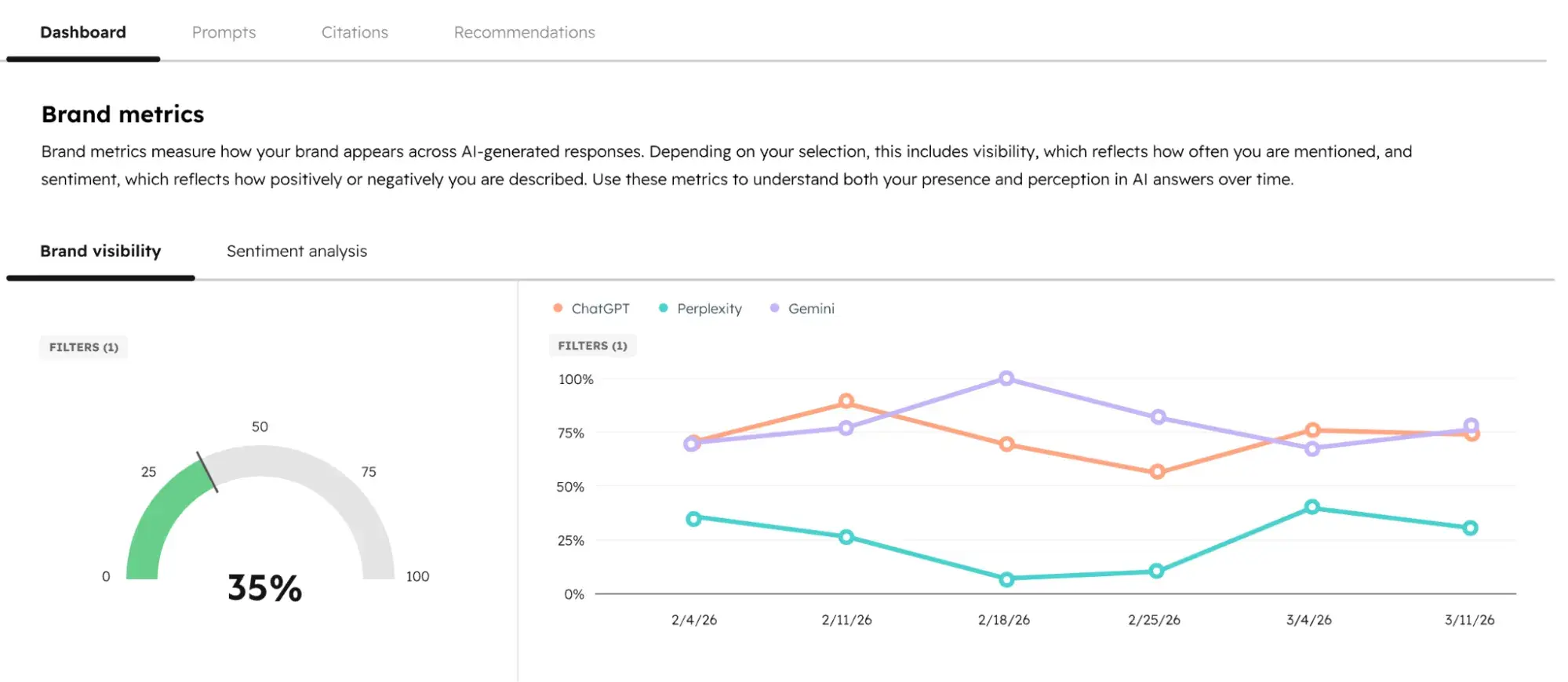
HubSpot AEO emerges as a notable alternative, offering continuous tracking of brand visibility and sentiment across ChatGPT, Perplexity, and Gemini. Its key differentiator is the integration with CRM data within HubSpot’s Marketing Hub, allowing teams to connect AI visibility directly to pipeline and revenue metrics. The tool provides prioritized recommendations, turning insights into actionable content and campaign strategies. Priced at $50 per month for 25 prompts, it offers a tangible path for teams to move beyond measurement to strategic action.
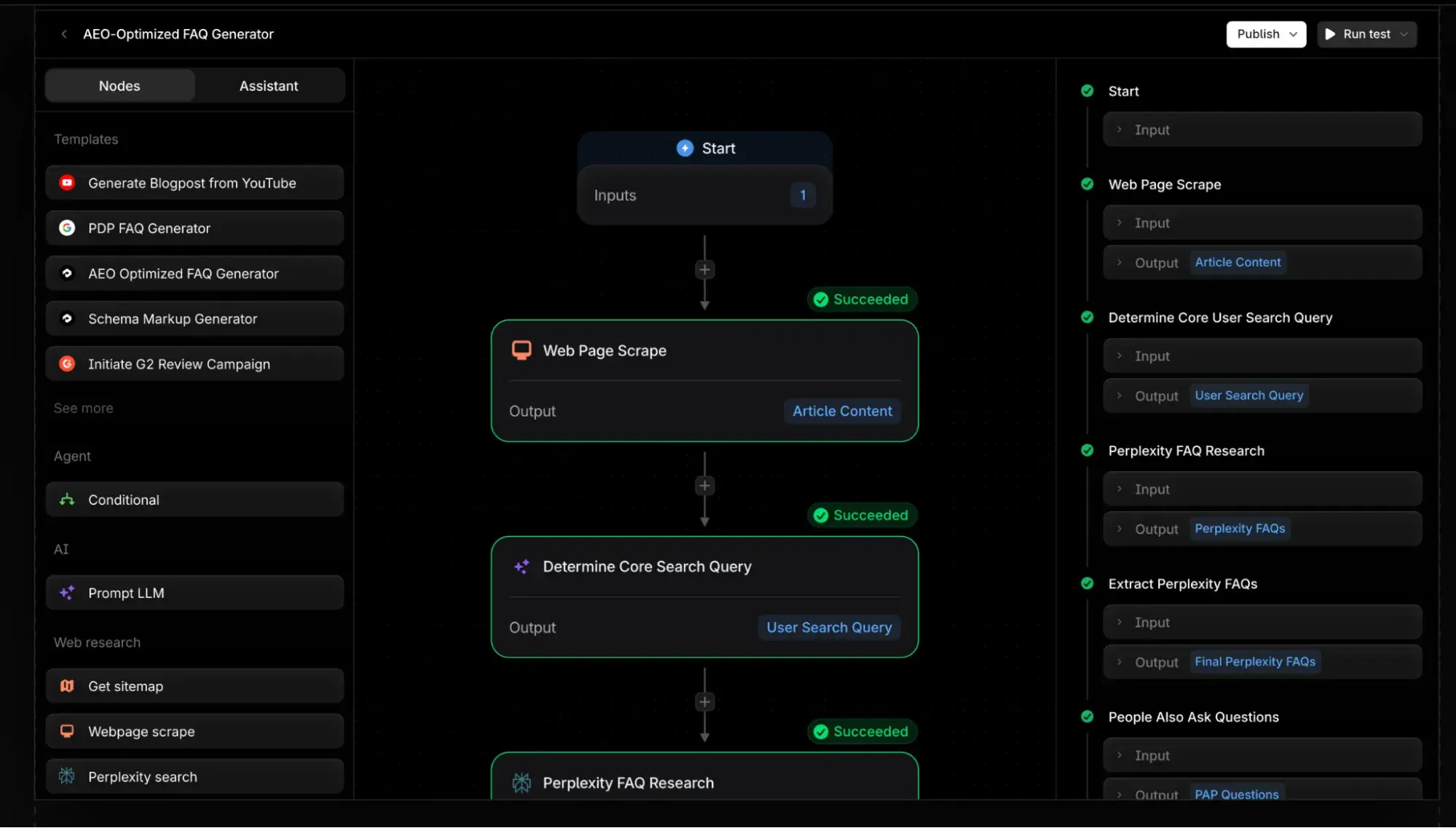
Profound caters to larger organizations seeking to establish dedicated AI-driven optimization (AEO) programs. With features like Answer Engine Insights and Agent Analytics, it provides detailed reporting and workflows for acting on AI visibility data. Its tiered pricing structure accommodates growing needs, from single-model tracking to broader enterprise coverage.
Peec AI offers broad AI model coverage and daily tracking, making it suitable for SEO and content teams prioritizing comprehensive visibility across various AI platforms. Its pricing model, which scales primarily by prompts and projects rather than per-user seats, facilitates easier collaboration.
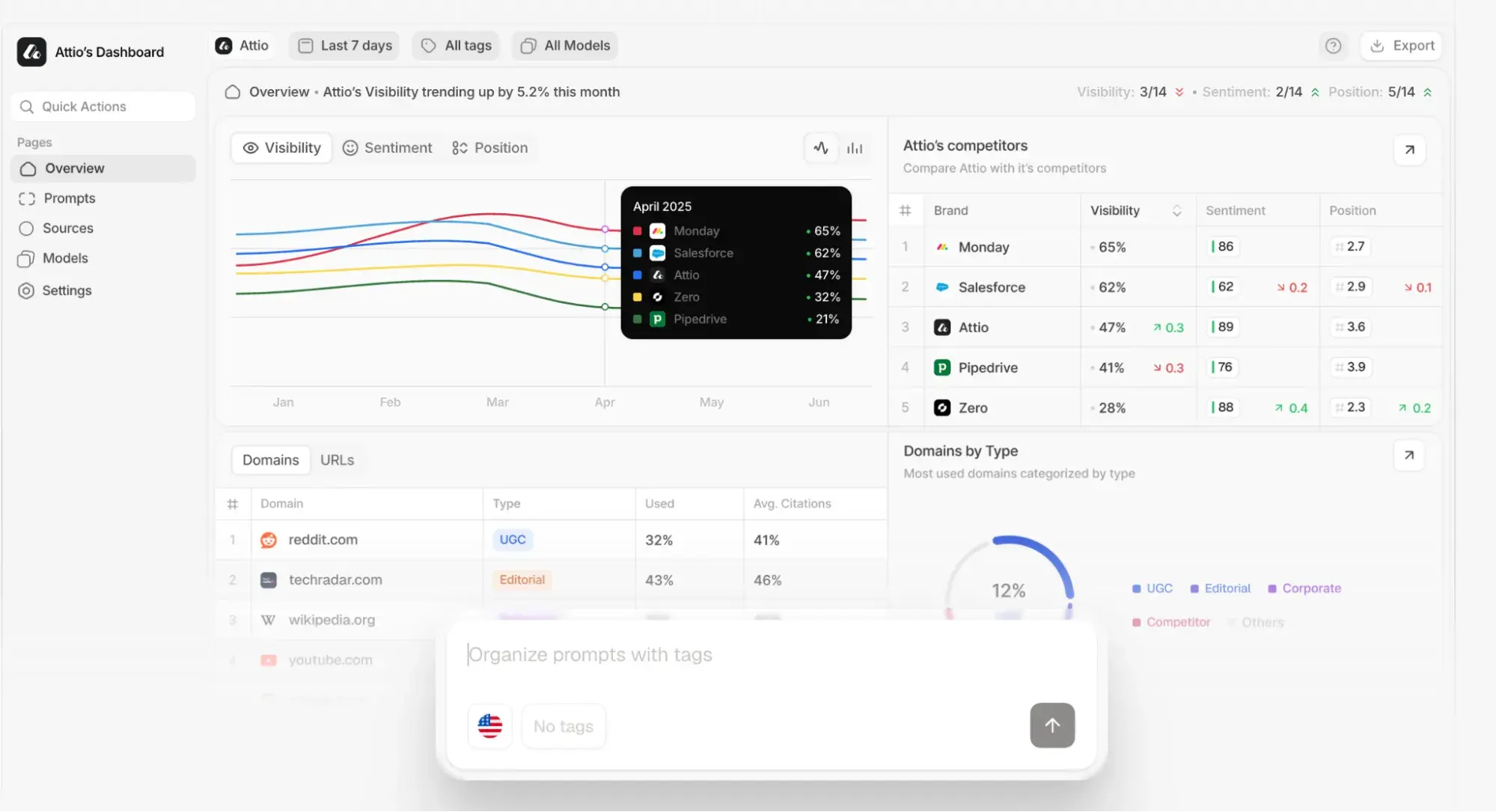
Xofu carves out a niche by focusing specifically on bottom-of-the-funnel and purchase-intent prompts, which are critical for SaaS companies and agencies aiming to influence direct purchasing decisions. Its emphasis on commercial-intent visibility differentiates it from broader brand monitoring tools.
Mangools AI Search Grader provides a valuable free diagnostic tool, offering a one-time baseline assessment of a brand’s AI search performance across multiple models. This serves as an excellent entry point for teams before committing to continuous monitoring solutions.
Morningscore ChatGPT Rank Tracker integrates ChatGPT visibility directly into a traditional SEO platform. This appeals to teams that want a consolidated view of both organic search and AI chatbot performance, specifically focusing on ChatGPT.
The Strategic Imperative: Connecting AI Visibility to Business Outcomes
The true value of AI visibility tools lies not just in identifying mentions but in translating those mentions into measurable business impact. As Matthew Kinneman of Bully Max pointed out, AI visibility is only meaningful when it can be linked to customer actions and revenue. This necessitates tools that can bridge the gap between AI-generated insights and core business metrics.
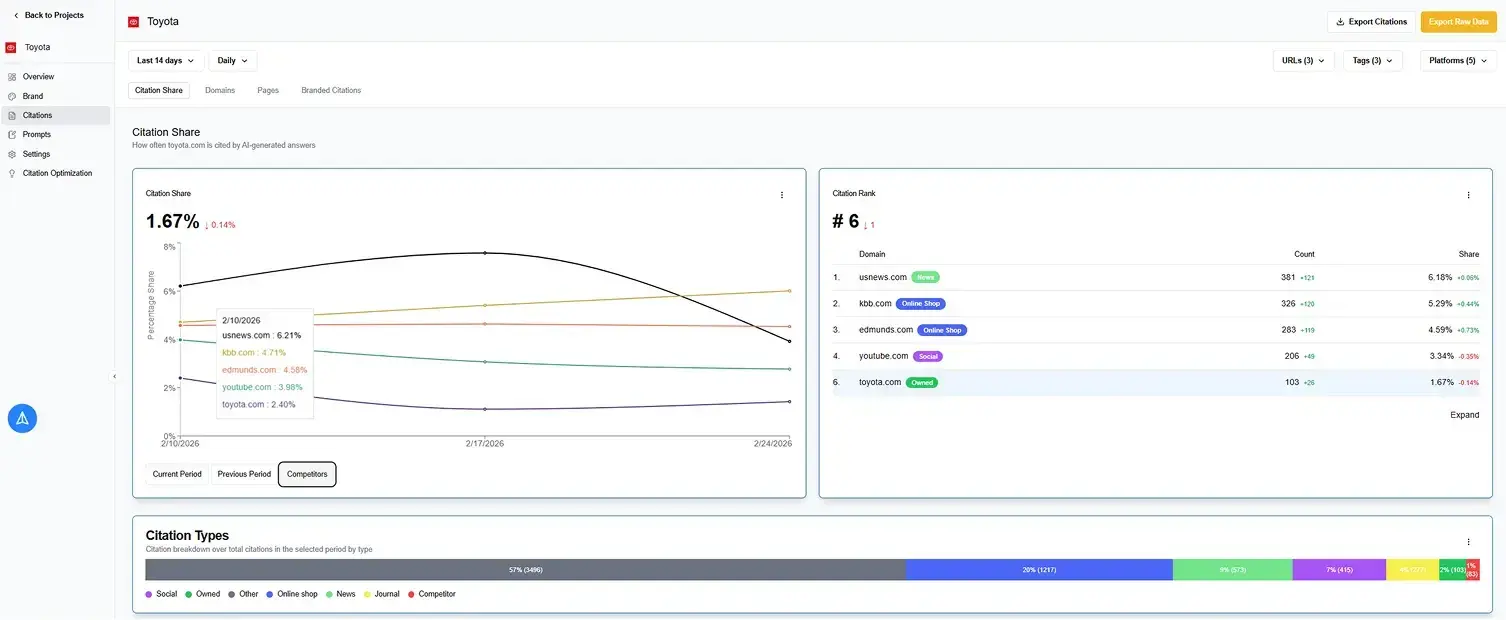
Platforms like HubSpot AEO, particularly when integrated with Marketing Hub Professional and Enterprise, leverage CRM data to suggest prompts that are directly relevant to actual buyers. This CRM-connected approach facilitates a direct link between AI visibility and pipeline, enabling teams to understand how AI-driven discovery influences leads, opportunities, and ultimately, revenue. Moreover, these tools often provide prioritized recommendations, guiding teams on content updates, new page creation, and citation opportunities based on identified visibility gaps. This transforms AI visibility into actionable competitive intelligence, revealing what AI engines recommend, which sources influence those recommendations, and where strategic improvements can be made.
Implementing an AI Visibility Strategy: A Phased Approach
Adopting an AI visibility tool, whether as an alternative to Ahrefs Brand Radar or as a new addition to the marketing stack, requires a structured implementation process. A controlled rollout is recommended to ensure efficacy and integration:
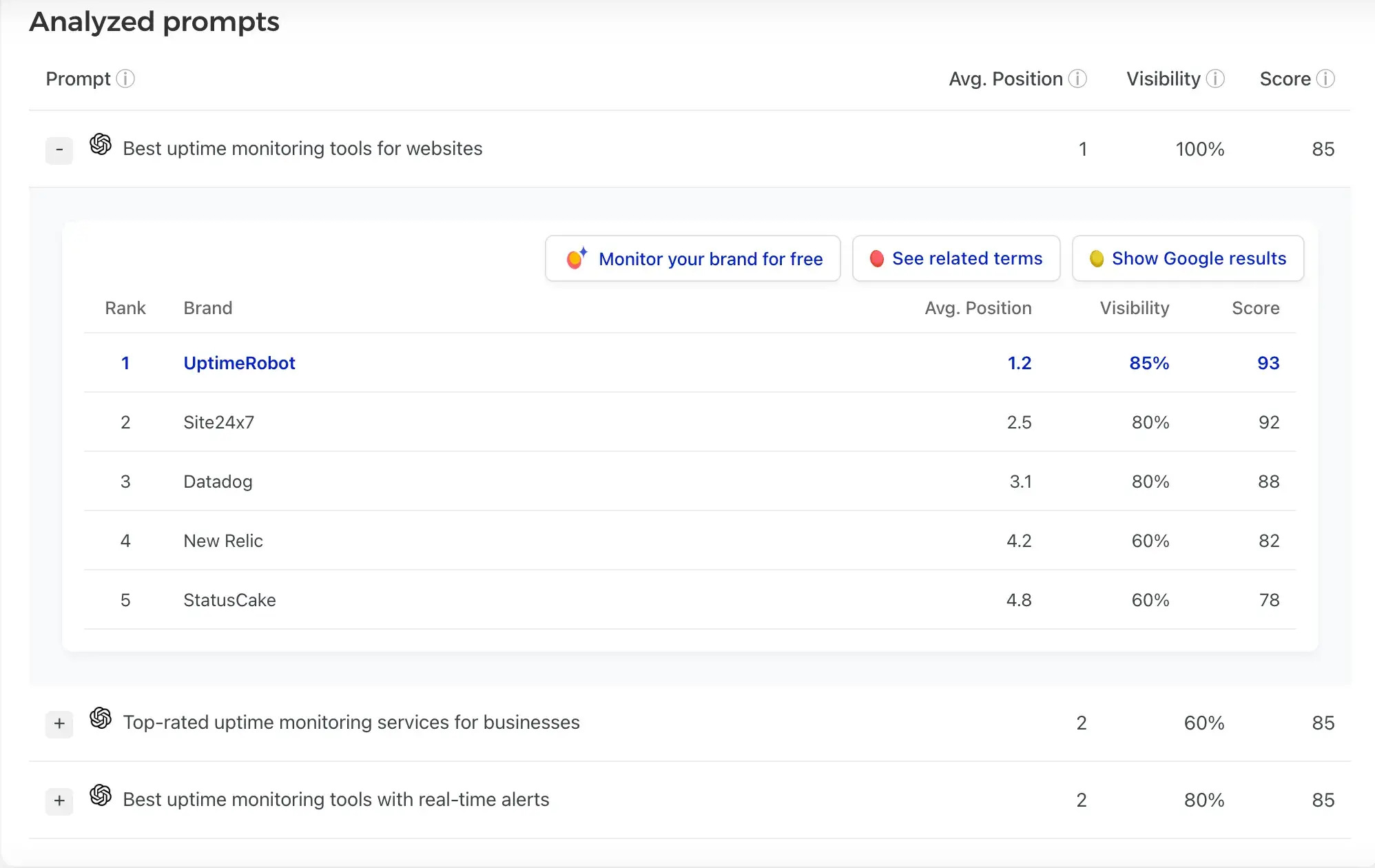
- Establish Integrations and Reporting Foundations: Determine where AI visibility data will reside and how it will be cross-referenced with existing marketing and revenue metrics. This involves setting up necessary connections to CRM, analytics, and business intelligence platforms.
- Develop Prompt Governance: Consistent and standardized prompts are crucial for accurate trend analysis. Establishing a clear process for prompt creation, review, and management ensures data reliability.
- Implement Multi-Run Quality Assurance: AI-generated answers can vary. Running priority prompts multiple times and comparing outputs across different models and configurations helps to validate findings and account for the inherent variability of AI responses.
- Build an Evidence Repository: Preserving the underlying AI responses, cited sources, and timestamps is essential for auditing results and understanding the context behind visibility scores. This evidence can also inform content strategy and competitive analysis.
- Pilot, Compare, and Scale: Test the workflow with a limited set of prompts and products before a full-scale deployment. This allows for refinement of the process and validation of the chosen tool’s effectiveness before expanding its use across all business units or regions.
Frequently Asked Questions on AI Visibility Tools
The rapid evolution of AI in marketing naturally brings forth numerous questions. Addressing these concerns can clarify the strategic importance and practical application of AI visibility tracking:
How do I validate AI visibility data across different models?
Validation involves running key prompts multiple times and comparing the outputs across various AI models, locations, and tracking frequencies supported by the tool. Crucially, retaining the underlying response and citation evidence allows for confirmation that reported visibility scores accurately reflect what the AI engine returned.
How long does it take to see results after switching tools?
While a new tool can begin collecting baseline data immediately, the timeframe for seeing meaningful results is not universally defined. It depends on the tool’s tracking cadence, the stability of the prompt set, ongoing changes in AI models, and the speed at which content updates influence AI responses.
Can I track brand visibility by region or persona?
Many AI visibility tools offer segmentation capabilities. Geographic segmentation is often supported, and some platforms allow for organizing prompts by specific buyer roles or journey stages. The extent of this functionality varies by vendor and plan.
What’s the best way to connect AI visibility to revenue?
Connecting AI visibility to revenue involves integrating this data with referral traffic, CRM, and attribution metrics. By comparing changes in high-intent prompt visibility with qualified leads, influenced opportunities, and closed revenue, teams can identify correlations. However, it is important to avoid claiming causal impact when only correlation is evident.
Do I still need traditional SEO tools with an AI visibility tracker?
Yes. AI visibility trackers and traditional SEO tools serve distinct but complementary purposes. AI trackers illuminate how brands appear in generated answers, while SEO tools focus on rankings, backlinks, technical health, keyword opportunities, and organic traffic. For most marketing teams, AI visibility enhances, rather than replaces, traditional SEO efforts.
Conclusion: Charting the Future of Brand Discovery
The decision of which Ahrefs Brand Radar alternative is most suitable hinges on specific organizational needs. Whether it’s basic mention monitoring for an emerging program or a sophisticated multi-model platform designed for continuous reporting and actionable insights, the choice depends on factors such as desired AI model coverage, the necessity of preserving evidence, the critical integrations required, and the overall cost of running the program at scale.
For teams prioritizing continuous monitoring coupled with clear, actionable next steps, solutions like HubSpot AEO offer a compelling blend of visibility, sentiment analysis, competitor citation tracking, prompt monitoring, and strategic recommendations. The integration within HubSpot’s Marketing Hub further enhances this by layering CRM context, aligning AI visibility more closely with existing marketing and revenue reporting workflows.
Ultimately, the most effective AI visibility tools provide marketing teams with more than just a score; they offer a clear path forward. They can answer not only "Are we visible?" but also "Why?" and "What should we do next?" This ability to translate data into actionable competitive intelligence and demonstrate a credible connection to business outcomes is the benchmark for selecting the right Ahrefs Brand Radar alternative and navigating the evolving landscape of AI-driven B2B software discovery.
About the Author