The internet’s primary gateway is undergoing a profound transformation, driven by the rapid ascent of artificial intelligence. A landmark report by McKinsey reveals a seismic shift in consumer behavior: 50% of individuals now leverage AI-powered search tools, with over 70% relying on them for asking questions and gathering information. This fundamental change necessitates an evolution for Search Engine Optimization (SEO) leaders, demanding the integration of Answer Engine Optimization (AEO) strategies. The goal is no longer solely to secure a top ranking on traditional search engine results pages (SERPs), but to achieve visibility within AI-generated answers across platforms like Google AI Overviews, ChatGPT, and Perplexity.
This burgeoning trend underscores a critical need for marketing leaders to actively monitor their brand’s presence within the AI search ecosystem. Understanding how AI tools reference, cite, and contextualize brands in relation to specific search queries is paramount. In this evolving digital frontier, two prominent platforms, Profound AI and Peec AI, have emerged to equip marketing teams with the tools to monitor, measure, and optimize their content for these new search generative experiences (SGE). This detailed comparison aims to dissect their offerings, highlight their distinctions, and guide teams in selecting the solution that best aligns with their AEO strategies.

The Imperative for Answer Engine Optimization (AEO)
As AI-driven answer engines increasingly dictate how users discover information, marketers must adapt their measurement and influence strategies beyond conventional search metrics. Platforms like Peec AI and Profound AI stand at the forefront of this paradigm shift. Both are purpose-built for AEO, empowering teams to comprehend their brand’s representation within AI-generated responses across platforms such as ChatGPT, Claude, and Perplexity.
While both platforms address similar challenges – tracking AI mentions, citations, and overall visibility – they diverge in their depth, complexity, and intended application. The core value proposition for marketers considering these tools lies in the fact that AI answer engines are becoming significant arbiters of customer perception and trust. These platforms offer critical insights into whether and how a brand appears in these influential responses, a crucial element of modern search visibility as AI-generated answers begin to supplant traditional blue links.
Peec AI: Simplicity and Speed to Insight
Peec AI positions itself as an AI visibility and search analytics platform designed for rapid understanding of brand presence across AI answer engines. Its core AEO metrics include tracking brand mentions, citations, and overall visibility. The platform’s key strength lies in its intuitive design and swift delivery of actionable insights. Peec AI presents clear, easily digestible data, facilitating performance benchmarking and the identification of visibility gaps without requiring extensive technical setup or complex integrations.

This makes Peec AI a compelling choice for:
- Startups and SMBs: Teams with limited resources and a need for quick deployment and clear, actionable data.
- Marketing Agencies: Professionals managing multiple client accounts who require efficient benchmarking and reporting to demonstrate AI visibility gains.
- SEO Professionals: Individuals seeking to understand how AI is impacting their traditional SEO efforts and to identify immediate optimization opportunities.
However, the platform’s focus leans more towards measurement and insight generation than direct execution. While it illuminates a brand’s AI presence, it offers fewer integrated tools for translating these findings into direct content and workflow adjustments.
Profound AI: Enterprise-Grade Actionability and Depth
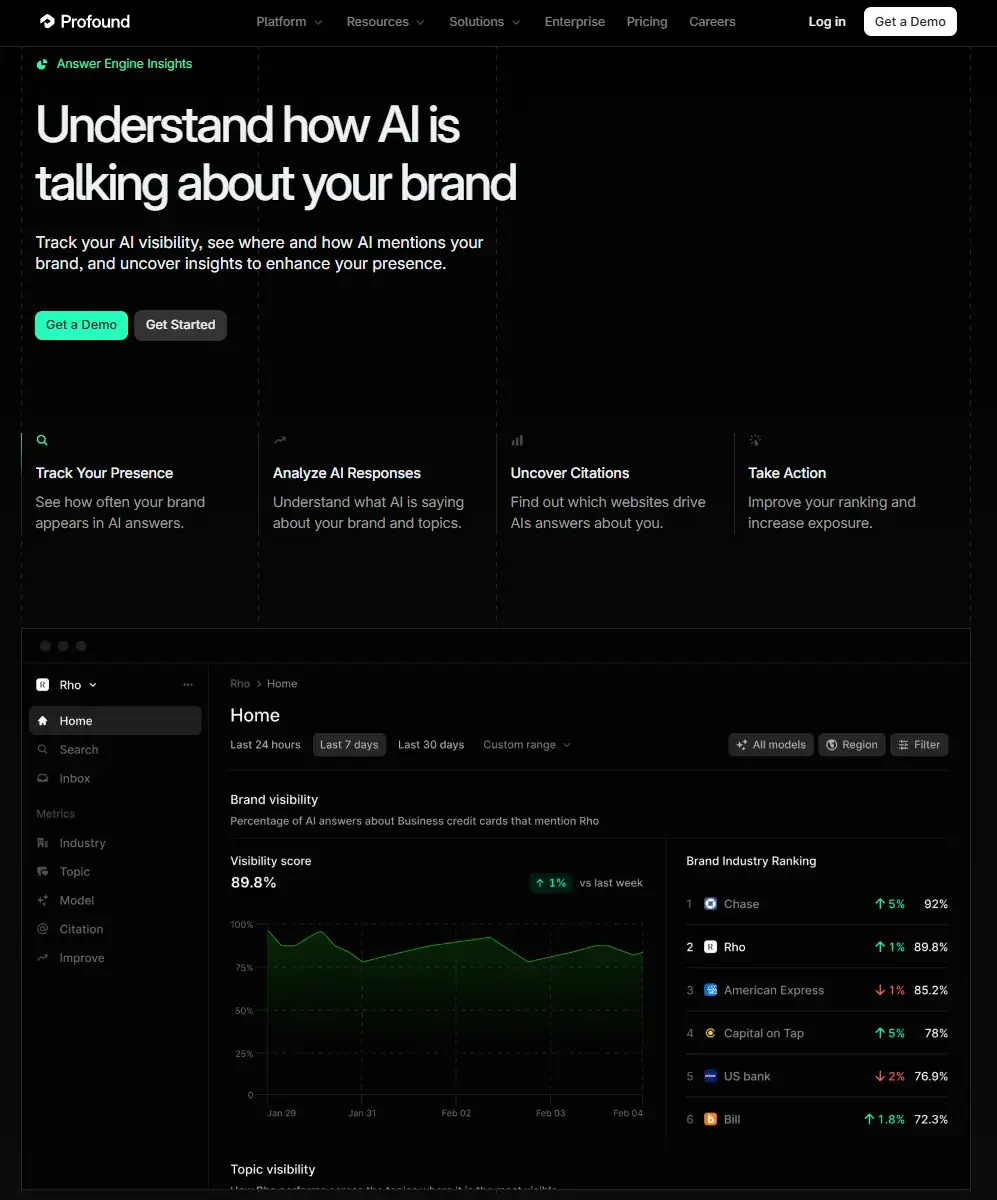
Profound AI operates as an enterprise-grade AEO platform engineered for both measuring AI visibility and actively enhancing it. Its primary advantage is its capacity for scalable, actionable optimization. Similar to Peec AI, Profound tracks mentions, citations, and brand presence across various AI systems. However, it extends its capabilities with advanced features such as:
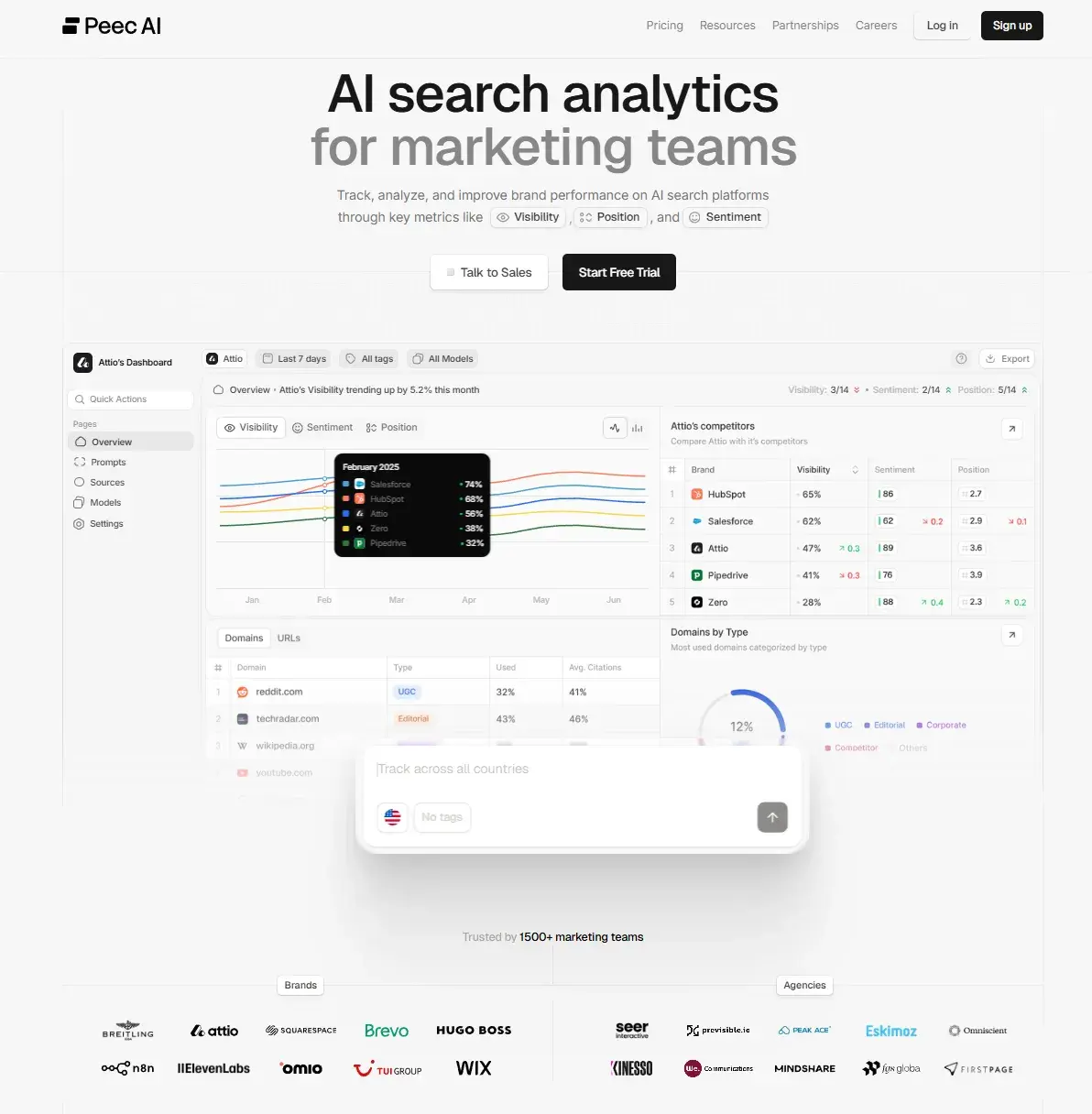
- AI Content Recommendations: Generating specific content suggestions to improve AI visibility based on analyzed data.
- Competitive Benchmarking: Detailed analysis of competitor performance within AI answer engines.
- Brand Sentiment Analysis: Understanding the tone and context in which a brand is discussed.
- Workflow Integrations: Seamless connection with existing content management systems, CRMs, and other marketing tools.
Profound is ideally suited for organizations that aim to embed AEO into their operational framework, linking AI visibility data directly to content strategy, SEO workflows, and measurable business outcomes. This makes it a strong contender for:
- Enterprise-Level Organizations: Large corporations with complex marketing structures and a need for robust data governance and scalability.
- Content-Focused Brands: Companies heavily reliant on content marketing and seeking to ensure their expertise is recognized and cited by AI.
- Data-Driven Marketing Teams: Departments that require deep analytical insights and the ability to integrate AI visibility metrics into broader marketing analytics.
The trade-off for this comprehensive functionality is a higher degree of complexity. Compared to Peec AI, Profound may necessitate a more significant investment in onboarding and ongoing management to fully harness its potential.
HubSpot’s AEO Grader: A Free Snapshot for Initial Assessment
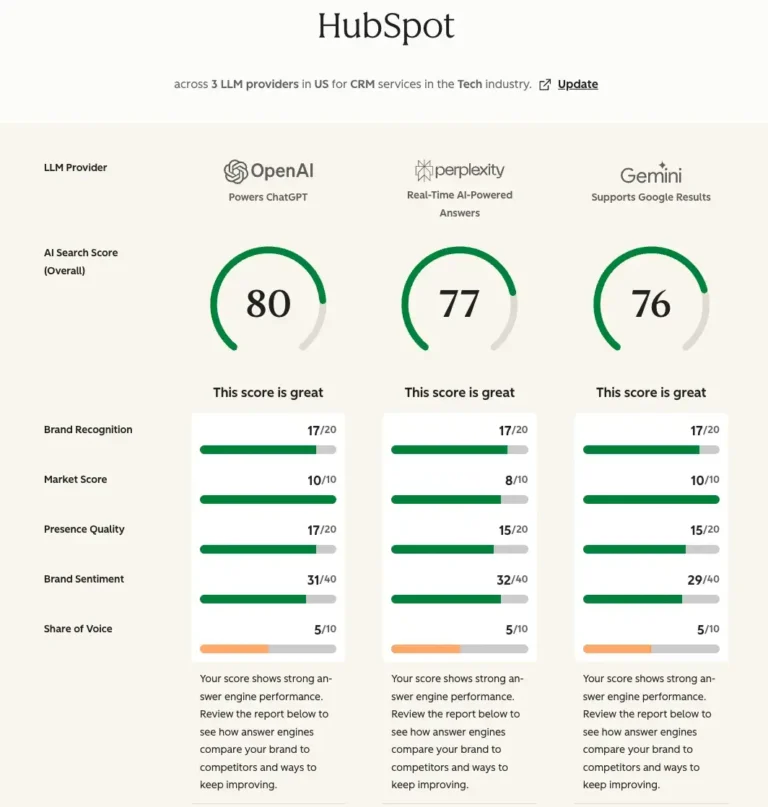
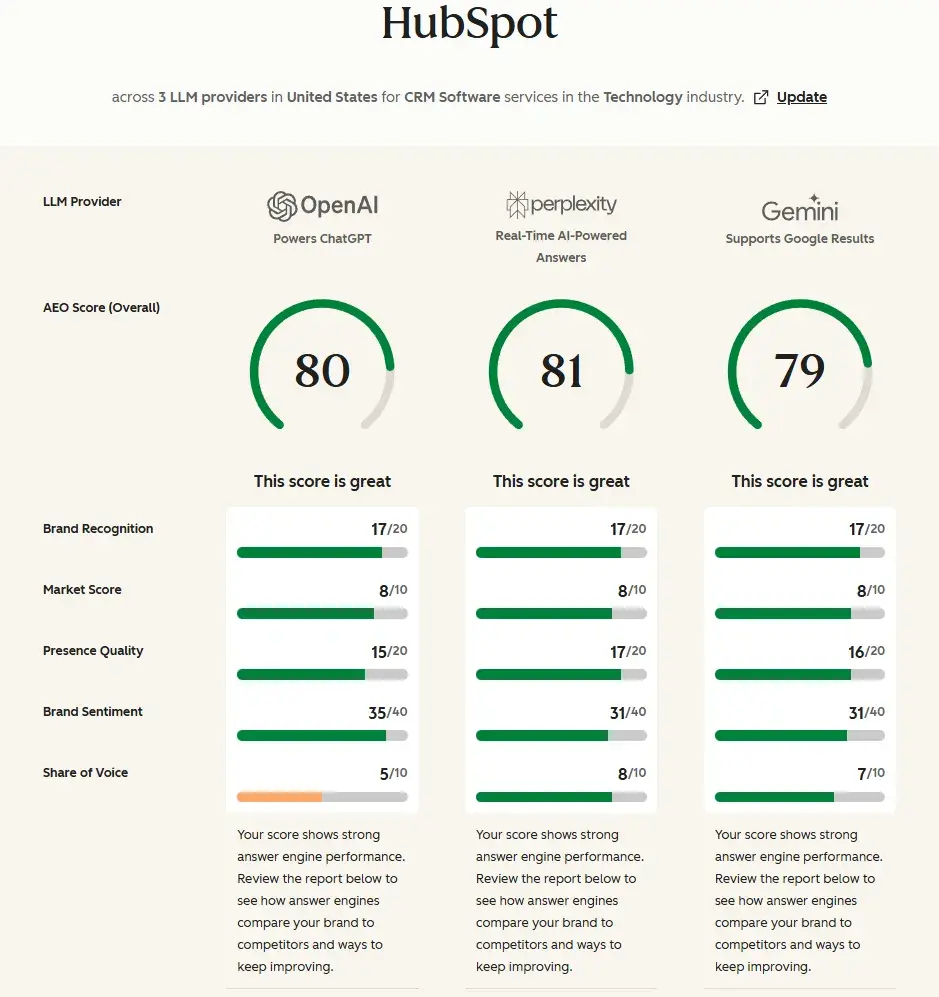
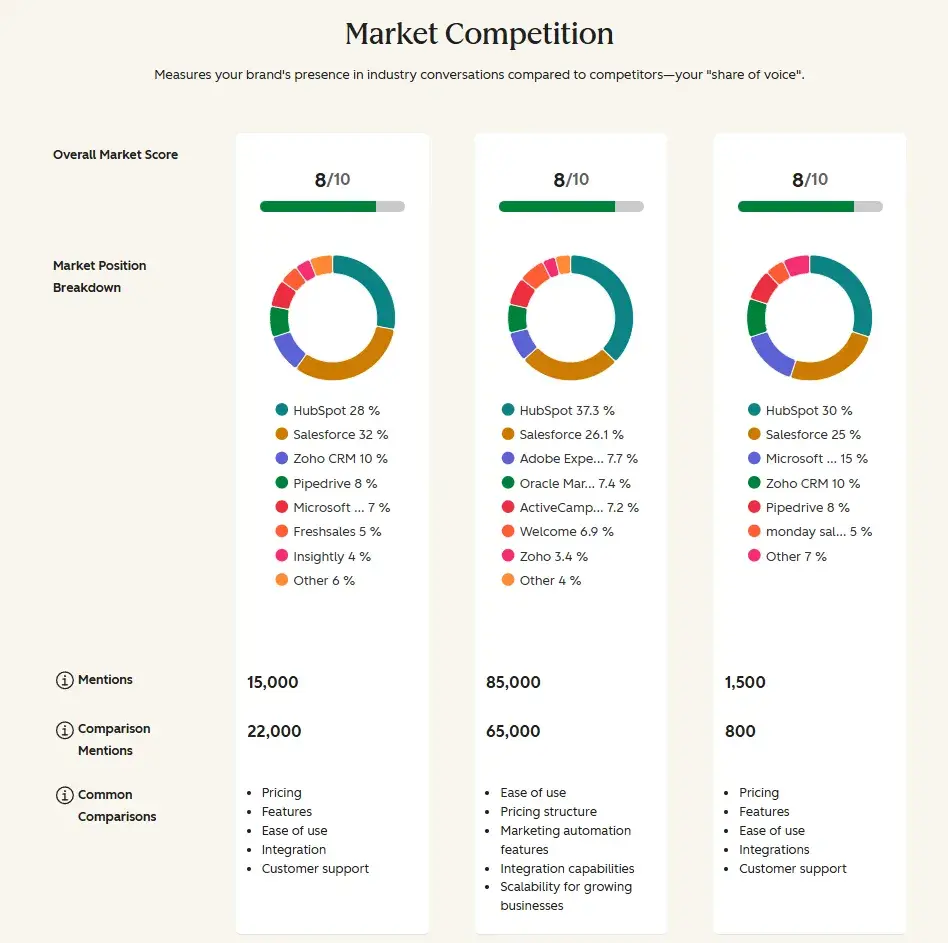
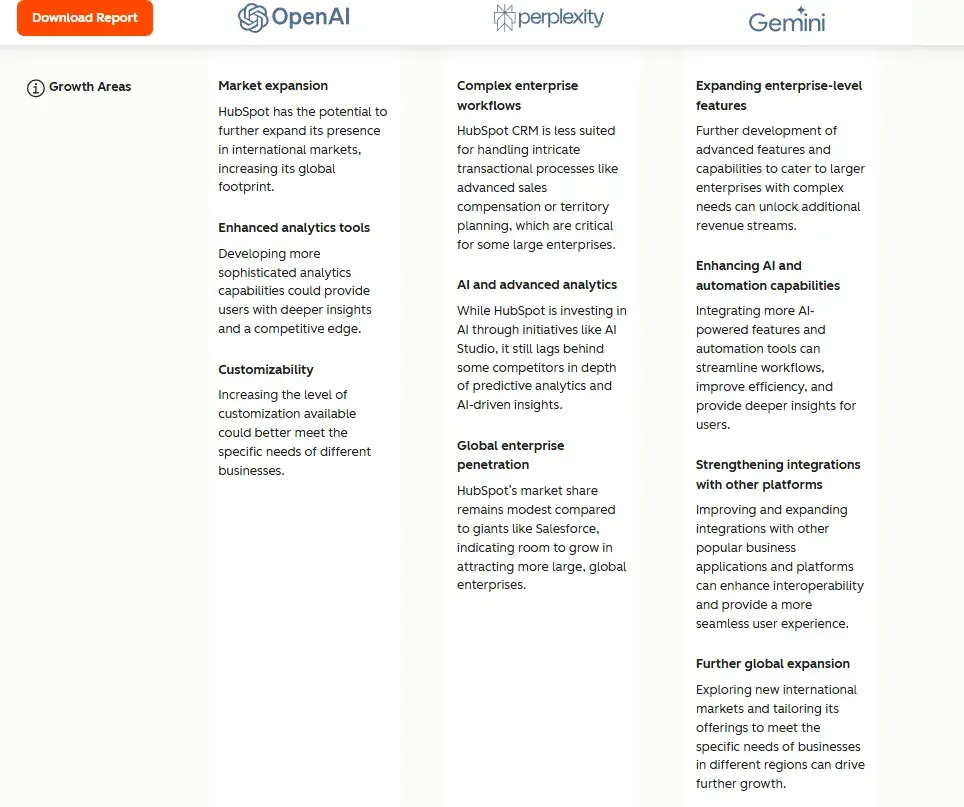
Complementing these dedicated platforms, HubSpot offers a free AEO Grader tool, providing a valuable snapshot of a brand’s AI visibility. This accessible resource allows marketers to benchmark their brand’s representation across answer engines, offering insights into sentiment, share of voice, and competitive positioning, along with preliminary recommendations for improvement. The Grader’s detailed reports, including market competition analysis and strategic recommendations, serve as an excellent starting point for understanding current AI performance and identifying areas for enhancement.
Comparing Profound AI and Peec AI: A Detailed Analysis
Supported AI Engines and Platform Coverage
The breadth of AI engine coverage is a critical factor for marketers investing in AEO, especially as the landscape of AI search tools continues to expand. Limited coverage means operating with incomplete visibility. Buyers frequently navigate between Google AI Overviews, ChatGPT, Perplexity, and other answer engines, necessitating monitoring platforms that mirror this multifaceted search experience.
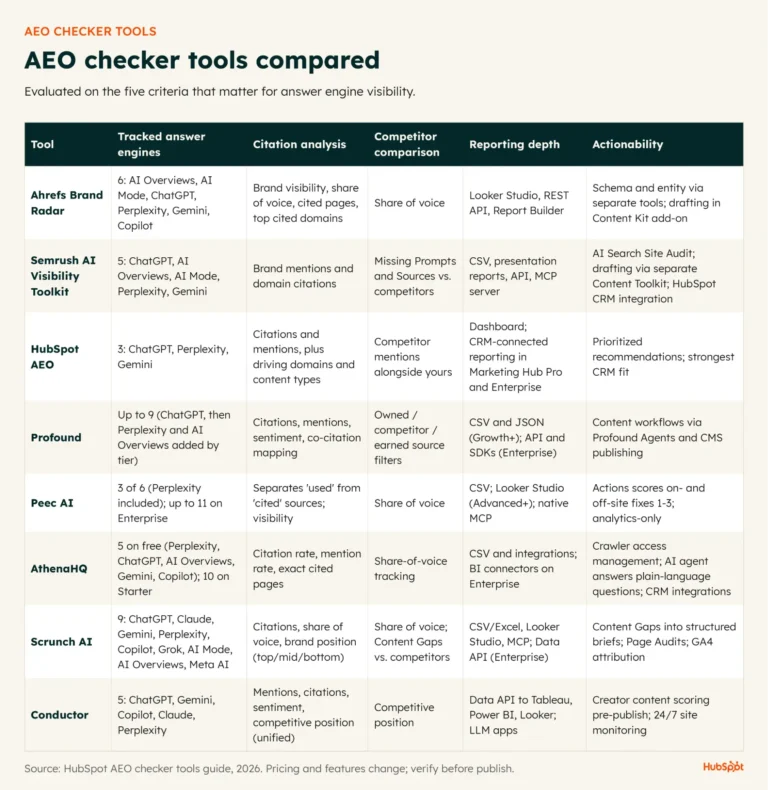
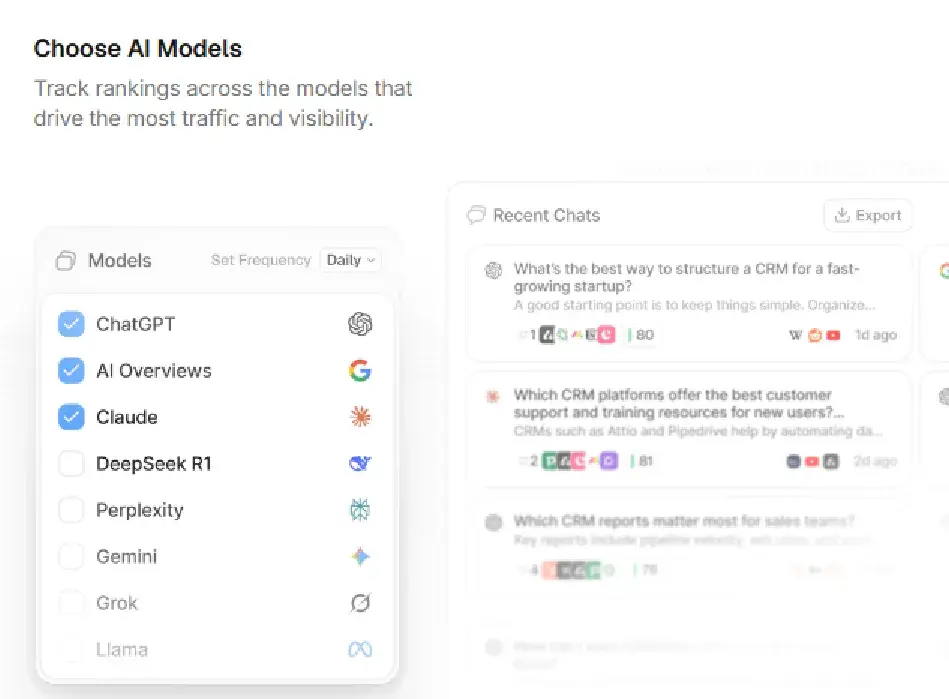
Peec AI’s Coverage: Peec AI supports Google AI Overviews and other prominent answer engines. However, its standard plans allow users to select only three engines for tracking, with additional engines available at an extra cost. The Enterprise tier offers unlimited model tracking, including emerging platforms like Grok, Claude, and advanced GPT versions. Its design focuses on monitoring core generative platforms influential in buyer research, enabling marketers to track mentions, citations, and competitive presence across multiple engines with manageable configuration.
Profound AI’s Coverage: Profound AI employs front-end capture for AI answer tracking, offering a broad spectrum of coverage. Its Starter plan, however, is limited to ChatGPT. To access tracking for other models, users must upgrade to the Growth plan (including ChatGPT, Perplexity, and AI Overviews) or the Enterprise plan, which encompasses Gemini, Copilot, Meta AI, Grok, DeepSeat, Claude, and other emerging AI modes.
Verdict: Profound AI generally offers broader native coverage across more AI engines, particularly in its higher-tier plans, making it more comprehensive for organizations aiming to monitor a wide array of emerging AI search interfaces.
Reporting Depth and Competitive Intelligence
The true value of AI visibility data hinges on its ability to drive strategic action. Reporting depth dictates whether a team can merely observe mentions or gain a profound understanding of positioning, competitive landscapes, and opportunities to shape AI-generated narratives.
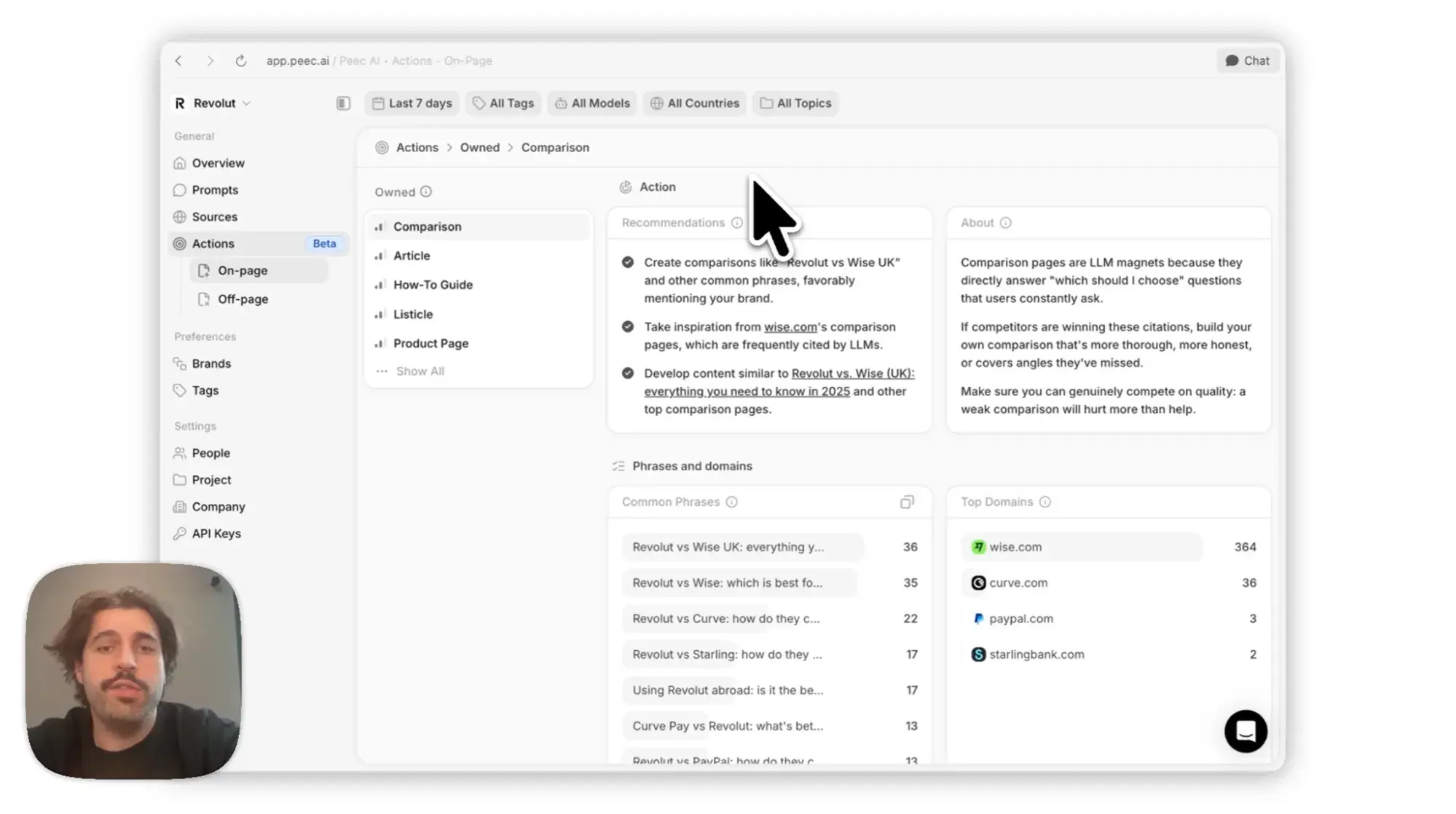
Peec AI’s Reporting: Peec AI differentiates itself with an "Act on Insights" feature that translates AEO data into specific, actionable recommendations for marketers. Instead of just showing a brand’s presence in AI answers, Peec identifies concrete next steps, such as building a presence on cited review platforms or engaging in relevant community discussions. This empowers teams to prioritize authority-building initiatives based on factors demonstrably influencing AI citations.
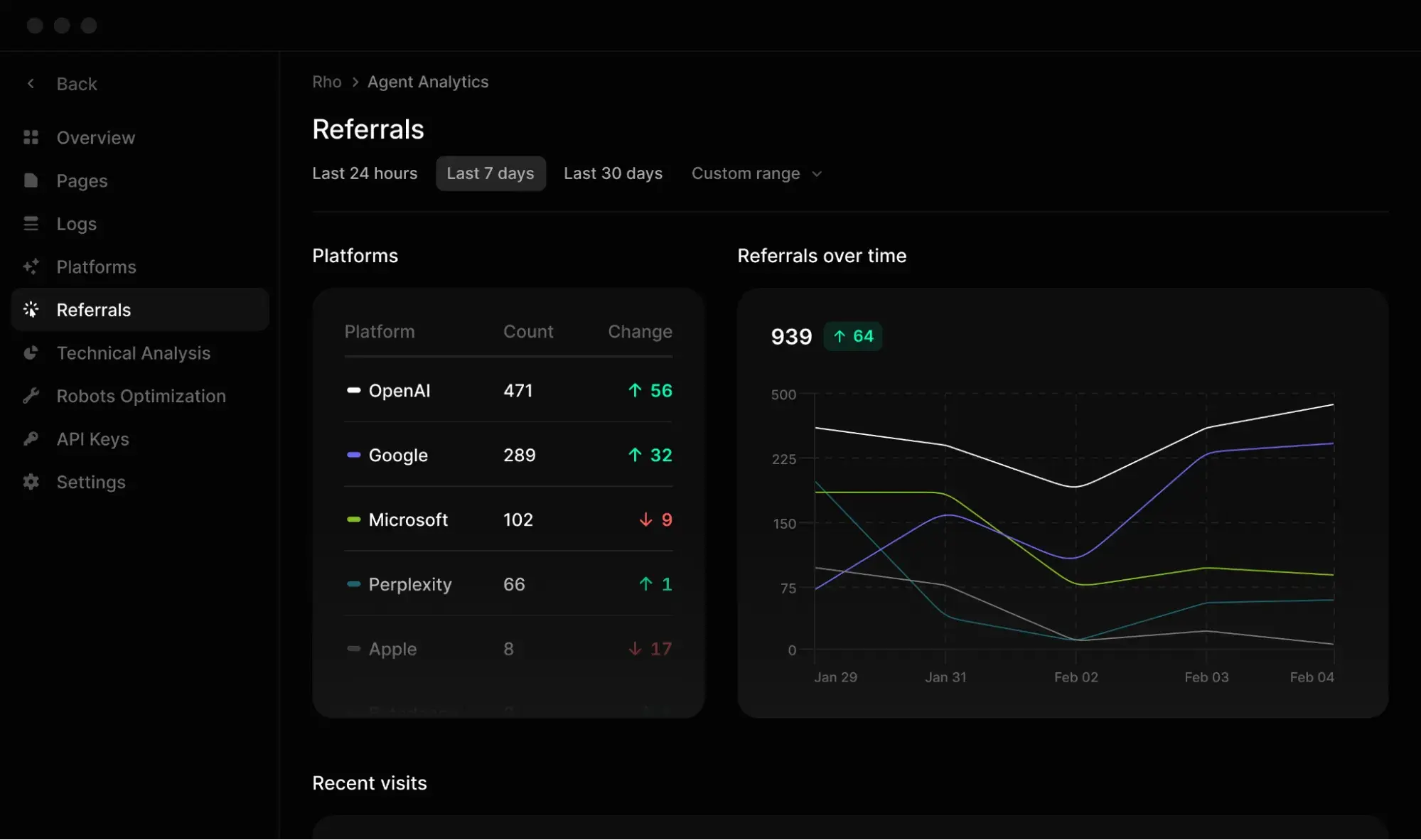
Profound AI’s Reporting: Profound AI emphasizes deeper analysis and contextual tracking. Its front-end capture method allows teams to observe how responses appear in live environments, providing granular insights into response structure, citation order, and positioning. This detailed approach facilitates a more nuanced understanding of competitive dynamics, including which brands are cited first and how specific prompts influence outcomes. For advanced AEO programs, this level of detail supports more deliberate optimization and content strategy decisions.
Verdict: Profound AI offers deeper analytical capabilities and more granular competitive intelligence, which is advantageous for organizations running sophisticated AEO programs. Peec AI excels in translating data into straightforward, actionable recommendations for immediate implementation.
Integrations and Workflow Connectivity
Effective AEO cannot operate in isolation; it must seamlessly integrate with existing marketing stacks to drive measurable growth. Marketing leaders require AI visibility data that connects to their CRM, content workflows, and revenue analytics. Without robust integrations, AEO can become an isolated metric, hindering efficient impact assessment.
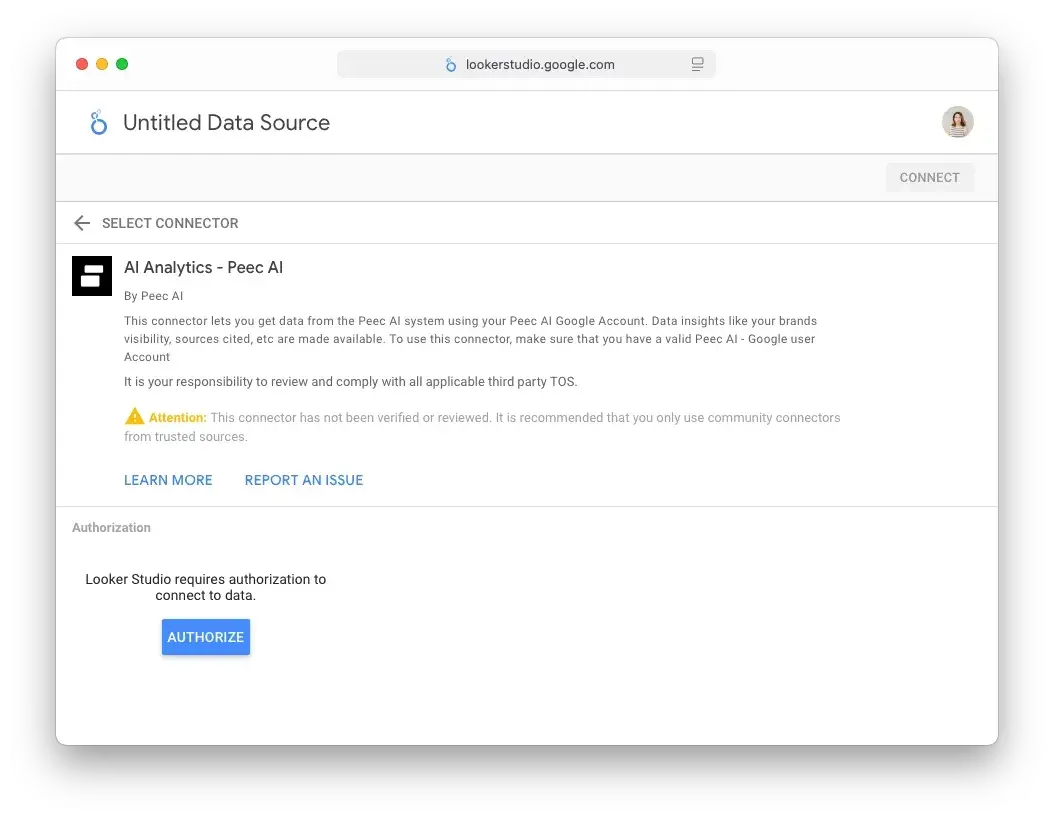
Peec AI’s Integrations: Peec AI provides flexible data export and integration options. Its Looker Studio integration allows for the export and visualization of visibility data in customizable dashboards, enabling teams to consolidate core AEO metrics alongside other performance data. Data API access and CSV exports are also available for teams needing to incorporate visibility data into their existing workflows. While the Looker Studio integration simplifies dashboard creation, Peec AI’s broader integration footprint remains relatively limited for deep enterprise system connectivity.
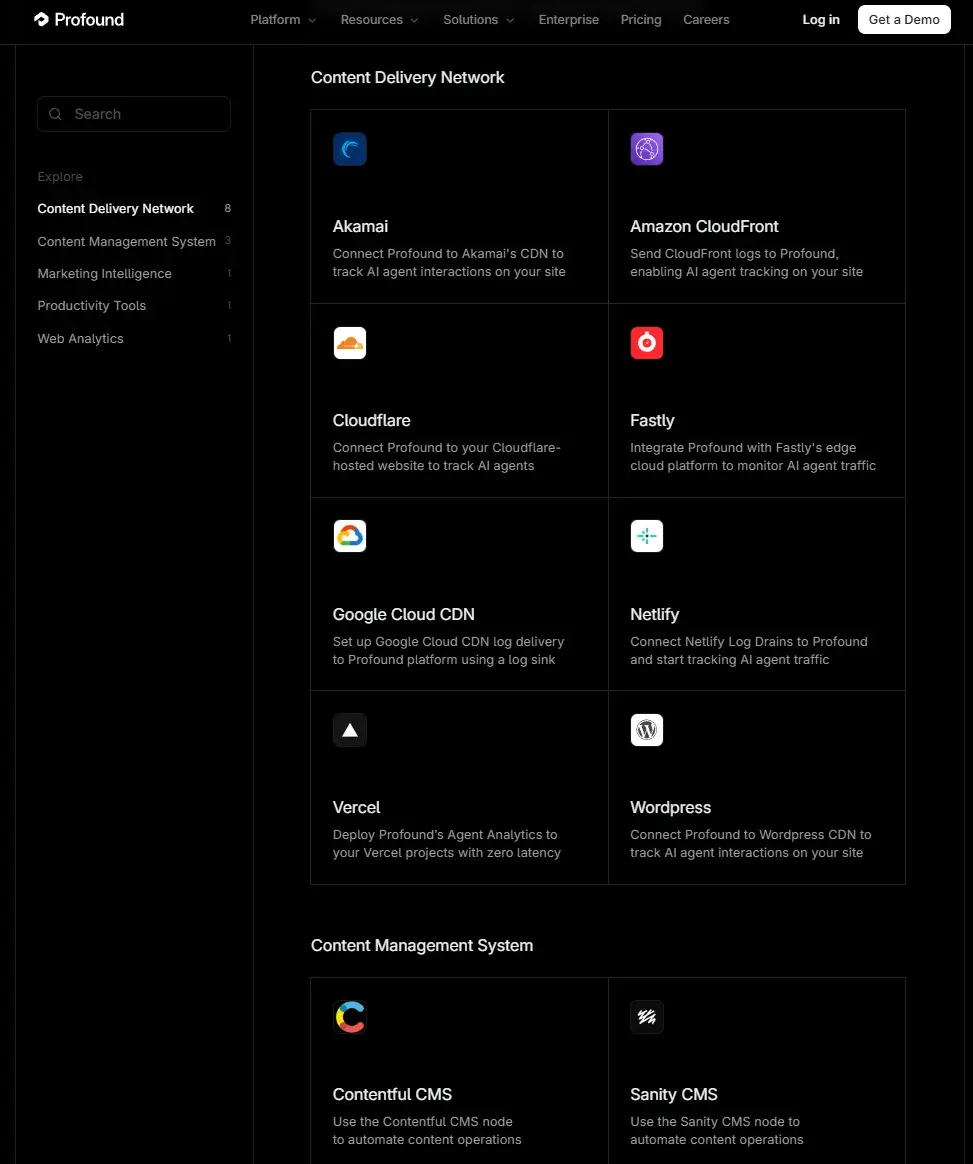
Profound AI’s Integrations: Profound AI boasts an extensive ecosystem of integrations designed to embed AEO insights directly into content and marketing workflows. Beyond dashboard exports, its "Profound Agents" offer native connections to content management systems (WordPress, Sanity, Contentful, Webflow), productivity tools (Slack, Gamma), and Google Search Console. This allows teams to act on AEO data without leaving their current platforms, streamlining workflows by bringing AI visibility signals into:
- Content Management Systems (CMS)
- Customer Relationship Management (CRM) systems
- Productivity and collaboration tools
- Analytics and reporting dashboards
Verdict: Profound AI demonstrably leads in integrations and workflow connectivity, offering a more comprehensive suite of tools for embedding AEO insights into daily operations.
Pricing Structure, Onboarding, and Scalability
The financial aspect of AI tools can be a decisive factor. Profound AI’s pricing, particularly for its higher-tier packages, may present a barrier for some businesses, especially those with plans for extensive scaling.
Peec AI’s Approach: Peec AI is recognized for its competitive pricing and rapid onboarding, making it an attractive option for startups, mid-market companies, and agencies seeking swift deployment. Its accessible entry points allow marketing teams to commence AI visibility tracking quickly. Peec AI offers a comprehensive knowledge base with video tutorials to guide users through setup processes. It is particularly appealing for organizations looking to experiment with AEO and scale gradually. Agencies managing numerous clients often benefit from its streamlined onboarding, facilitating quicker rollout across their portfolio.
- Pricing: Peec AI offers a seven-day free trial, followed by paid packages starting from approximately $49 per month.
Profound AI’s Approach: Profound AI is primarily positioned for enterprise clients, offering enterprise-grade security and compliance features essential for large brands operating in regulated industries or global markets. Its pricing and onboarding model typically align with enterprise procurement cycles, involving structured implementation, stakeholder alignment, and governance considerations. While this may entail a longer ramp-up period, it caters to larger organizations requiring robust data controls, auditability, and scalable deployment across distributed teams.
- Pricing: Profound AI’s paid packages begin at approximately $199 per month. It’s important to note that the starter package for Profound AI exclusively includes ChatGPT coverage.
Verdict: Peec AI offers a more accessible entry point with competitive pricing and faster onboarding, making it ideal for smaller teams or those prioritizing immediate deployment. Profound AI’s pricing reflects its enterprise-grade features and scalability, making it suitable for larger organizations with more significant budgets and complex needs.
Choosing the Right AEO Platform: Profound vs. Peec AI
The selection between Profound AI and Peec AI for AEO hinges less on isolated features and more on team structure, organizational maturity, and operational complexity. AEO tools are accelerators, amplifying existing systems rather than creating growth in a vacuum.
-
Choose Peec AI if: Your primary objective is to rapidly understand your brand’s AI visibility, benchmark competitors, and generate clear, actionable insights without a demanding implementation process. This is ideal for teams early in their AEO journey or those prioritizing speed and simplicity.
-
Choose Profound AI if: AEO is evolving into a core growth driver for your organization, requiring in-depth analytics and seamless integration into content, CRM, and reporting workflows. For organizations aiming to operationalize AEO at scale and directly link AI visibility to business outcomes, Profound AI provides the robust infrastructure needed to transition from insight to sustained execution.
The Evolving AEO Landscape and HubSpot’s Role
As the demand for sophisticated AEO solutions grows, platforms like HubSpot are introducing their own integrated offerings. HubSpot AEO provides in-depth analysis and ongoing AI visibility strategy, including continuous tracking of brand performance across answer engines with regularly updated visibility scores. Available as a standalone tool or within Marketing Hub Pro and Enterprise, HubSpot AEO aims to connect recommendations directly to existing content and social tools, enabling action without leaving the platform for current HubSpot users. This approach democratizes access to advanced AEO capabilities, particularly for businesses already invested in the HubSpot ecosystem.
Frequently Asked Questions
What is the primary distinction between Profound AI and Peec AI for AEO?
Profound AI emphasizes comprehensive analytics, broad engine coverage, and enterprise-level integration, making it suitable for teams seeking deep insights into AI answer engine interpretation. Peec AI focuses on straightforward visibility tracking and actionable recommendations, enabling teams to quickly identify brand presence and strategize next steps.
Which AI engines do Profound and Peec AI monitor?
Peec AI supports seven platforms, with users selecting up to three on standard plans. Its Enterprise tier offers unlimited engine monitoring. Profound AI provides broad coverage, with its Starter plan limited to ChatGPT, while higher tiers include major and emerging engines like Perplexity, Claude, Gemini, and Copilot.
Does Profound or Peec AI offer superior enterprise-grade features and compliance?
Profound AI is generally stronger for enterprise readiness, offering features designed for security, governance, and large-scale deployment. Peec AI is valuable for rapid adoption and clear insights but may require additional manual processes for enterprise governance.
Which platform is better suited for agencies managing multiple clients?
Peec AI’s pricing and ease of onboarding make it a strong candidate for agencies needing to implement AEO tracking quickly across various clients. Profound AI can also serve agencies, especially those supporting enterprise clients, but its depth and governance features may align better with larger, more structured engagements.
Conclusion: Navigating Towards Sustainable Growth in AI Search
The choice between Peec AI and Profound AI ultimately depends on an organization’s specific needs, resources, and strategic objectives. Peec AI serves as an excellent entry point for understanding AI visibility and generating immediate action. Profound AI offers a more comprehensive, enterprise-focused solution for teams integrating AEO deeply into their growth strategies.
Before committing to any platform, a crucial first step is to assess your current standing. Tools like HubSpot’s AEO Grader offer a free, no-obligation analysis of a brand’s AI visibility, providing essential benchmarks and initial recommendations. This data-driven approach ensures clarity and informed decision-making, regardless of the chosen AEO solution, paving the way for sustainable growth in the increasingly AI-centric digital landscape.
About the Author