The burgeoning field of Answer Engine Optimization (AEO) is rapidly reshaping how brands establish visibility in the digital realm. As artificial intelligence (AI) continues to permeate search functionalities, traditional Search Engine Optimization (SEO) metrics are no longer sufficient to gauge a brand’s true reach. This evolution necessitates a new class of tools: AEO rank trackers. These sophisticated platforms are designed to measure a brand’s presence and prominence within AI-generated answers, offering crucial insights into metrics such as citations, brand mentions, share of voice, and sentiment. For businesses seeking to thrive in this dynamic environment, understanding and investing in these tools is becoming paramount.
The emergence of AEO and its associated rank trackers represents a significant paradigm shift. Unlike the familiar landscape of SEO, where rankings in traditional search engine results pages (SERPs) have long been the primary benchmark, AEO focuses on a more complex and synthesized form of information delivery. AI engines, such as those powering ChatGPT, Perplexity, and Gemini, do not simply present a ranked list of webpages. Instead, they process vast amounts of data from across the internet, evaluate source credibility, and construct a cohesive narrative response. This process often involves integrating information from multiple sources, leading to a nuanced form of brand visibility that requires specialized tracking.
Understanding the Distinction: AEO vs. SEO Tracking
The fundamental difference between AEO and SEO tracking lies in their core objectives. Traditional SEO rank trackers meticulously monitor a website’s position in the coveted "blue links" that populate a search engine’s results page. Key metrics here include keyword rankings, click-through rates, and impression volumes – all directly tied to a specific URL’s placement. In stark contrast, AEO rank trackers are engineered to assess whether a brand’s information is incorporated into an AI-generated answer and, if so, to what extent.
This distinction is critical because AI answer engines operate on a different logic. When a user poses a query, for instance, "What is the best CRM for small businesses?", the AI doesn’t just pick the top-ranking article. It synthesizes information from various reputable sources. This synthesis can manifest in two primary ways:
- Citations: These are explicit references, often in the form of hyperlinks or direct attributions, that indicate the AI engine has directly utilized and acknowledged a specific piece of content. A citation signifies that the AI deemed the source credible and authoritative enough to be a foundational element of its response.
- Mentions: These occur when the AI engine references a brand name without providing a direct link to its content. While less direct than a citation, a mention still signals brand awareness and a presence within the broader information ecosystem that the AI draws upon. It suggests that the brand is sufficiently established to surface in conversational AI responses.
AEO rank trackers are specifically built to capture and differentiate between these two forms of visibility, a capability that traditional SEO tools were not designed to address. The metrics monitored by AEO trackers are distinct from their SEO counterparts:
- Brand Visibility in AI Answers: The primary metric, indicating whether a brand appears in an AI-generated response.
- Citation Rate: The frequency with which a brand’s content is directly cited by AI engines.
- Mention Frequency: The number of times a brand is mentioned, even without a direct link.
- Share of Voice: The proportion of AI-generated answers within a specific topic or keyword set that mention or cite a particular brand, relative to competitors.
- Sentiment Analysis: Gauging the emotional tone (positive, negative, or neutral) of AI-generated responses that mention a brand.
- Average Position in Citations: For prompts that result in a list of citations, this metric tracks where a brand’s URL typically appears.
This divergence underscores the need for a dual approach to digital visibility. Relying solely on SEO metrics means missing a significant and growing channel of user engagement.

Key Features to Seek in AEO Rank Trackers
As the AEO landscape matures, the capabilities of rank tracking tools are becoming more refined. Not all trackers are created equal, and understanding the essential features is crucial for making an informed investment. The most effective AEO tools combine broad engine coverage with granular, citation-level analytics.
Must-Have Features for AEO Rank Trackers:
- Multi-Engine Coverage: The ability to monitor performance across a range of leading AI answer engines (e.g., ChatGPT, Gemini, Perplexity, Claude, Copilot). This ensures a comprehensive understanding of where your brand is appearing.
- Citation and Mention Tracking: The core functionality to identify both direct citations and simple brand mentions within AI responses.
- Share of Voice Analysis: Tools that can quantify your brand’s visibility relative to competitors within specific AI-generated content.
- Sentiment Analysis: The capacity to assess the overall tone of AI responses related to your brand, providing insights into brand perception.
- Keyword/Prompt Tracking: The ability to define and monitor specific queries or prompts to understand how your brand performs for relevant user searches.
- Historical Data and Trend Analysis: Features that allow you to track changes in your AEO performance over time, identify trends, and understand the impact of algorithm updates or content changes.
- Competitor Benchmarking: The capability to compare your AEO performance against key competitors, revealing opportunities and threats.
- Reporting and Dashboards: Clear, intuitive visualizations and customizable reports to easily interpret data and share insights with stakeholders.
Mapping Features to Real Use Cases:
These features translate directly into actionable insights for content and marketing teams:
- Content Gap Identification: By comparing your brand’s citations and mentions against competitors for specific prompts, you can identify content gaps. For example, if a competitor is consistently cited for a prompt related to "sustainable fashion," and you are not, it signals an opportunity to create more authoritative content on that topic.
- SEO Strategy Refinement: Understanding which of your existing content pieces are being cited by AI engines can inform your SEO strategy. Content that performs well in AEO might be a good candidate for further optimization and promotion within traditional search channels.
- Brand Reputation Management: Sentiment analysis can alert you to potential issues. If AI engines are consistently generating responses with a negative sentiment about your brand, it warrants an investigation into the underlying causes.
- New Content Opportunity Discovery: Analyzing competitor citations can reveal the types of content, formats, and sources that AI engines favor for certain queries. This can guide the creation of new, high-impact content.
- Measuring the Impact of AI Integration: As AI becomes more prevalent in search, AEO trackers provide a direct measure of your brand’s success in this new frontier, allowing for the evaluation of AEO-specific marketing efforts.
A crucial tip for evaluating these tools is to move beyond feature lists. During free trials, run the same set of 5-10 prompts across different platforms and compare the depth, accuracy, and clarity of the returned data. The differences in the quality and comprehensiveness of insights will become apparent quickly.
Transforming AEO Insights into Content Success
The true value of AEO rank trackers lies not just in data collection but in the strategic application of those insights. A common and highly effective starting point is to analyze competitor performance, particularly identifying those brands that appear in AI answers where your own brand is absent.
Reverse-Engineering Competitor Visibility:

Most AEO trackers facilitate direct comparisons of citation rates and mention frequencies for the same prompts across various brands. This comparative analysis is the bedrock of effective editorial strategy.
Begin by pinpointing prompts for which a competitor is consistently cited, while your brand is overlooked. Tools that offer competitive analysis capabilities alongside AEO tracking can provide a more profound understanding of your rivals’ successes. Subsequently, delve into what is being cited: examine the specific URLs, content formats, and source categories that the AI engine is prioritizing. The critical question shifts from "Are they showing up?" to "What did they publish, and where, that earned them that citation?"
Identifying recurring patterns among successful competitors often reveals a few common factors:
- Authoritative Content: Competitors are frequently cited for content that demonstrates deep expertise, thorough research, and original data. This includes comprehensive guides, in-depth analyses, and original research reports.
- Up-to-Date Information: AI engines prioritize current and relevant information. Competitors who regularly update their content, especially for rapidly evolving topics, tend to gain more citations.
- Diverse Content Formats: While blog posts and articles are common, AI engines may also draw from case studies, whitepapers, data visualizations, and even reputable forum discussions.
- Strong Backlink Profiles and Domain Authority: While not directly measured by AEO trackers, a strong backlink profile and high domain authority are often prerequisites for content that AI engines deem authoritative and trustworthy.
- Strategic Keyword Targeting: Competitors are likely targeting informational queries that align with their core expertise and are structured in a way that AI engines can easily parse and integrate into answers.
Developing an Actionable Strategy:
Once these patterns are identified, the next step is to translate them into a concrete action plan. Each identified gap should correspond to a specific strategic move:
- Publish New Comparison Content: If competitors are consistently cited for comparison pieces (e.g., "Product A vs. Product B"), create your own authoritative comparison content that highlights your unique advantages.
- Pursue Third-Party Inclusions: Actively seek opportunities to be featured in reputable third-party roundups, industry reports, or expert lists that AI engines are likely to reference.
- Refresh Outdated Reports: If your existing content is no longer current, update it with the latest data, insights, and trends to ensure its continued relevance for AI engines.
- Experiment with Favored Formats: If AI engines seem to favor specific content formats (e.g., infographics, interactive tools) for certain prompt clusters, consider developing content in those formats.
The ultimate objective is not to replicate competitor strategies but to understand the underlying principles that AI answer engines value for different types of queries. By leveraging your unique expertise and data, you can create content that not only meets these criteria but surpasses them.
Selecting the Right AEO Rank Tracker for Your Team
Choosing the most suitable AEO rank tracker involves more than just comparing feature lists; it requires an honest assessment of your team’s workflow, existing tools, and strategic priorities.
Key Questions to Guide Your Selection:
- What is your budget? AEO tools range in price, from free basic graders to comprehensive enterprise solutions.
- Which AI engines are most critical for your brand? Different tools offer varying levels of support for specific AI platforms.
- What is your team’s technical expertise? Some tools offer more intuitive interfaces and guided workflows, while others require a higher degree of analytical skill.
- How does AEO fit into your existing marketing stack? Consider integration capabilities with your current CRM, SEO tools, and content management systems.
- What are your primary AEO goals? Are you focused on brand awareness, lead generation, competitive intelligence, or content optimization?
A Simple Scorecard for Platform Comparison:
To mitigate bias, especially after polished product demonstrations, create a weighted scorecard. Identify five to seven key criteria based on your team’s needs. Rate each tool on a 1-5 scale for each criterion, then multiply the rating by the criterion’s assigned weight. This quantitative approach can help surface the most logical fit.
Examples of Leading AEO Rank Trackers
The AEO rank tracker market is dynamic, with new players and evolving features constantly emerging. Here are a few notable examples, offering different approaches to monitoring brand visibility in AI-generated answers:
-
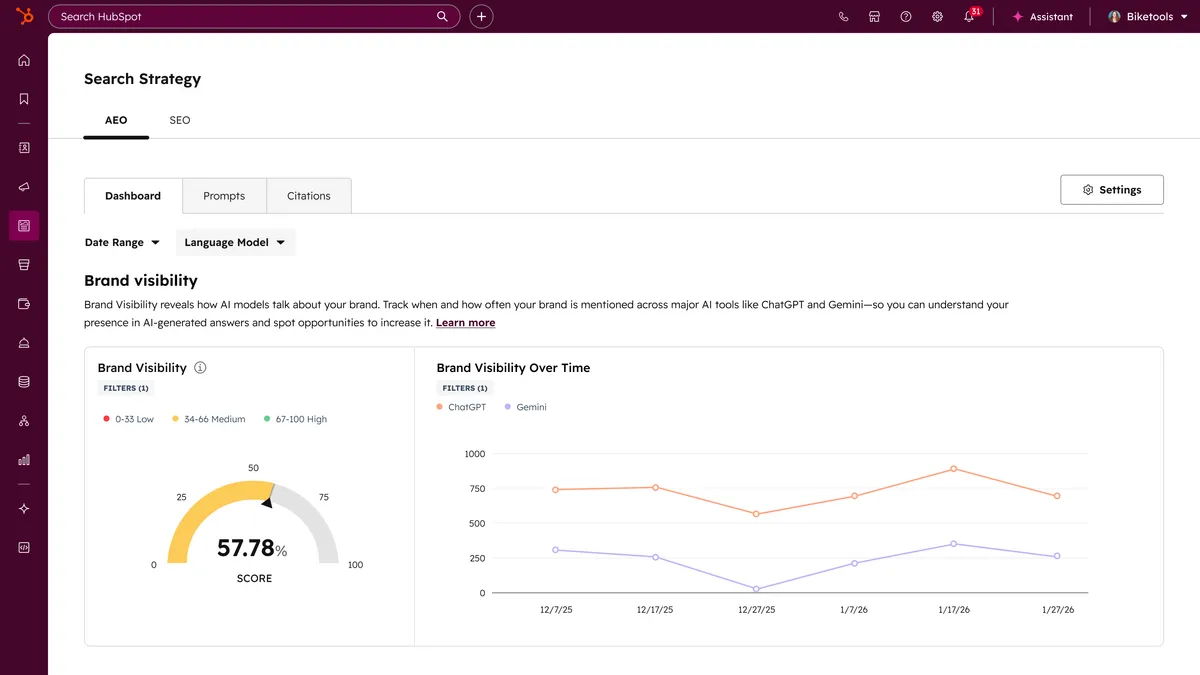
HubSpot AEO:
- Best For: Teams seeking integrated visibility tracking and content execution within a unified workflow.
- Features: Tracks brand visibility, citations, share of voice, and sentiment across ChatGPT, Perplexity, and Gemini. Offers tiered prompt tracking capabilities with paid plans. Its strength lies in post-data analysis, identifying influential domains and content types. For Marketing Hub Professional and Enterprise users, CRM data can inform prompt suggestions, tailoring tracking to specific business needs. A free 28-day trial of HubSpot AEO is available for tracking 10 prompts on ChatGPT.
-
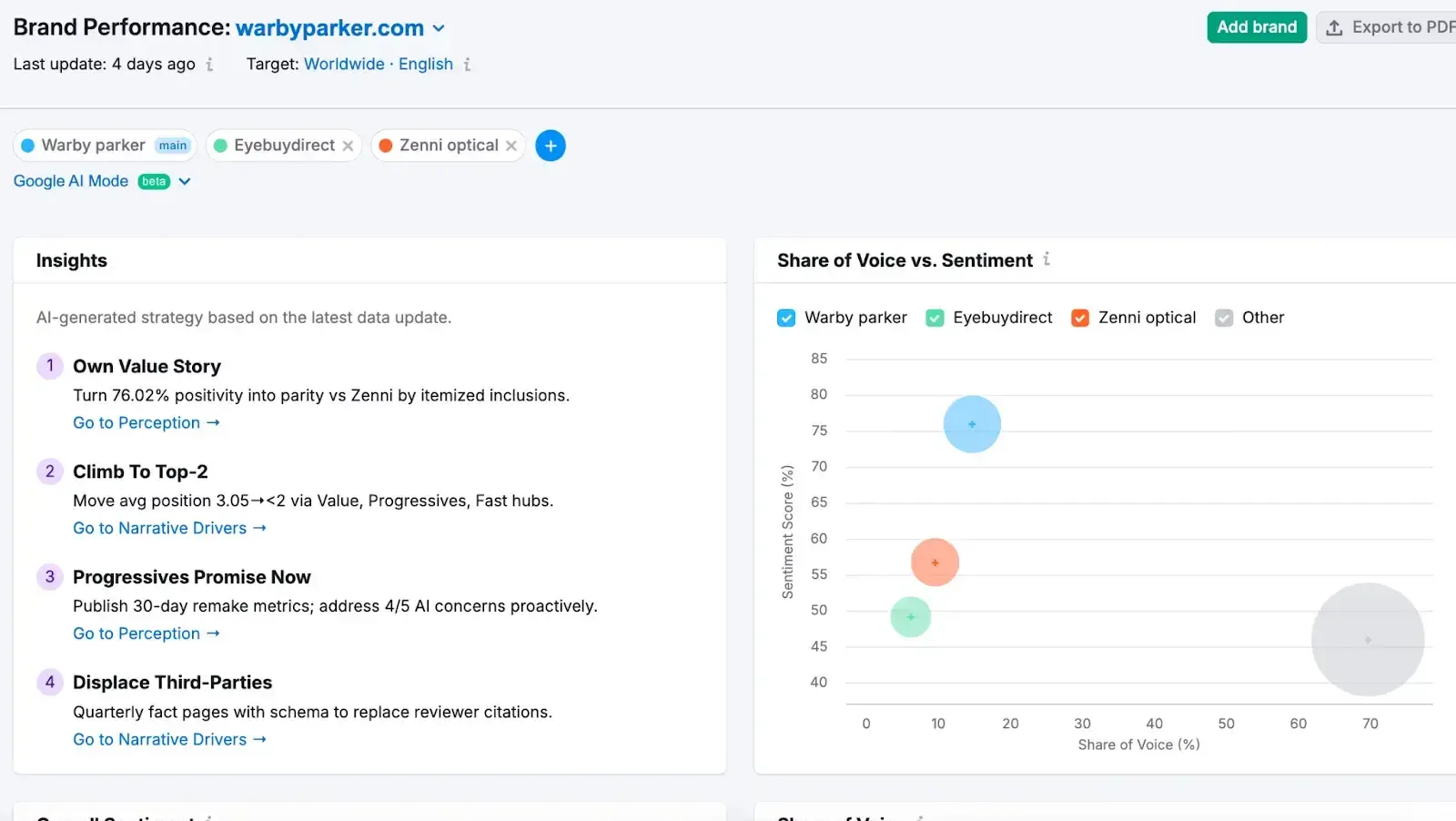
Semrush AI Visibility Toolkit:
- Best For: SEO teams looking to integrate AEO into their existing Semrush ecosystem.
- Features: Monitors brand mentions and sentiment across ChatGPT, Google AI Mode and AI Overviews, Gemini, and Perplexity. Its Prompt Tracking feature measures "Average Position," indicating where a domain typically appears in AI answer citations. The standalone toolkit is priced competitively, and integration with Semrush One offers a consolidated solution for broader digital marketing needs.
-
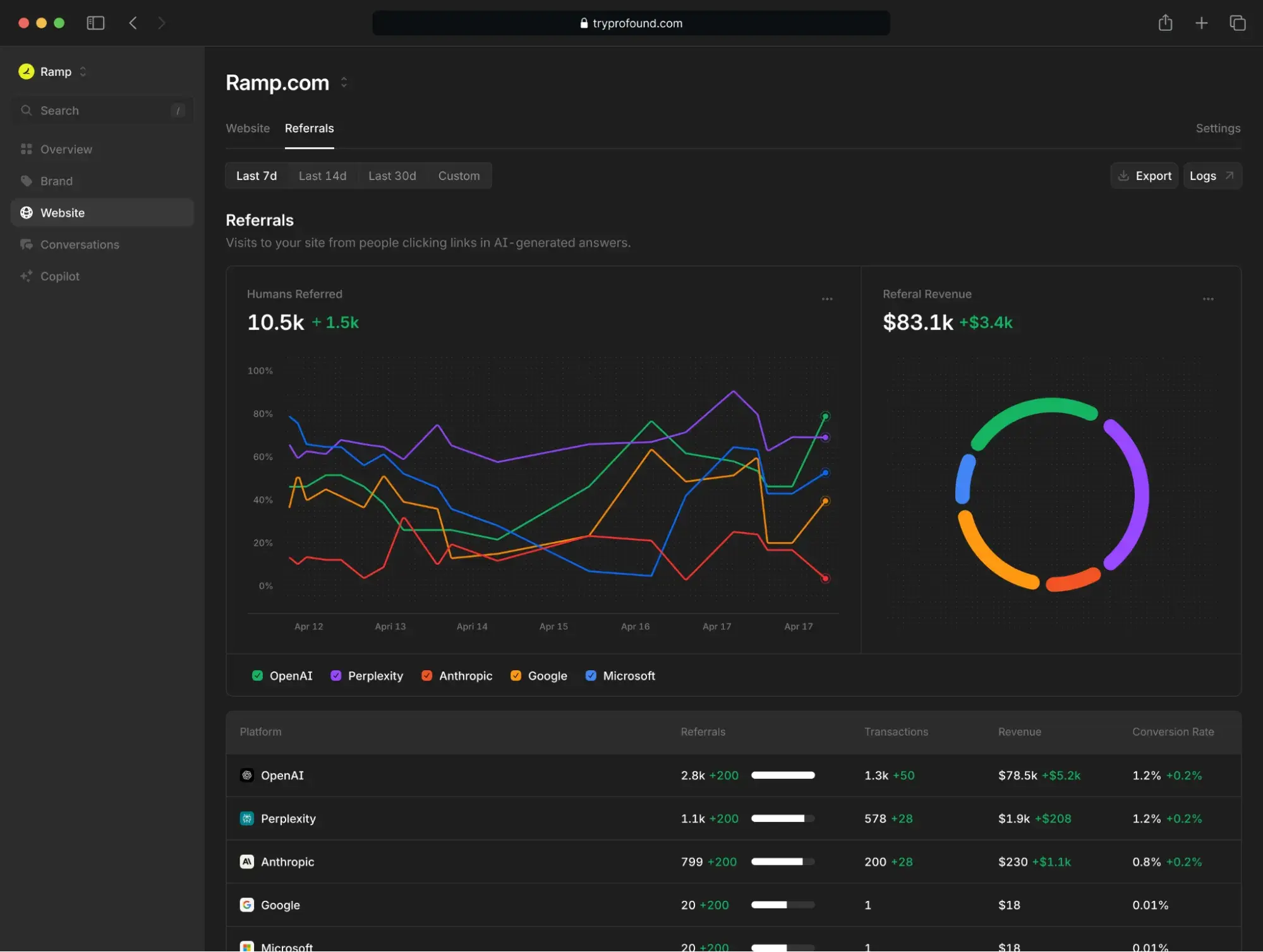
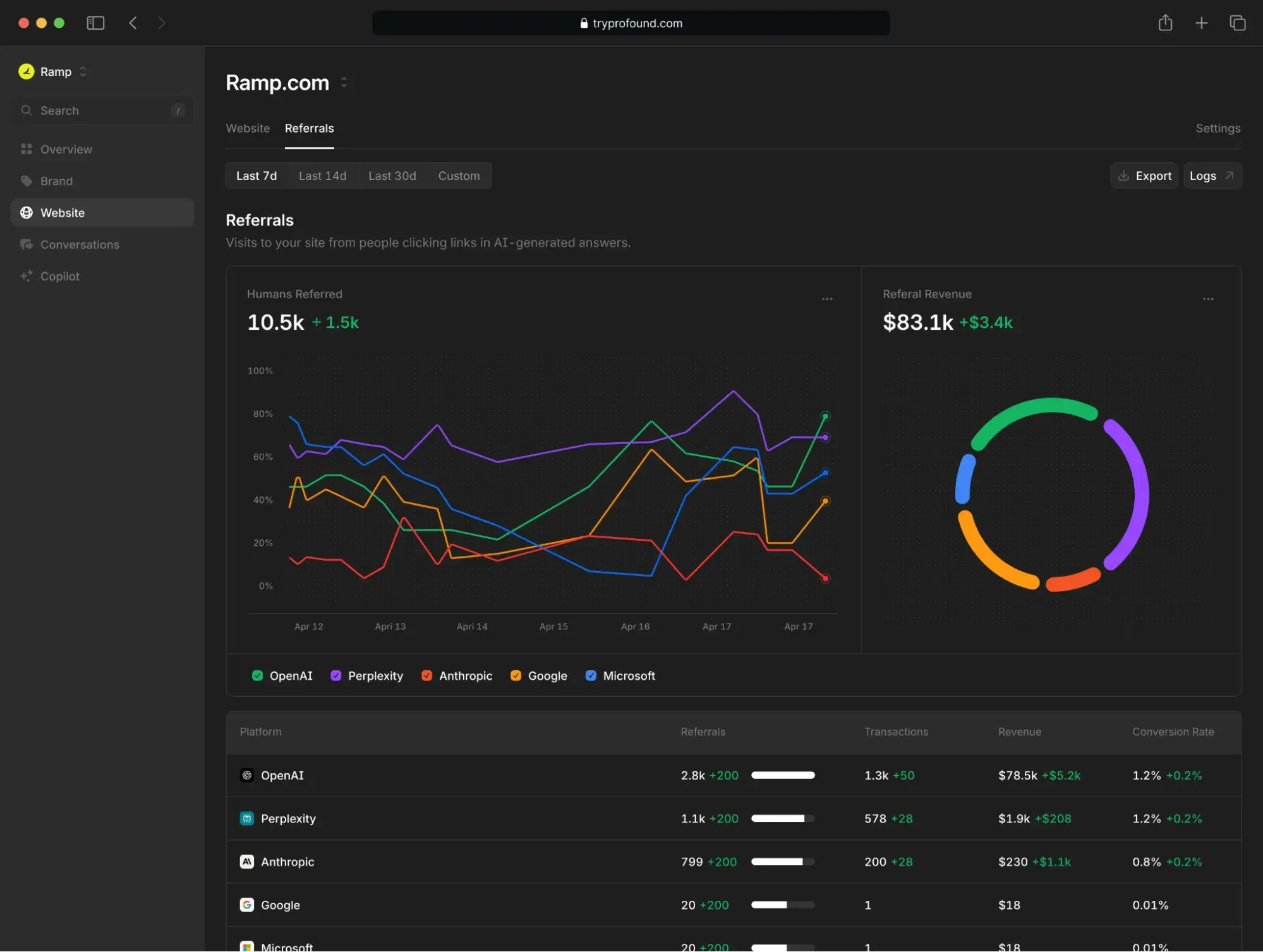
Profound:
- Best For: Enterprise-level teams requiring deep analytics and multi-engine coverage.
- Features: Supports a wide array of answer engines, including ChatGPT, Gemini, Claude, Perplexity, Copilot, Grok, and DeepSeek. It offers advanced features like query fanout and prompt volumes, alongside "Average Position" tracking. Profound’s pricing scales with the number of engines and prompts tracked, making it suitable for organizations with complex AEO monitoring requirements.
-
Otterly:
- Best For: Lean teams beginning their AEO tracking journey without the complexity of enterprise solutions.
- Features: Covers several key answer engines, with optional add-ons for additional platforms. It provides average brand position in AI answers, sentiment tracking, and a comprehensive audit of over 25 factors. Otterly offers accessible pricing tiers, making it a cost-effective entry point for smaller businesses or teams testing AEO strategies.
Frequently Asked Questions About AEO Rank Trackers
Do AEO rank trackers replace traditional SEO tools?
No, they are complementary. SEO tools focus on traditional search engine rankings, clicks, and impressions. AEO trackers measure visibility within AI-generated responses, including citations, mentions, and sentiment. A comprehensive approach to digital visibility requires both sets of tools. Understanding how to identify SERP feature opportunities, for instance, can work in tandem with AEO data.
How often should I refresh prompts and measurements?
It is recommended to review prompt performance weekly and refresh your prompt list monthly. Weekly check-ins allow for rapid detection of significant shifts, such as new competitor appearances or drops in citation rates following AI model updates. Monthly reviews ensure that the prompts being tracked remain relevant to current user search behavior, which can change as markets and products evolve.
Can I measure persona-level visibility with AEO trackers?
Some advanced trackers offer persona-level segmentation, allowing for tracking based on geo-location, language, and audience profiles. This is particularly valuable for understanding how AI answers might differ for specific buyer segments or regional markets, especially for teams focusing on local SEO, where geographic variations in AI responses can be substantial.
What’s the simplest way to start if I have a limited budget?
For those with budget constraints, HubSpot’s free AEO Grader offers a foundational baseline score for AI visibility without requiring a subscription. This allows brands to assess their current standing before committing to a paid tracking solution.
The advent of AI-driven search has irrevocably altered the digital marketing landscape. AEO rank trackers are not merely a new category of tools; they represent an essential evolution in how brands must measure and achieve visibility. By understanding their functionalities, strategically applying the insights they provide, and selecting the right tools, businesses can effectively navigate this new frontier and ensure their continued prominence in the age of intelligent search.
About the Author